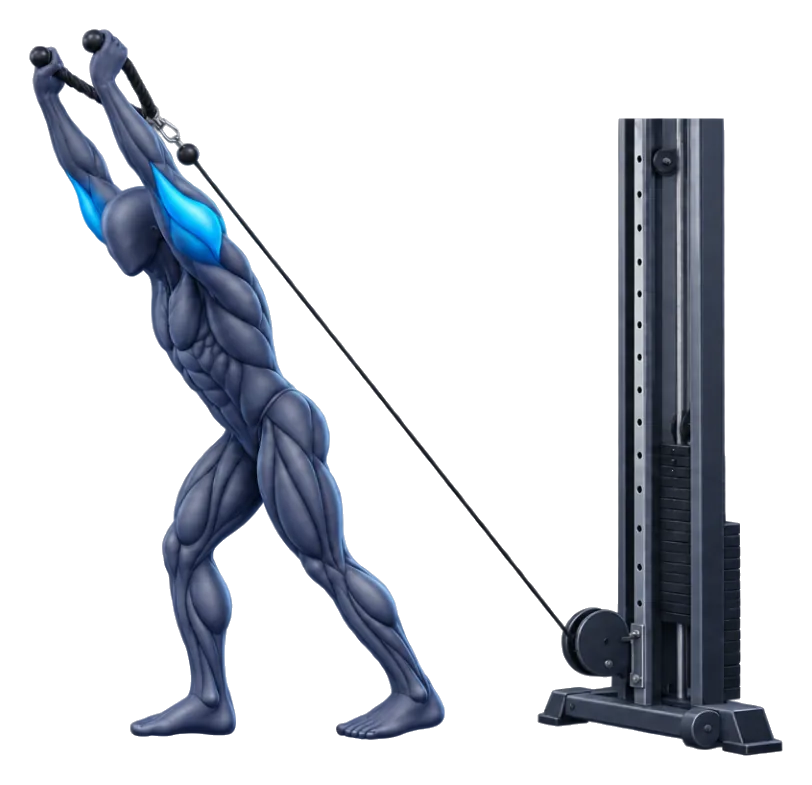
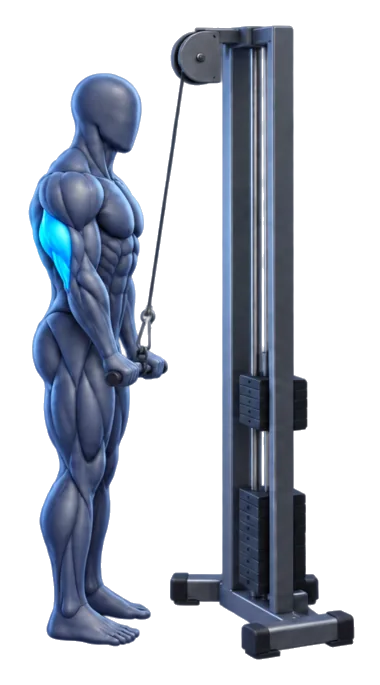
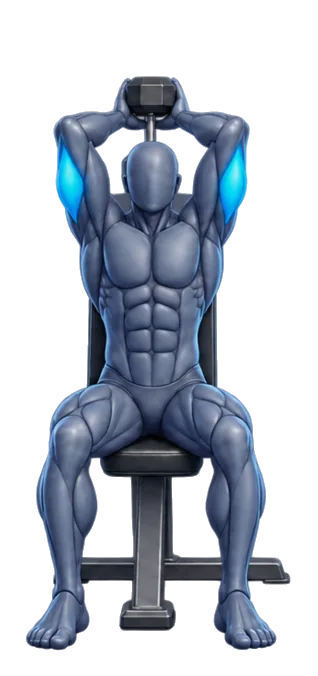
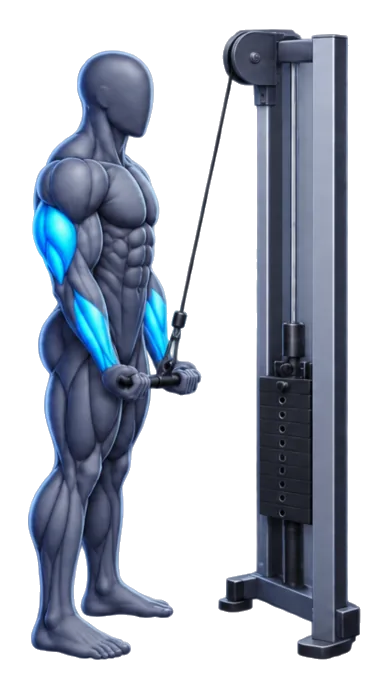
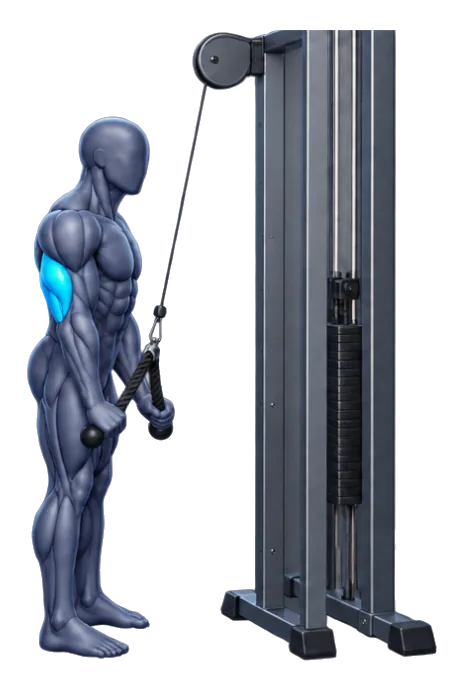
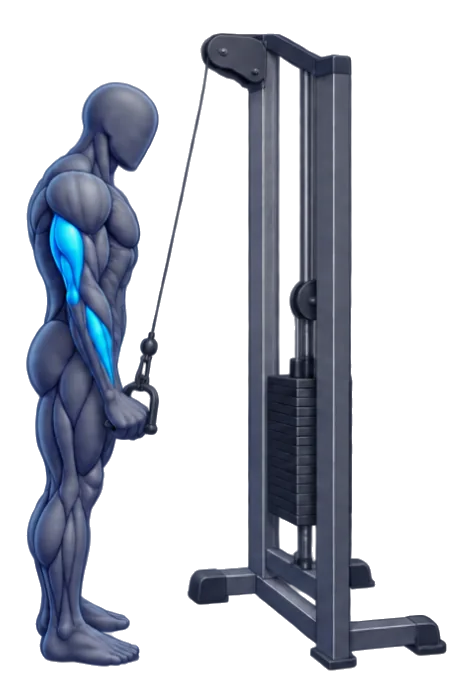
How to Do the Tricep Kickback
The tricep kickback is a lighter isolation exercise where you hinge forward and extend your arm behind you with a dumbbell. It suits beginners learning the elbow-extension pattern and anyone who wants to feel their triceps contract at the end of the range.
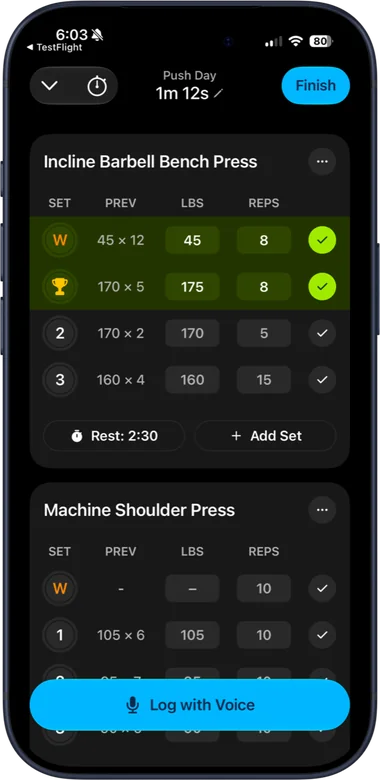
 Log every set of your Tricep Kickback in Superlift
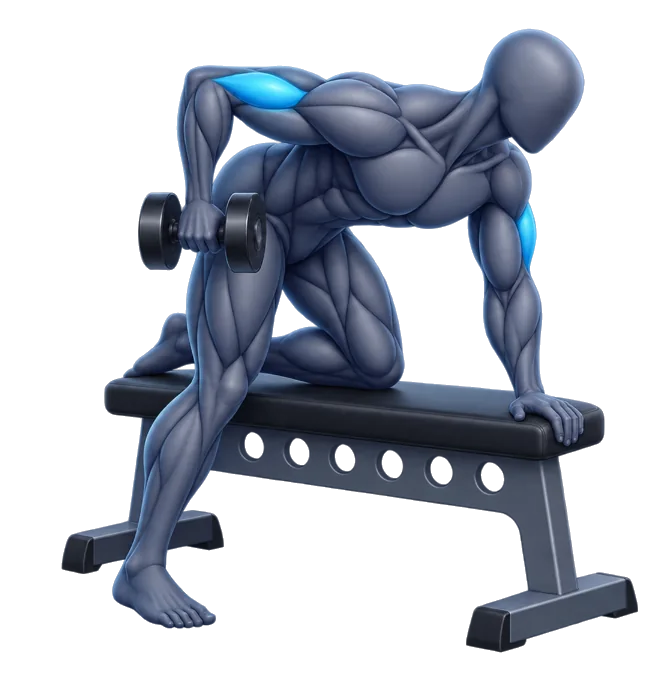
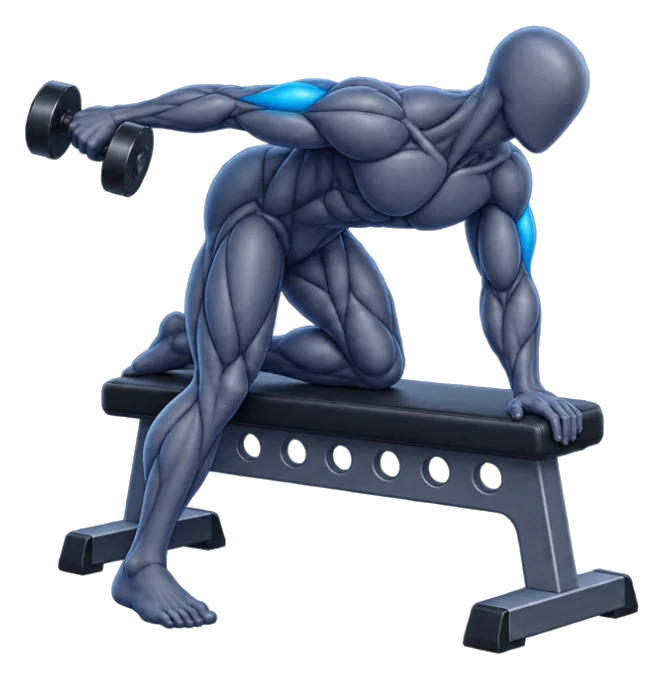
Muscles worked
Primary
- Triceps
Secondary
- None to speak of
How to do the Tricep Kickback
- 1
Place one knee and the same-side hand on a bench, with your back flat.
- 2
Hold a dumbbell in your other hand with your upper arm parallel to your torso.
- 3
Pin your elbow high at your side and bend it to 90 degrees.
- 4
Straighten your arm backward until your elbow is fully extended.
- 5
Squeeze your triceps for a second.
- 6
Lower slowly back to 90 degrees.
- 7
Finish all reps, then switch sides.
Form cues to remember
- Upper arm stays glued to your side
- Straighten fully and squeeze
- Keep your back flat
- Slow lowering
Tricep Kickback video tutorial
Common mistakes
Swinging the weight
Use a lighter dumbbell and keep your elbow high.
Dropping the upper arm
Keep the upper arm parallel to your torso the entire set.
Rounding the back
Hinge at the hips and keep your spine flat.
Stopping short of full extension
Straighten the elbow completely on each rep.
Sets and reps
| Muscle growth | 3 sets of 10–15 reps per arm, 45–60 sec rest |
|---|---|
| Endurance | 2–3 sets of 15–25 reps per arm, 30–45 sec rest |
Use light weight, since the leverage is hardest at the top and heavy dumbbells encourage swinging. Keep your spine neutral to protect your lower back.
Superlift for iPhone
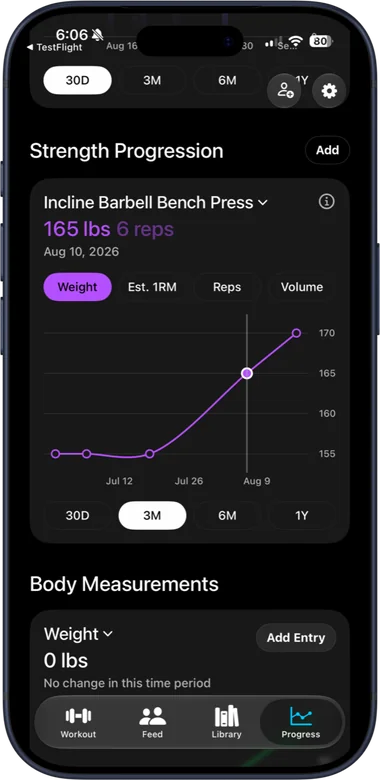
Track your Tricep Kickback and watch it go up
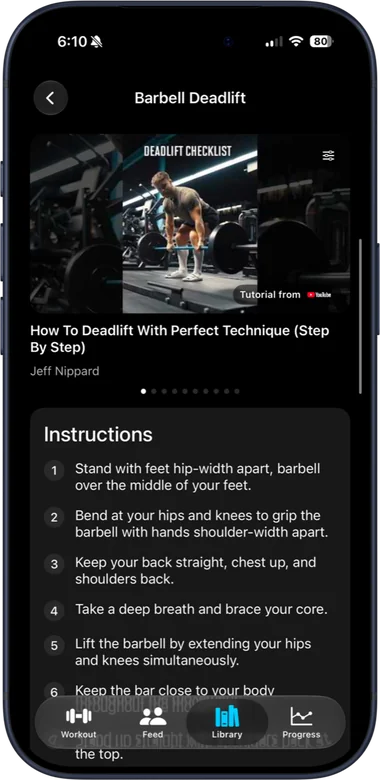
Superlift shows what you lifted last time, times your rest, and charts your strength week by week, so you always know what to beat. Every exercise in this library is built in, with the same demos and tutorials.
Tricep Kickback FAQ
Are tricep kickbacks effective?
Yes for the triceps contraction, as long as the weight is light enough to keep your upper arm still. They are less demanding than pushdowns or dips, so they work best as a finishing exercise.
How heavy should tricep kickbacks be?
Light. Choose a weight you can lift through full extension for 10–15 reps without swinging.
Kickback vs overhead extension?
Kickbacks emphasize the squeeze when the arm is straight, while overhead extensions load the stretched position. Pairing both covers more of the muscle.