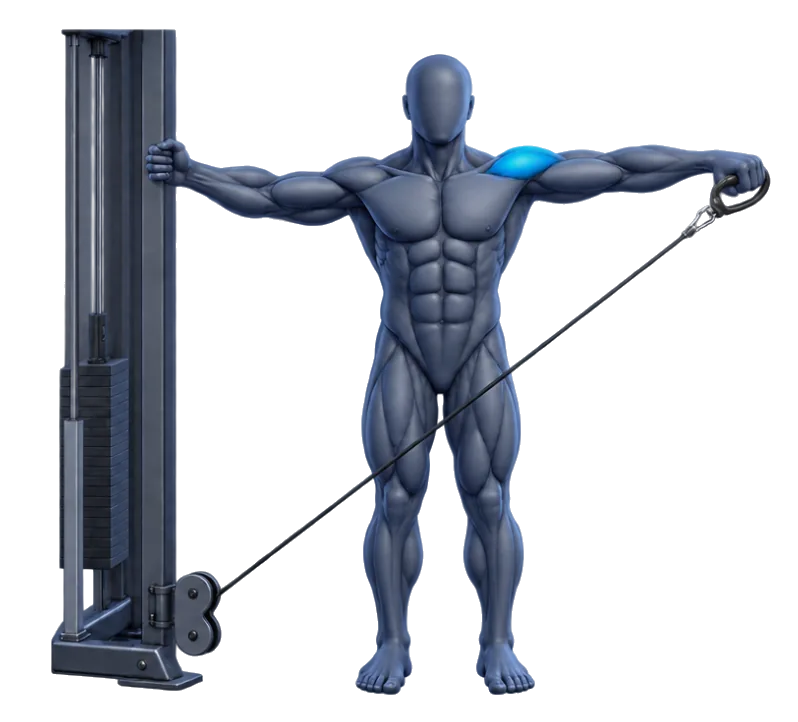
How to Do the Cable Front Raise
The cable front raise trains the front delts with constant cable tension. Standing with your back to the pulley adds a small stretch at the start. It's an accessory lift, useful if your pressing doesn't hit the front delts hard enough.
 Log every set of your Cable Front Raise in Superlift


Muscles worked
Primary
- Shoulders
Secondary
- Chest
How to do the Cable Front Raise
- 1
Set a low pulley and attach a single handle.
- 2
Face away from the stack and take the handle in one hand, with the cable running between your legs or beside your hip.
- 3
Stand tall with a slight bend in your elbow.
- 4
Raise your arm in front of you to shoulder height.
- 5
Pause briefly, then lower slowly.
- 6
Finish all reps on one arm, then switch.
Form cues to remember
- Raise to eye level, not higher
- Keep your ribcage down
- Control the cable on the way back
- Keep your elbow slightly soft
Cable Front Raise video tutorial
Common mistakes
Leaning back to swing the weight
Brace your abs and use a lighter weight.
Raising above shoulder height
Stop at shoulder level; going higher adds trap work.
Dropping the weight fast
Lower over two to three seconds.
Turning the wrist inward
Keep the handle neutral and aligned with your forearm.
Sets and reps
| Muscle growth | 3 sets of 10–15 reps per arm, 60 seconds rest |
|---|---|
| Endurance | 2–3 sets of 15–20 reps |
| Strength | 3 sets of 8–10 reps with a controlled pause |
Front delts already get plenty of work from pressing, so don't overdo volume. Reduce the weight if your shoulder feels pinched.
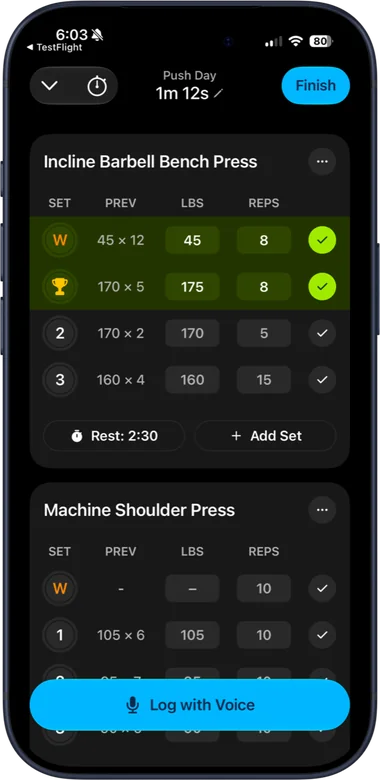
Superlift for iPhone
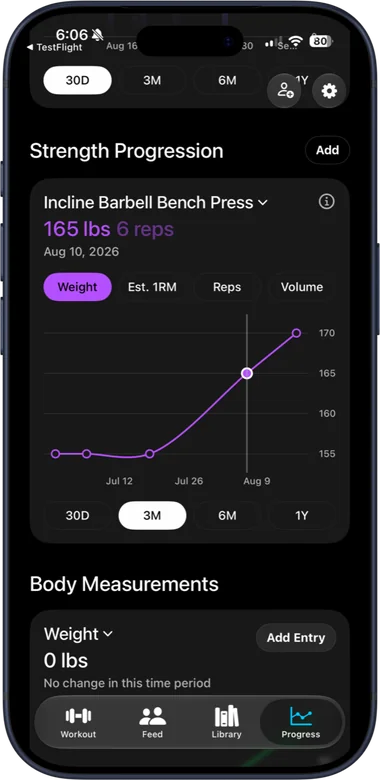
Track your Cable Front Raise and watch it go up
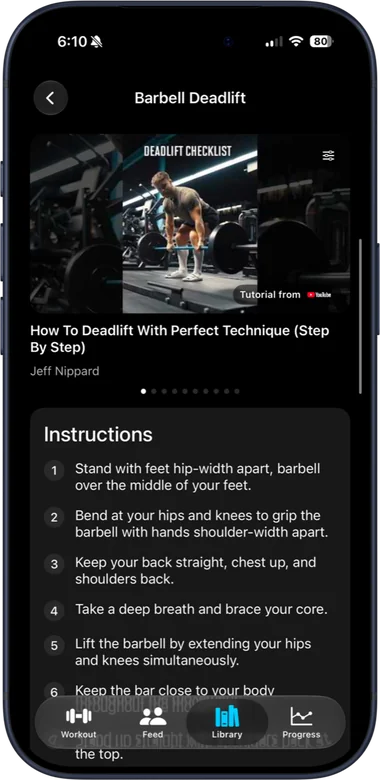
Superlift shows what you lifted last time, times your rest, and charts your strength week by week, so you always know what to beat. Every exercise in this library is built in, with the same demos and tutorials.
Cable Front Raise FAQ
Do I need front raises if I press?
Often not much. Overhead and bench presses already train the front delts, so front raises are optional for most programs.
Cable vs. dumbbell front raise?
The cable keeps tension at the bottom where a dumbbell goes slack. Dumbbells are simpler and need no cable station.
Which muscles does the cable front raise work?
It targets the front delts, with the upper chest helping a little.