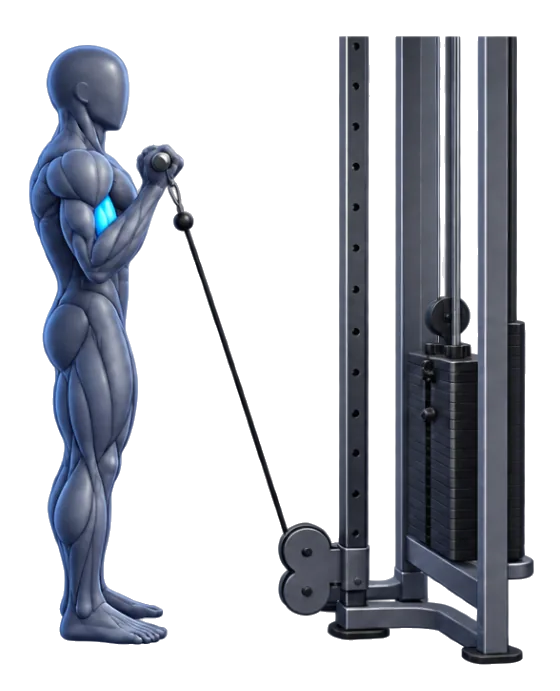
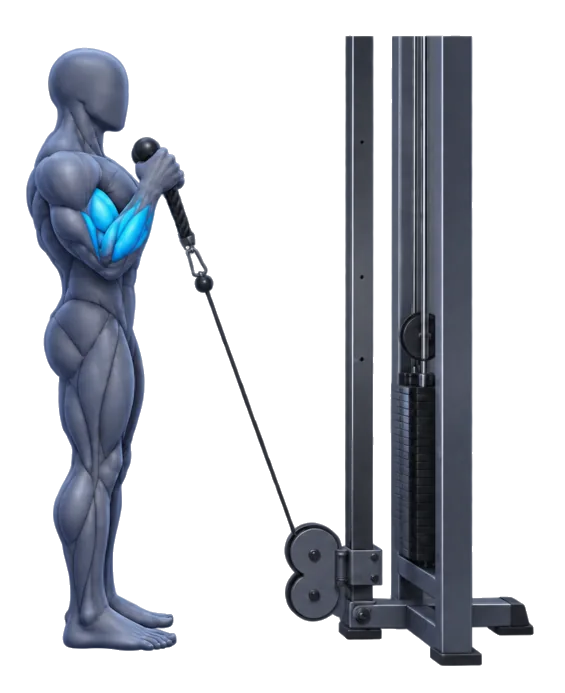
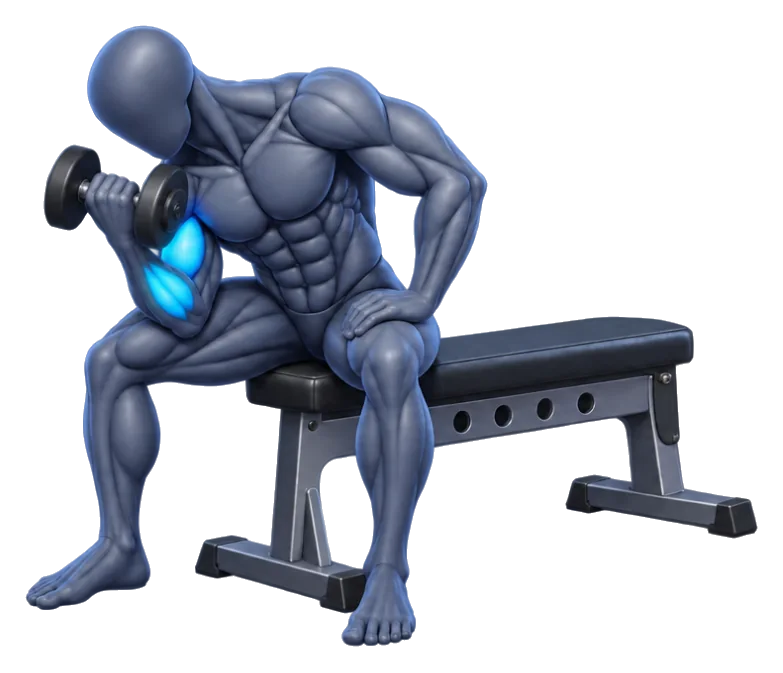
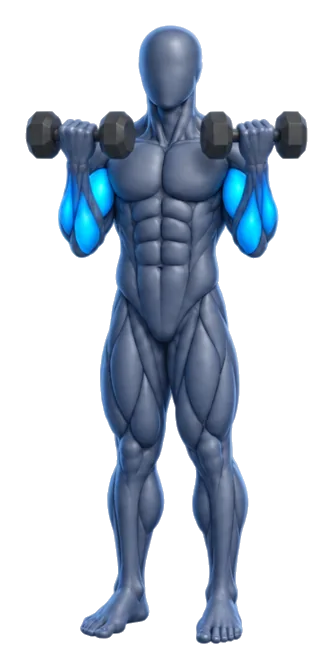
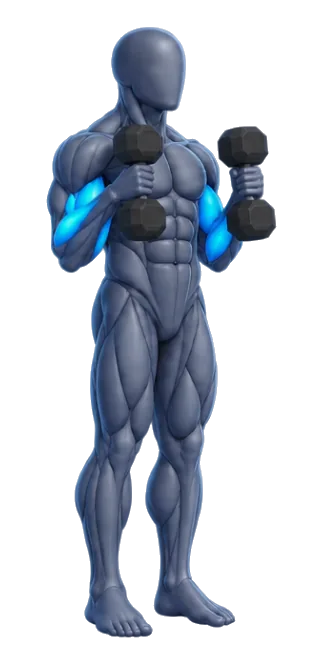
How to Do the Drag Curl
The drag curl pulls the bar straight up your torso with your elbows moving backward instead of lifting in an arc. This reduces help from your front delts and puts a strong focus on the biceps, especially the long head.
 Log every set of your Drag Curl in Superlift
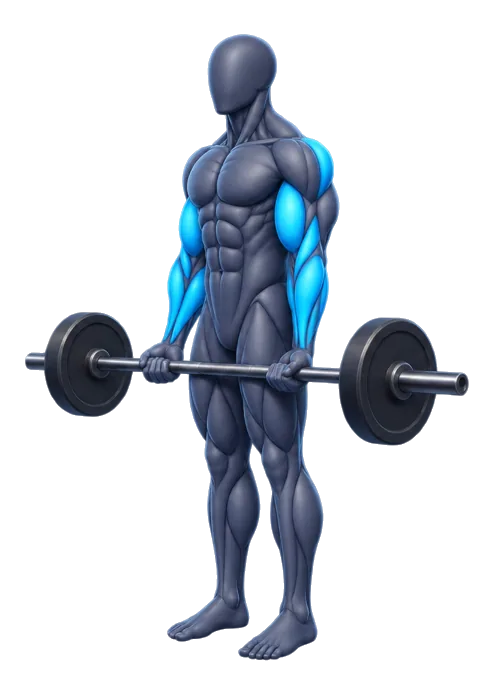
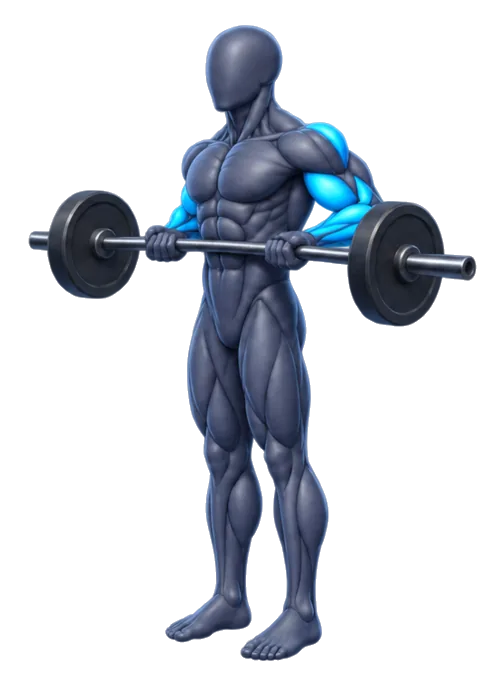
Muscles worked
Primary
- Biceps
Secondary
- Forearms
How to do the Drag Curl
- 1
Stand holding a barbell with an underhand grip, hands about shoulder width apart.
- 2
Keep the bar touching your body from the thighs on up.
- 3
Pull your elbows back behind your torso as you start to lift.
- 4
Drag the bar up your body to your upper chest.
- 5
Squeeze your biceps at the top.
- 6
Lower the bar slowly back down along your body.
- 7
Keep your shoulders back and your torso still.
Form cues to remember
- Keep the bar against your body
- Elbows move back, not forward
- Squeeze at the top
- Lower along the same line
Drag Curl video tutorial
Common mistakes
Swinging the hips
Lighten the weight and brace your core.
Letting the bar drift away
Keep the bar in contact with your torso.
Shrugging the shoulders
Keep your shoulders down and back.
Going too heavy
The path shortens leverage, so use a lighter weight than a normal curl.
Sets and reps
| Muscle growth | 3 sets of 8–12 reps, 60–90 sec rest |
|---|---|
| Endurance | 2–3 sets of 12–20 reps, 45–60 sec rest |
Because the bar stays close, the load is lighter than a normal curl, so don't force heavier weights. Stop if you feel pain in the front of your shoulder.
Superlift for iPhone
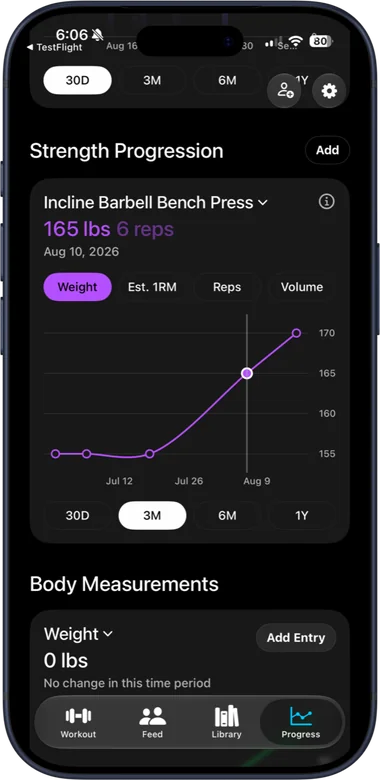
Track your Drag Curl and watch it go up
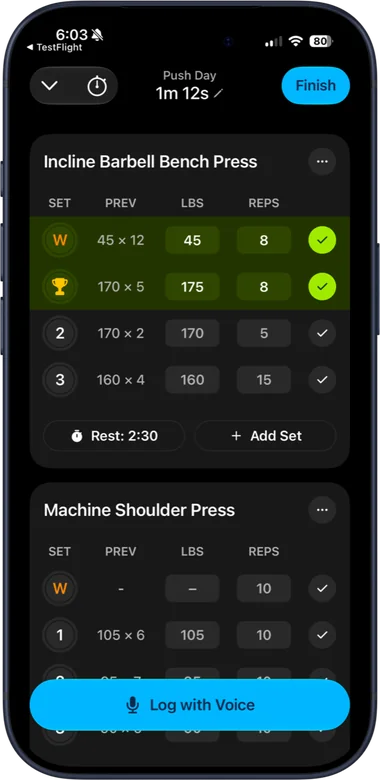
Superlift shows what you lifted last time, times your rest, and charts your strength week by week, so you always know what to beat. Every exercise in this library is built in, with the same demos and tutorials.
Drag Curl FAQ
Drag curl vs barbell curl?
The drag curl keeps the bar close and moves the elbows back, which reduces front-delt help and shifts focus to the biceps. A standard curl lets you use more weight.
Why should I use less weight on drag curls?
The shortened path and elbow-back position make the lift harder to leverage, and the point is to isolate the biceps. Heavy weights encourage swinging.
Which part of the biceps does the drag curl work?
It is often said to emphasize the long head, the outer part of the biceps, because the elbows move behind the body.