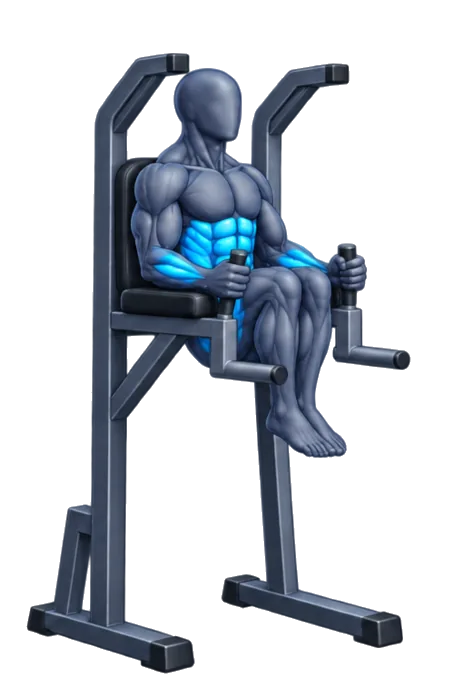
How to Do the Hanging Leg Raise
The hanging leg raise has you hang from a bar and lift your legs by curling your pelvis up, working your abs hard through a long range. It is an advanced move best for lifters with a solid grip and enough core strength to avoid swinging.
 Log every set of your Hanging Leg Raise in Superlift
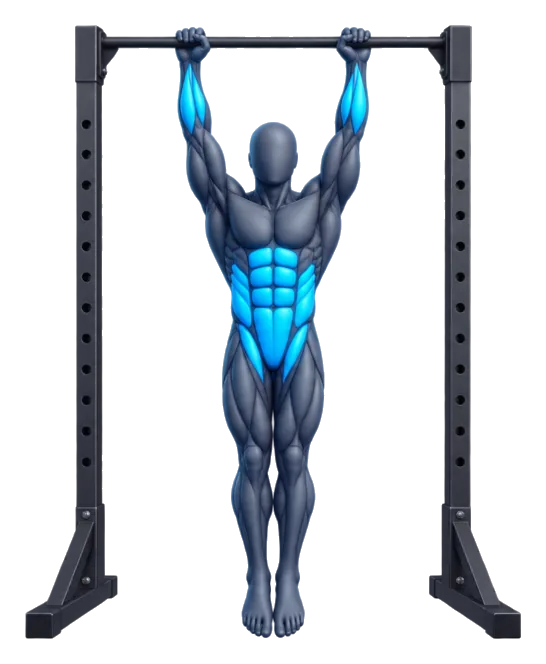
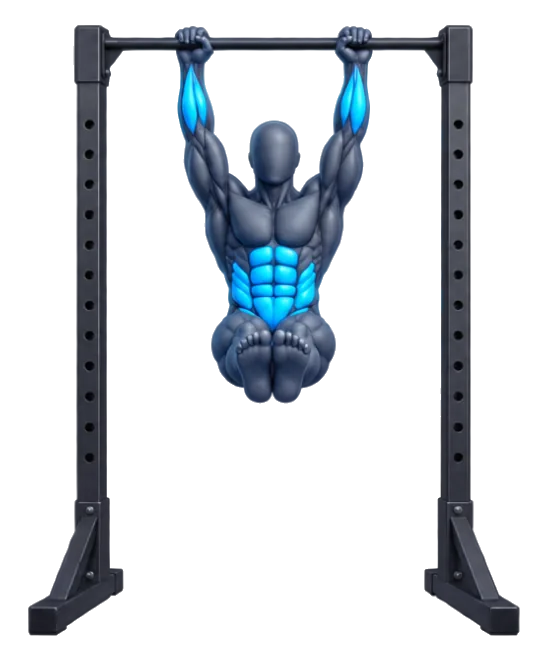
Muscles worked
Primary
- Abs
Secondary
- Hip Flexors
How to do the Hanging Leg Raise
- 1
Hang from a pull-up bar with an overhand grip, hands about shoulder-width apart.
- 2
Pull your shoulders down and slightly back so you are not hanging limp.
- 3
Tuck your pelvis by curling your hips slightly upward.
- 4
Raise your legs, straight or slightly bent, until your thighs are at least parallel to the floor.
- 5
Pause briefly at the top.
- 6
Lower your legs slowly without letting your body swing.
- 7
Reset your hang before starting the next rep.
Form cues to remember
- Curl your pelvis up
- Lower slowly, no swinging
- Shoulders pulled away from ears
- Squeeze the bar
Common mistakes
Swinging with momentum
Pause at the bottom of each rep and slow the lowering phase.
Only using the hip flexors
Curl your pelvis up at the top so your abs do the work, not just your hips.
Hanging with shrugged shoulders
Engage your lats and pull your shoulders down before each rep.
Letting go of the hang position
Stop the set when your grip fails or your form breaks; use knee raises instead.
Sets and reps
| Strength | 3–4 sets of 6–10 strict reps, 90 seconds rest |
|---|---|
| Muscle growth | 3 sets of 8–15 reps with a slow lowering phase |
| Endurance | Use knee raises: 2–3 sets of 12–20 reps, 60 seconds rest |
Hanging can irritate shoulders and lower backs, and a weak grip ends sets early. Start with bent-knee raises and stop if you feel sharp pain in your shoulders.
Superlift for iPhone
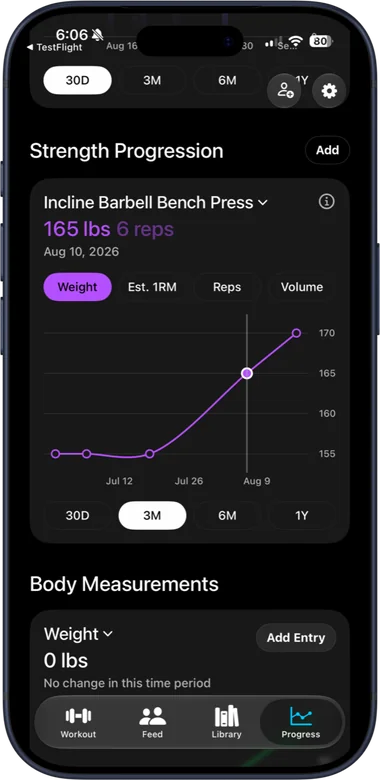
Track your Hanging Leg Raise and watch it go up
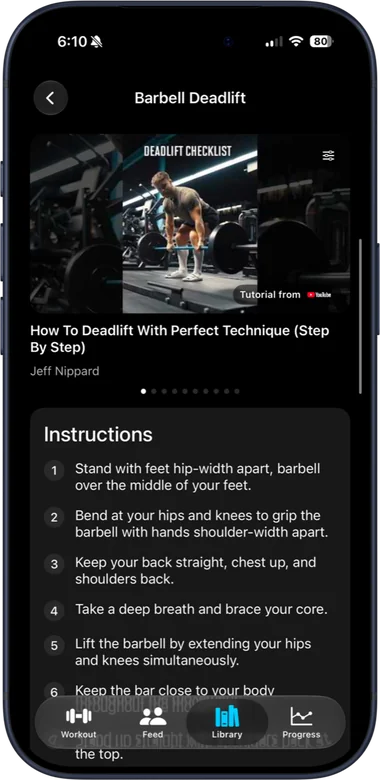
Superlift shows what you lifted last time, times your rest, and charts your strength week by week, so you always know what to beat. Every exercise in this library is built in, with the same demos and tutorials.
Hanging Leg Raise FAQ
How do I get better at hanging leg raises?
Start with hanging knee raises, then straighten your legs a little at a time. Controlling the lowering phase matters more than lifting higher.
Why do my hands give out before my abs on hanging leg raises?
Grip is often the limit on hanging moves. Using straps, a pull-up grip with chalk, or an assisted version lets your abs work longer.
Hanging leg raise vs reverse crunch: which should I do?
The hanging version has a bigger range and needs more strength; the reverse crunch is easier on shoulders and grip. Beginners often start with the reverse crunch.