How to Do the Kettlebell Rack Carry
The kettlebell rack carry is a loaded walk with one or two bells held in the rack position at your chest. It trains your abs, obliques and upper back to resist leaning while your legs and breathing keep working. It suits beginners who want a trunk-stability exercise that is easy to learn.
 Log every set of your Kettlebell Rack Carry in Superlift
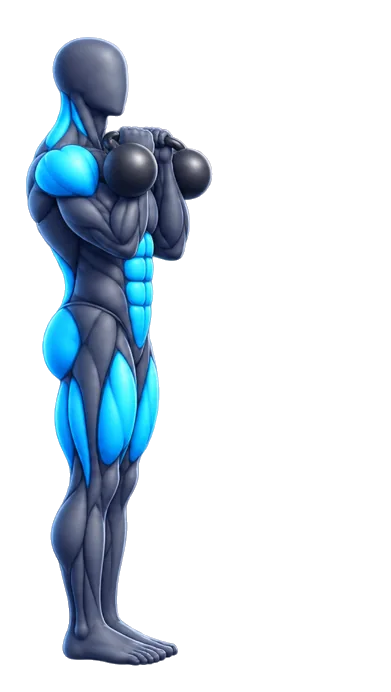
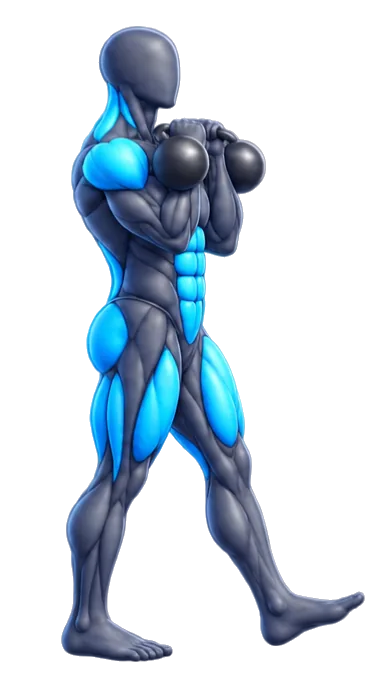
Muscles worked
Primary
- Abs
- Lower Back
Secondary
- Shoulders
- Quads
- Hamstrings
How to do the Kettlebell Rack Carry
- 1
Clean one or two kettlebells up to the rack position, with elbows tucked against your ribs.
- 2
Rest each bell on your forearm and upper arm with your wrist straight.
- 3
Stand tall, squeeze your glutes and brace your abs as if bracing for a light punch.
- 4
Walk forward in smooth, medium steps for your set distance or time.
- 5
Keep your ribs stacked over your hips and your head neutral.
- 6
Set the bells down with a hinge, not a rounded back.
- 7
Rest, then repeat, swapping sides if you carry a single bell.
Form cues to remember
- Ribs down, chest tall
- Elbow tucked into your side
- Wrist straight, bell resting on forearm
- Walk quietly, no lean
Common mistakes
Leaning back
Brace your abs and bring the bell closer to your body so your torso stays vertical.
Leaning toward the loaded side
Squeeze your glutes and stand tall; use a lighter bell if you keep tipping.
Bent wrists
Rotate the handle so the bell sits on your forearm with your wrist in line.
Holding your breath
Breathe in short, steady sips while keeping your abs tight.
Sets and reps
| Conditioning | 3–4 carries of 30–60 seconds, 60 seconds rest |
|---|---|
| Strength | 3–4 carries of 20–40 meters with a heavy bell, 2 min rest |
| Muscle growth | Use as a finisher after squats or presses, 2–3 carries of 40–60 seconds |
The bell can bruise your collarbone or forearm if you are not set up well, so pad it with a towel or use a lighter bell. If you have shoulder or wrist pain in the rack, carry in a goblet hold instead.
Superlift for iPhone
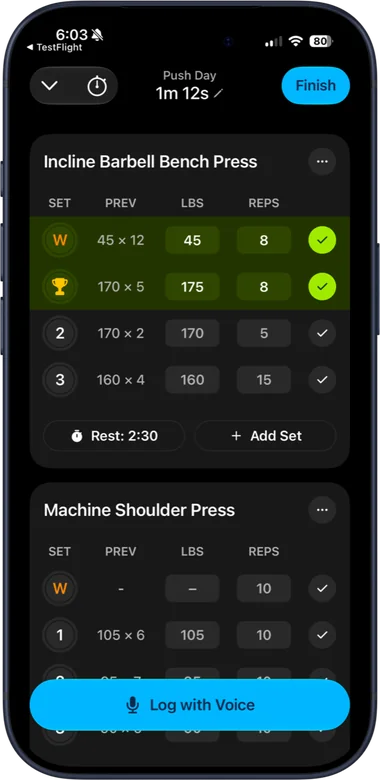
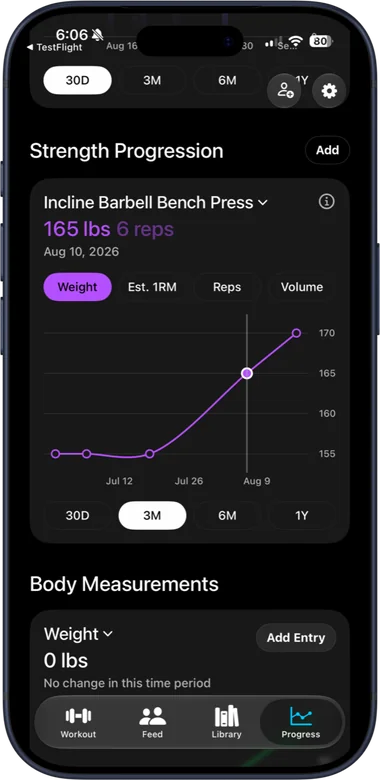
Track your Kettlebell Rack Carry and watch it go up
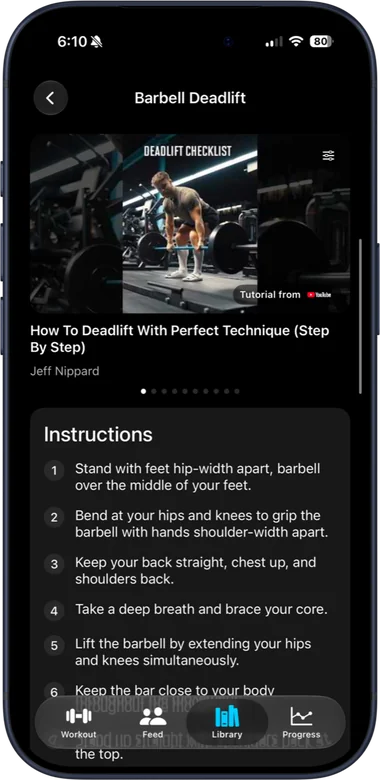
Superlift shows what you lifted last time, times your rest, and charts your strength week by week, so you always know what to beat. Every exercise in this library is built in, with the same demos and tutorials.
Kettlebell Rack Carry FAQ
Is the rack carry better with one or two kettlebells?
Two bells load your abs evenly and let you go heavier overall. One bell is a sneaky obliques challenge because your torso fights to stay upright, so many people use both versions.
What muscles does the kettlebell rack carry work?
Your abs, obliques and lower back work to keep your torso still, while your shoulders and legs hold the bell and move you forward. Your grip and upper back also stay busy.
How far should I carry the kettlebell?
Most people do 20–40 meters per trip or 30–60 seconds. Pick a bell that lets you keep perfect posture for the whole carry.