How to Do the Barbell Lunges
The barbell lunge puts a bar across your upper back so you can load your legs heavily while training balance and single-leg strength. It is best for intermediate lifters comfortable with squat positioning.
 Log every set of your Barbell Lunges in Superlift

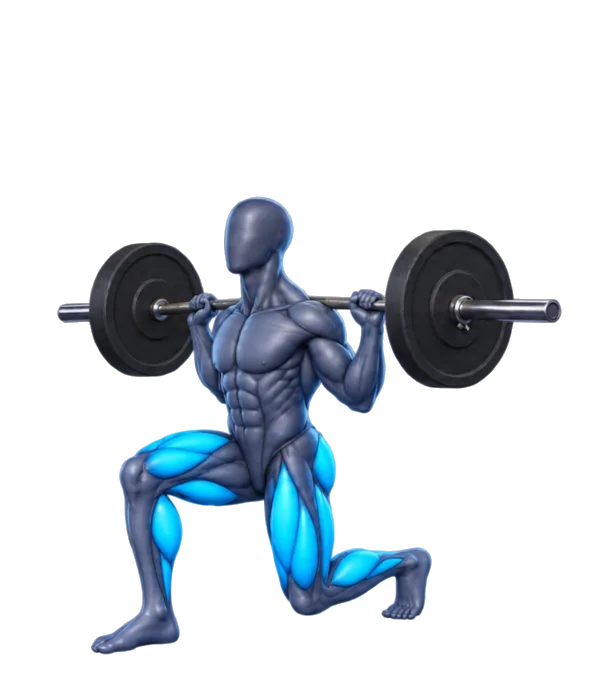
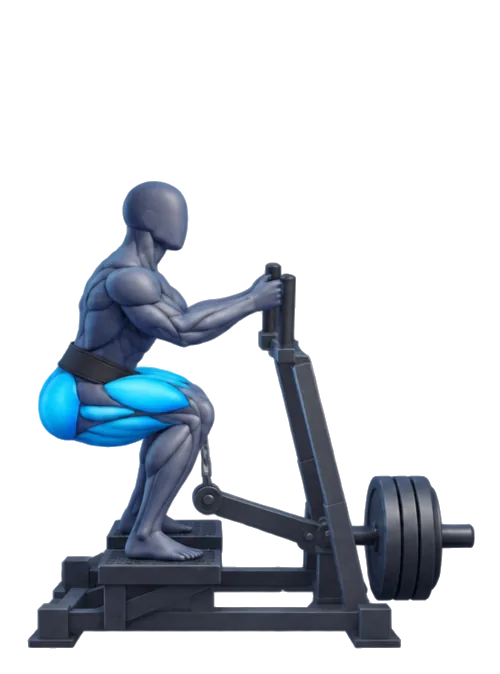
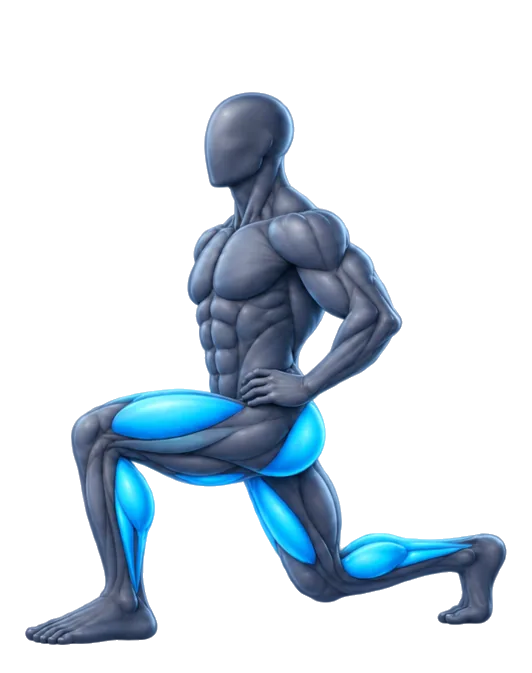
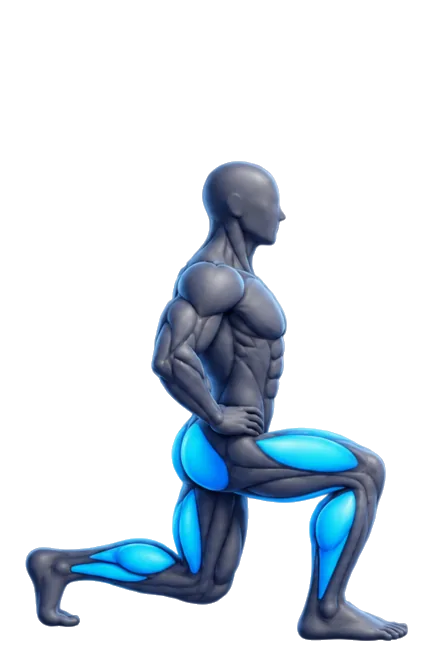
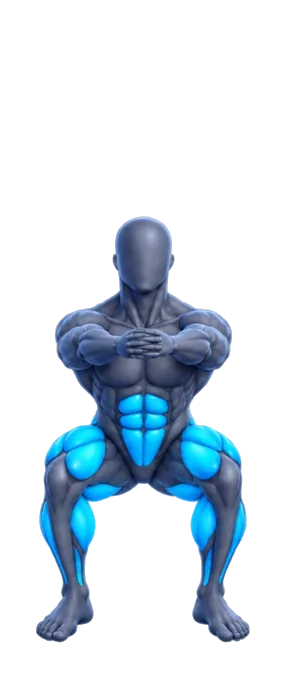
Muscles worked
Primary
- Quads
- Glutes
Secondary
- Hamstrings
- Calves
How to do the Barbell Lunges
- 1
Set the bar on your upper back, as for a squat, and step back from the rack.
- 2
Brace your core and keep your chest tall.
- 3
Step forward and plant your foot flat.
- 4
Lower your back knee toward the floor until both knees are at about 90 degrees.
- 5
Keep your torso upright and the bar steady.
- 6
Drive through your front foot to return to standing.
- 7
Alternate legs or finish one side first.
Form cues to remember
- Brace before every step
- Stay tall under the bar
- Drive through your front heel
- Knee tracks over toes
Common mistakes
Leaning forward under load
Keep your chest up and reduce the weight.
Taking too short a step
Step far enough that your front shin stays near vertical.
Letting the bar roll
Keep a tight grip and a firm shelf on your upper back.
Wobbling the front knee
Push your knee out in line with your toes.
Sets and reps
| Strength | 3–4 sets of 5–8 reps per leg, 2 min rest |
|---|---|
| Muscle growth | 3 sets of 8–12 reps per leg, 90 sec rest |
Balance under a loaded bar is a risk, so use a rack with safety bars set at the right height or choose dumbbells instead. Don't use a weight that makes you lose control of your torso.
Superlift for iPhone
Track your Barbell Lunges and watch it go up
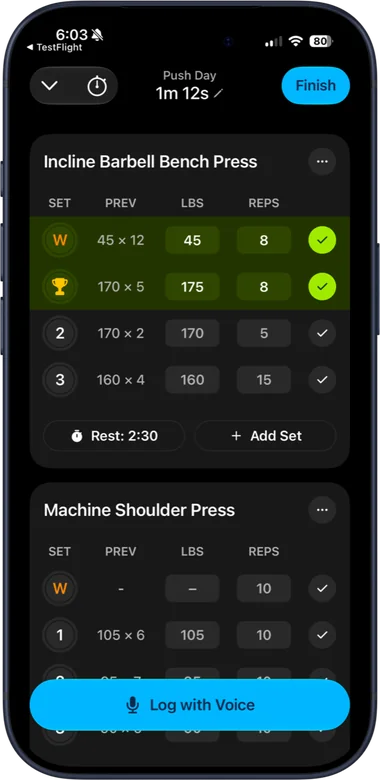
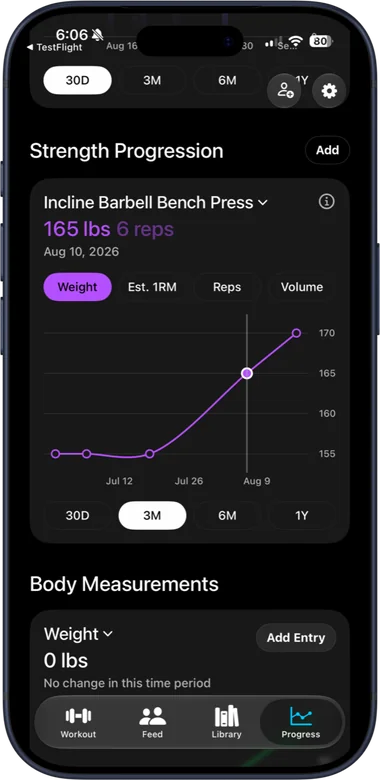
Superlift shows what you lifted last time, times your rest, and charts your strength week by week, so you always know what to beat. Every exercise in this library is built in, with the same demos and tutorials.
Barbell Lunges FAQ
Barbell lunge or dumbbell lunge?
The barbell loads more total weight and keeps your hands free, but it needs more balance and a rack. Dumbbells are simpler and easier to bail out of.
Where should the bar sit for barbell lunges?
On your upper back, on the traps or rear delts as in a squat. A stable shelf stops the bar from rolling when you step.
Is the barbell lunge safe?
It is safe when you keep the load manageable and use safeties. Start light until your balance and step length feel consistent.