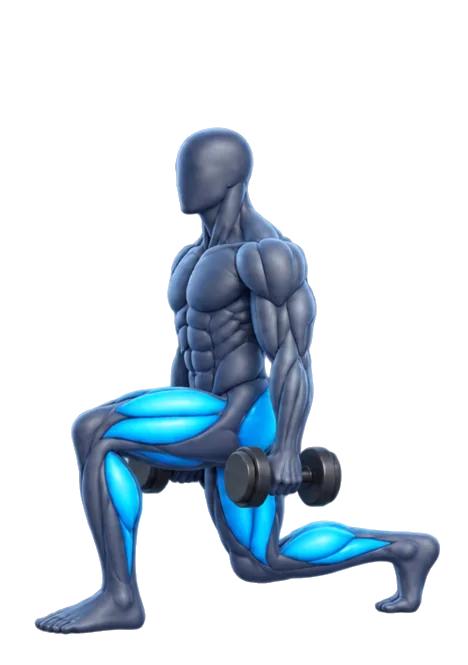
How to Do the Bodyweight Lunge
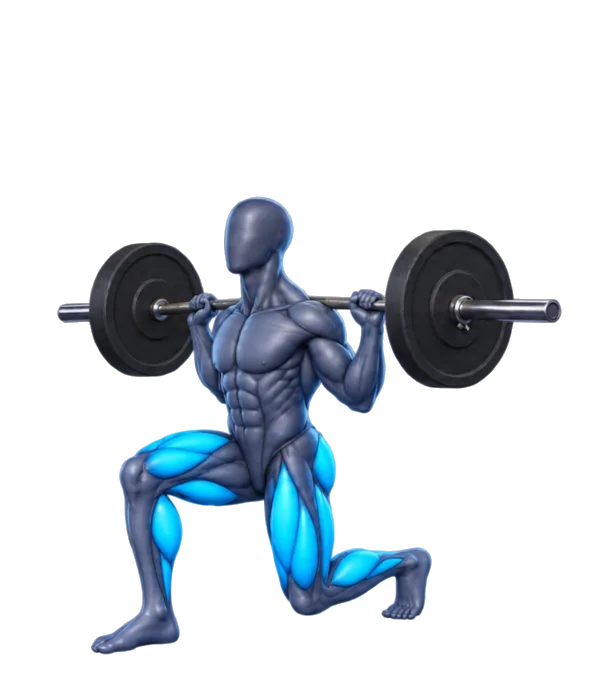
The bodyweight lunge steps forward into a deep split position and pushes back to standing, training one leg at a time. It builds quads and glutes and improves balance and hip mobility with no equipment. It suits beginners and anyone training at home or traveling.
 Log every set of your Bodyweight Lunge in Superlift
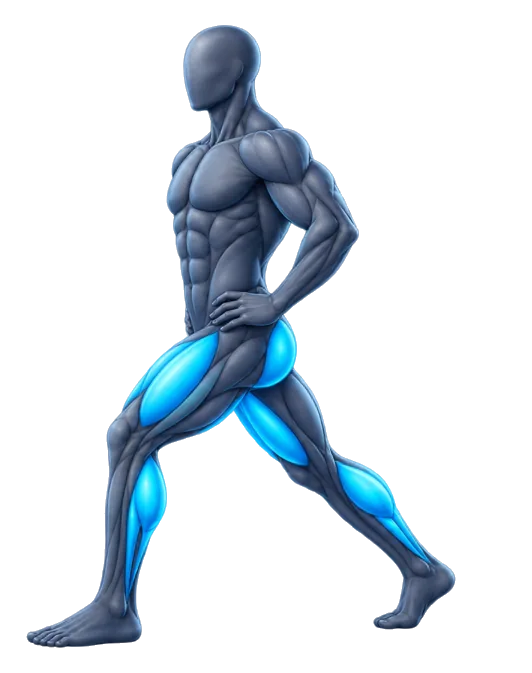
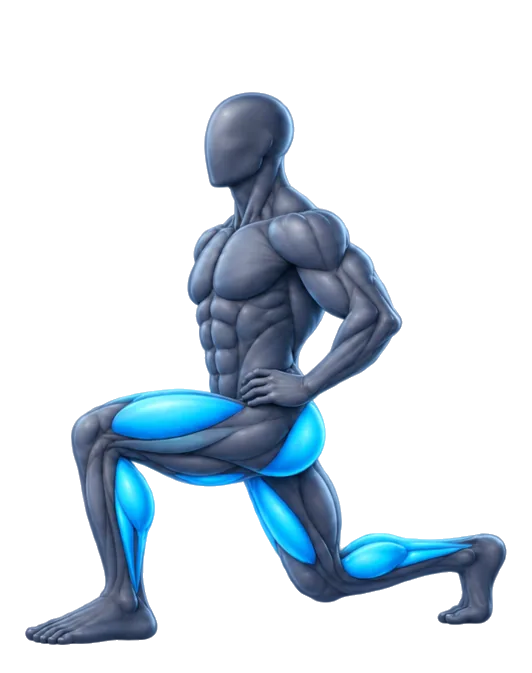
Muscles worked
Primary
- Quads
- Glutes
Secondary
- Hamstrings
- Calves
How to do the Bodyweight Lunge
- 1
Stand tall with your feet hip-width apart and your hands on your hips.
- 2
Take a big step forward with one foot.
- 3
Lower your back knee toward the floor until your front thigh is parallel.
- 4
Keep your front foot flat and your chest up.
- 5
Push through your front heel to return to standing.
- 6
Step forward with the other leg and alternate.
Form cues to remember
- Take a long step
- Front knee tracks over your toes
- Chest up, core braced
- Push through your front heel
Common mistakes
Short steps
Step far enough that your front shin stays near vertical.
Front knee caving in
Push your knee out in line with your toes.
Leaning forward
Keep your torso upright.
Wobbling side to side
Imagine you're on train tracks and step slightly wider.
Sets and reps
| Muscle growth | 3 sets of 10–15 reps per leg, 60 sec rest |
|---|---|
| Endurance | 2–3 sets of 20 reps per leg, 30–45 sec rest |
If your knees hurt, shorten your step or try reverse lunges. Hold a wall for balance until you're steady.
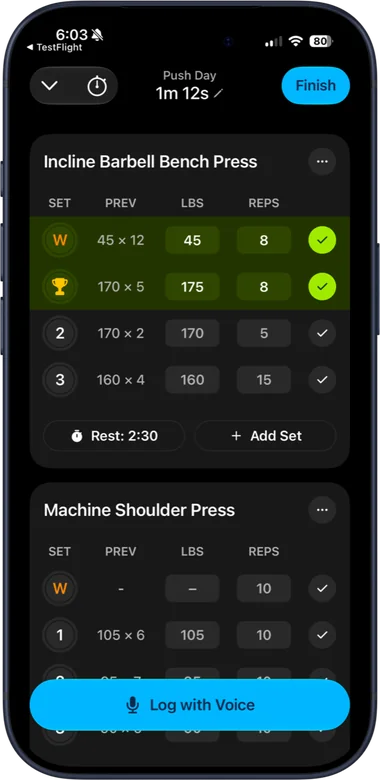
Superlift for iPhone
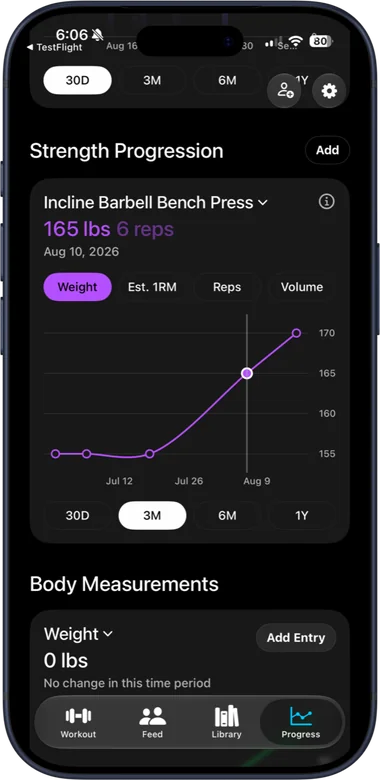
Track your Bodyweight Lunge and watch it go up
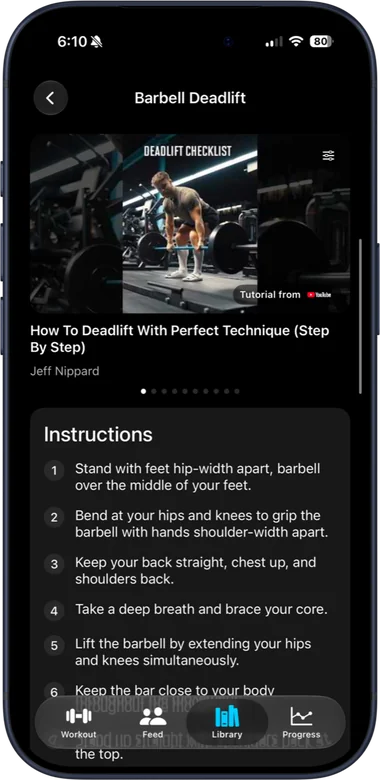
Superlift shows what you lifted last time, times your rest, and charts your strength week by week, so you always know what to beat. Every exercise in this library is built in, with the same demos and tutorials.
Bodyweight Lunge FAQ
What's the difference between a lunge and a split squat?
In a lunge you step into position each rep, while in a split squat your feet stay fixed. Lunges challenge your balance more.
Are lunges better than squats?
They're different. Lunges train one leg at a time and challenge balance, while squats let you load both legs together.
Why do lunges hurt my knees?
Your step may be too short or your knee may be caving in. Lengthen your step and keep your knee in line with your toes.