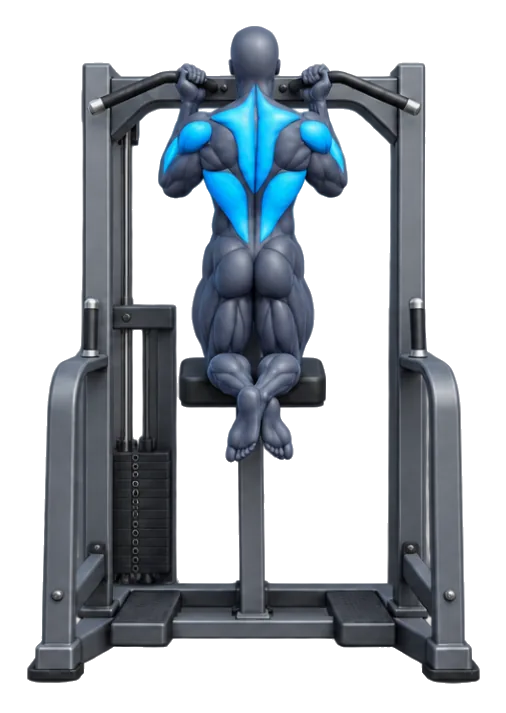
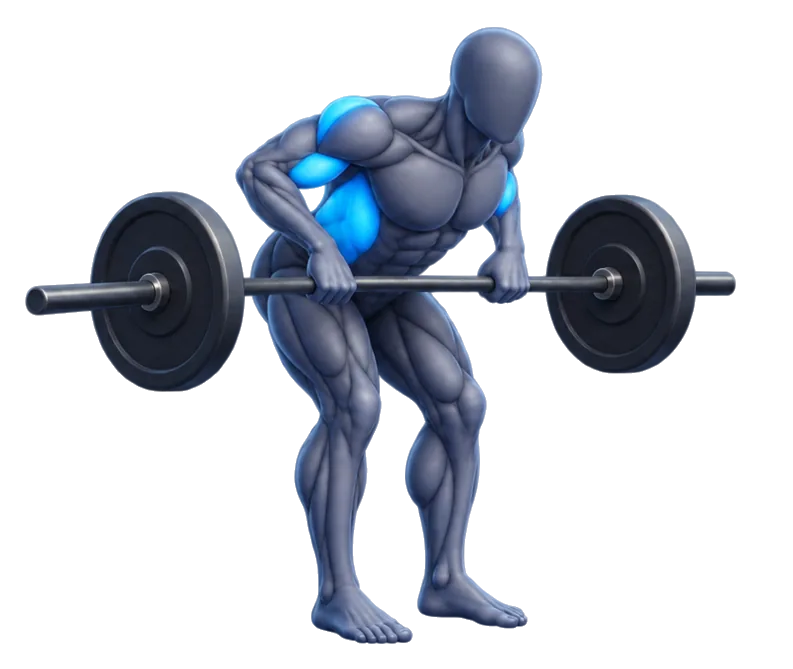
How to Do the Chin-Up
The chin-up is a pull-up done with an underhand grip, which brings the biceps into the movement alongside your lats. It is typically a bit easier than the pull-up, so it is a great way to build upper-body pulling strength.
 Log every set of your Chin-Up in Superlift
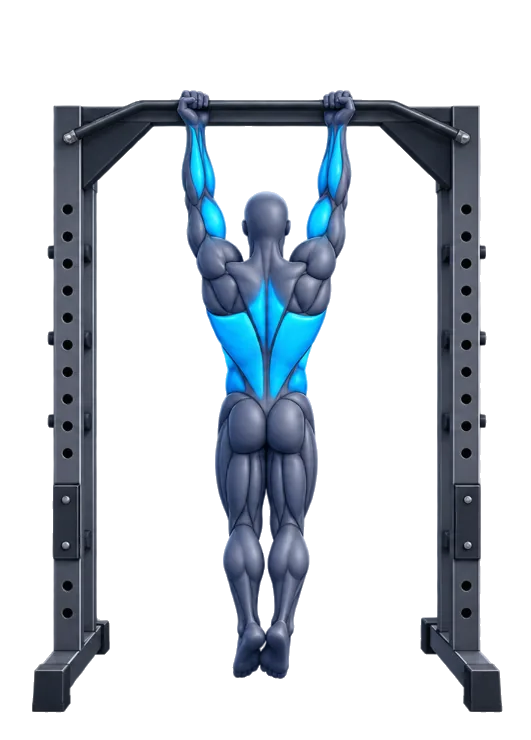
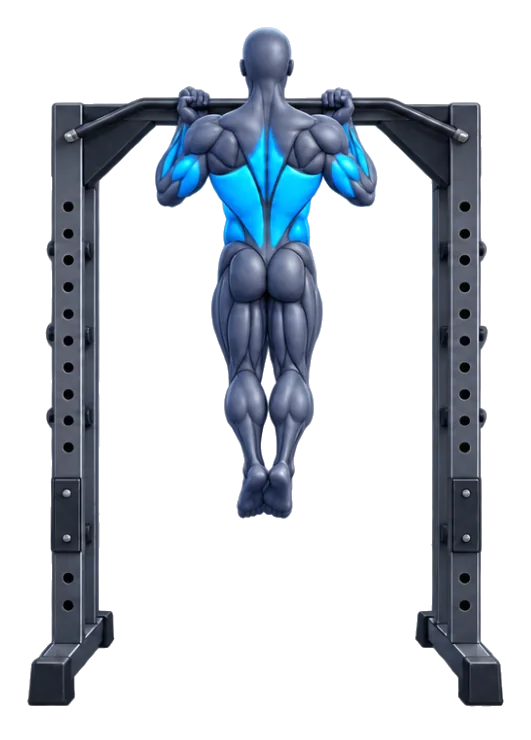
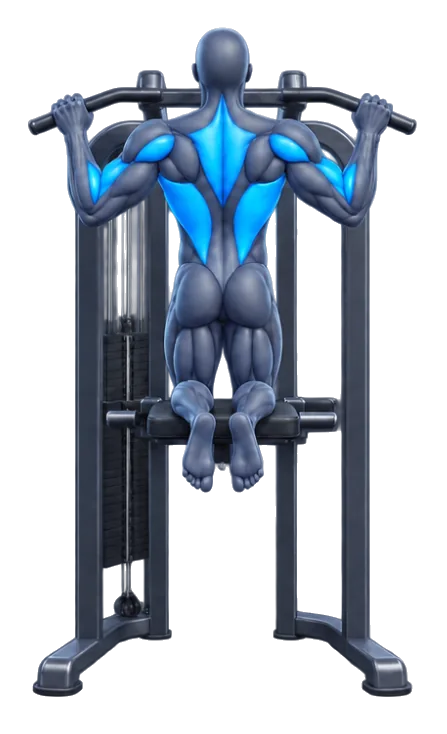
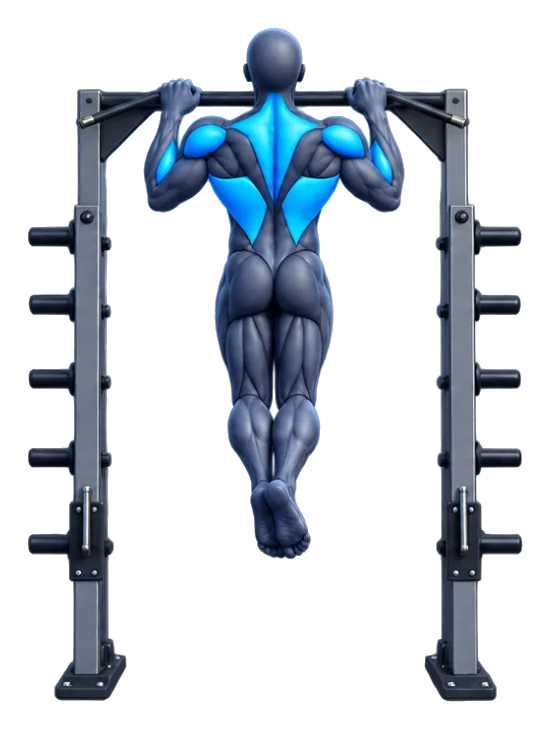
Muscles worked
Primary
- Lats
- Biceps
Secondary
- Forearms
- Abs
How to do the Chin-Up
- 1
Grab the bar with an underhand grip, hands about shoulder width apart.
- 2
Hang with your arms straight and your shoulders pulled down.
- 3
Brace your core and squeeze your glutes lightly.
- 4
Pull your chest up toward the bar until your chin clears it.
- 5
Pause at the top without shrugging.
- 6
Lower yourself slowly until your arms are fully straight.
- 7
Start the next rep from a still hang.
Form cues to remember
- Pull your elbows toward your hips
- Chest to the bar
- Full hang every rep
- Lower slowly, don't drop
Chin-Up video tutorial
Common mistakes
Half reps
Start each rep from straight arms and finish with your chin over the bar.
Kicking or swinging
Brace your core and pause at the bottom.
Shrugging toward the bar
Pull your shoulders down before you pull up.
Craning the neck
Keep your head neutral and chin tucked in a natural position.
Sets and reps
| Strength | 4–5 sets of 3–6 reps (add weight if needed), 2–3 min rest |
|---|---|
| Muscle growth | 3–4 sets of 6–12 reps, 90 sec rest |
| Endurance | 2–3 sets of as many reps as you can with good form |
Your elbows and biceps tendons take load, so build up your volume gradually. If you can't do a full chin-up yet, use a band or negatives rather than swinging.
Superlift for iPhone
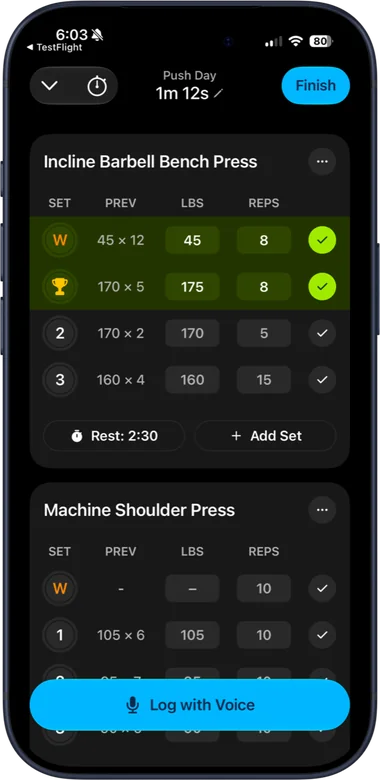
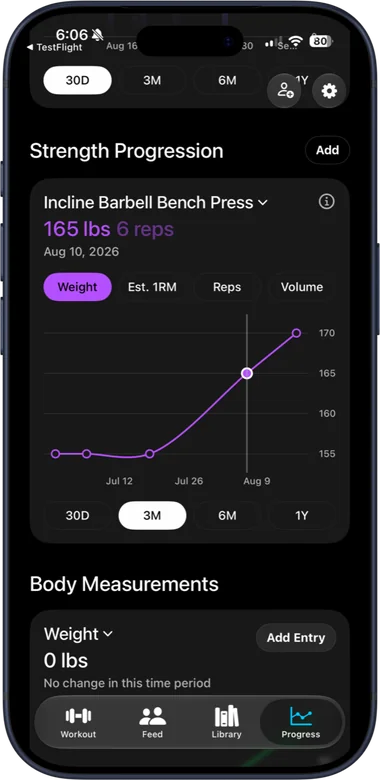
Track your Chin-Up and watch it go up
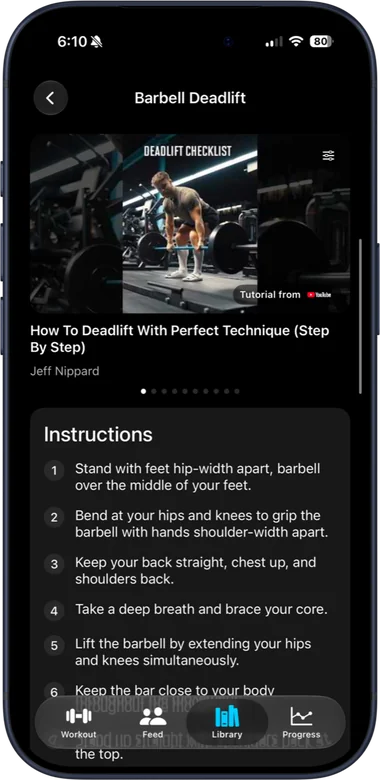
Superlift shows what you lifted last time, times your rest, and charts your strength week by week, so you always know what to beat. Every exercise in this library is built in, with the same demos and tutorials.
Chin-Up FAQ
Chin-up vs pull-up: what's the difference?
The chin-up uses an underhand grip, which adds more biceps and chest involvement and is usually easier. The pull-up uses an overhand grip and puts more emphasis on the lats.
How do I get my first chin-up?
Practice slow lowering from the top, hang for time, and use a resistance band for assisted reps. Adding row and curl work helps too.
Do chin-ups build biceps?
Yes, the underhand grip makes the biceps work harder than in most back exercises. They are a good compound option to pair with curls.