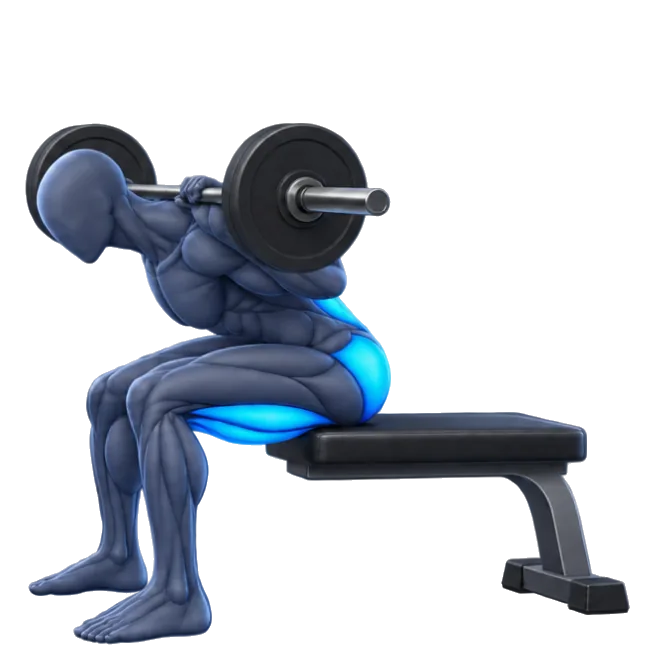
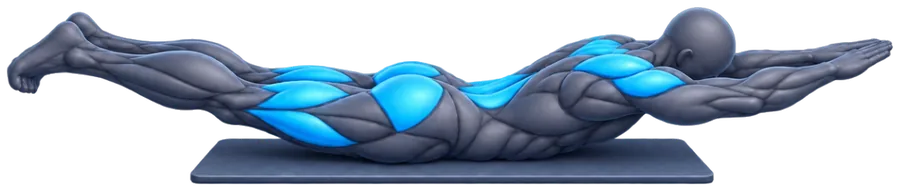
How to Do the Good Morning
The good morning has you hinge forward with a barbell on your upper back, loading your hamstrings, glutes and lower back through a long stretch. It suits intermediate lifters who want to strengthen the hinge pattern and build posterior chain strength.
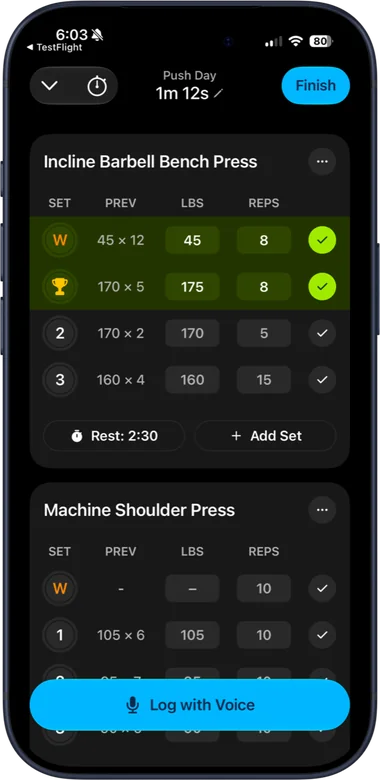
 Log every set of your Good Morning in Superlift
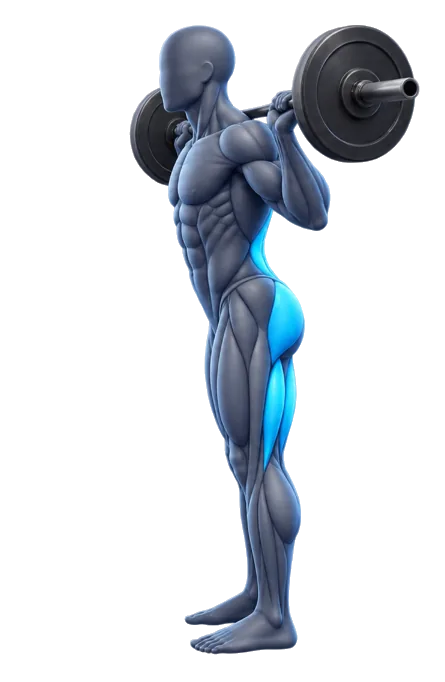
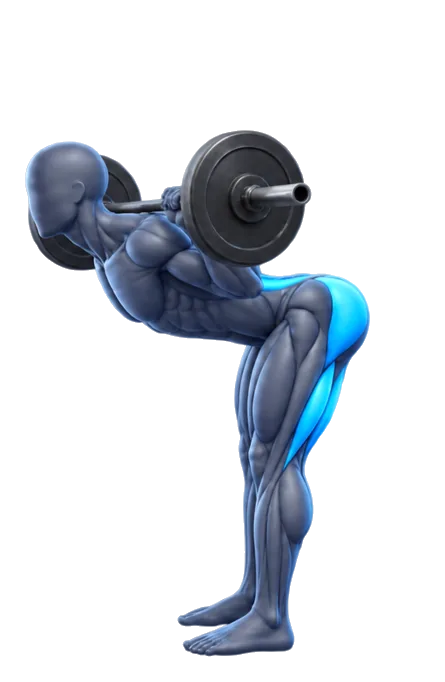
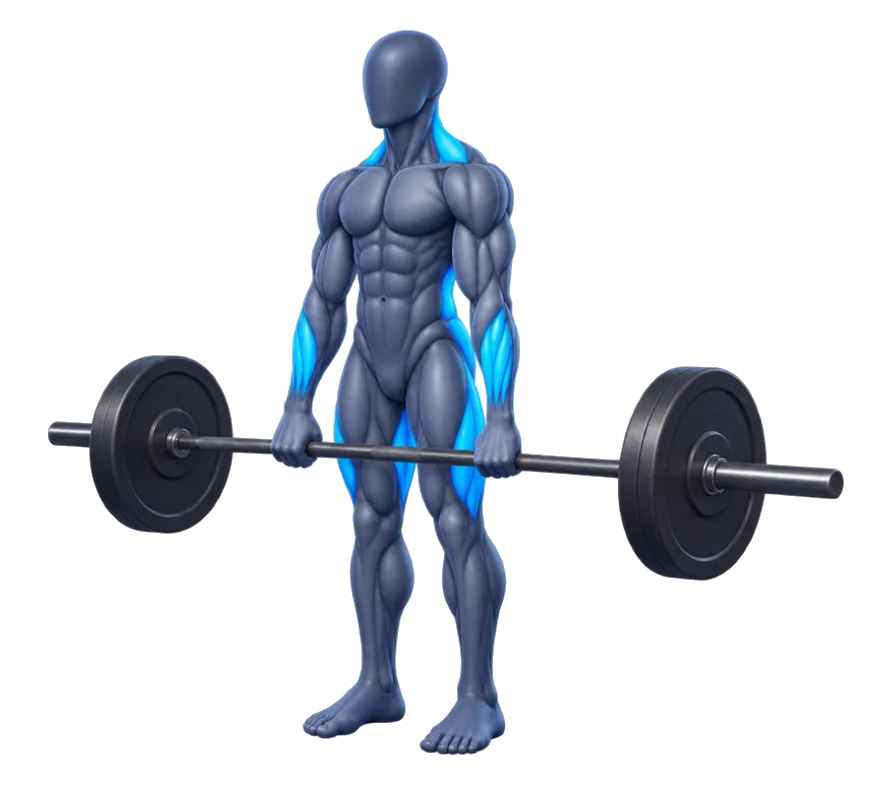
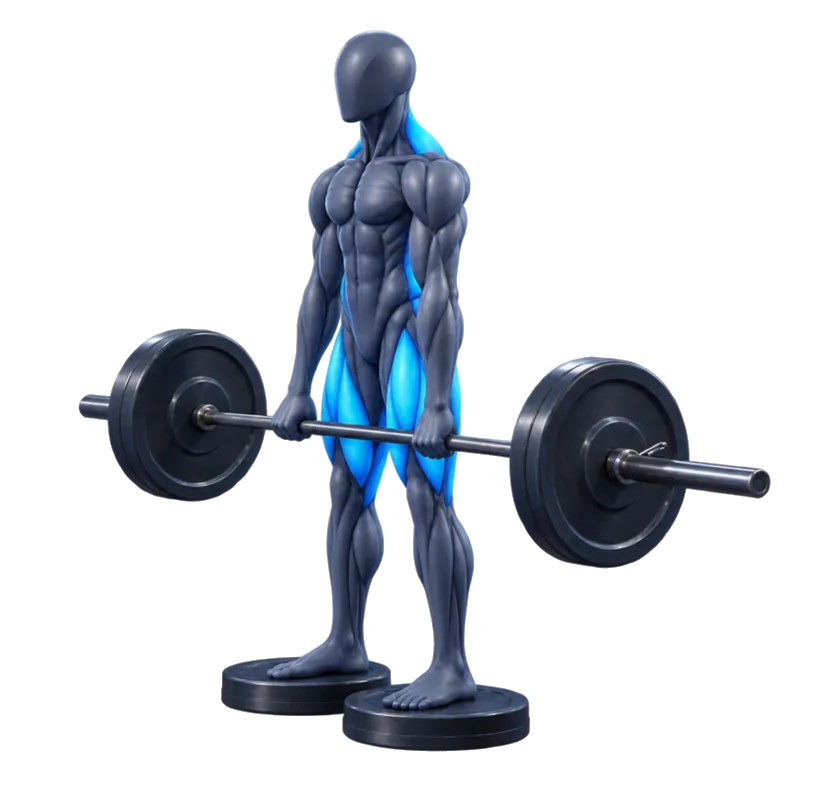
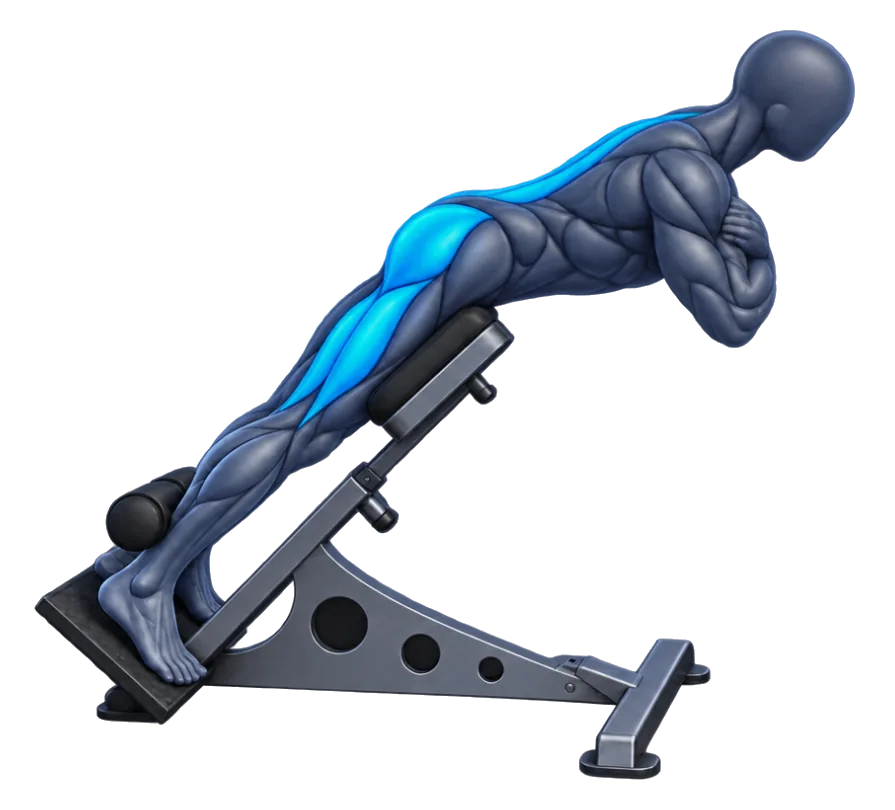
Muscles worked
Primary
- Lower Back
- Hamstrings
Secondary
- Glutes
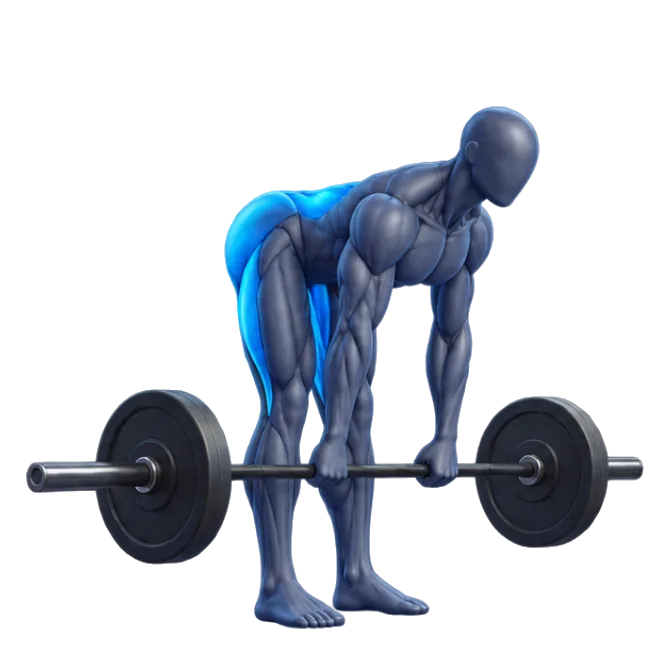
How to do the Good Morning
- 1
Set a bar on your upper back, as for a squat.
- 2
Stand with feet hip-width and a soft bend in your knees.
- 3
Brace your core and lift your chest.
- 4
Push your hips back and lower your torso until it is near parallel to the floor.
- 5
Keep your back flat and your knees soft.
- 6
Drive your hips forward to stand tall.
- 7
Squeeze your glutes at the top.
Form cues to remember
- Hips back, back flat
- Soft knees, don't squat
- Lift your chest
- Drive your hips forward
Good Morning video tutorial
Common mistakes
Rounding the back
Lower the weight and stop before your back rounds.
Squatting instead of hinging
Push your hips back and keep your shins fairly vertical.
Going too heavy
Use a light-to-moderate weight until your technique is solid.
Letting the bar slide
Squeeze your shoulder blades together to hold the bar steady.
Sets and reps
| Strength | 3–4 sets of 5–8 reps, 2 minutes rest |
|---|---|
| Muscle growth | 3 sets of 8–12 reps with a controlled lowering |
The bar sits over your spine, so rounding your back under load is risky. Start very light and stop if your back rounds.
Superlift for iPhone
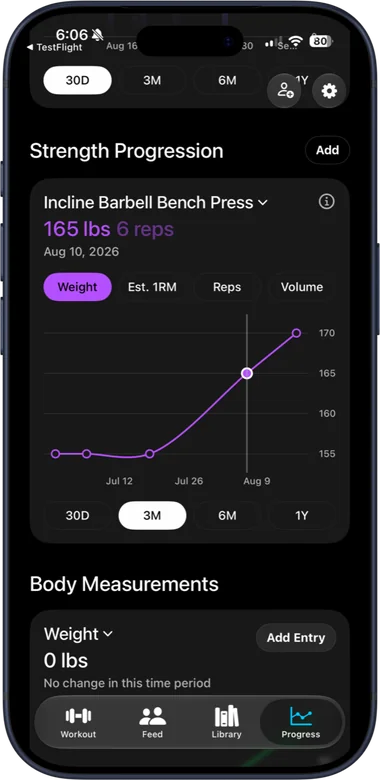
Track your Good Morning and watch it go up
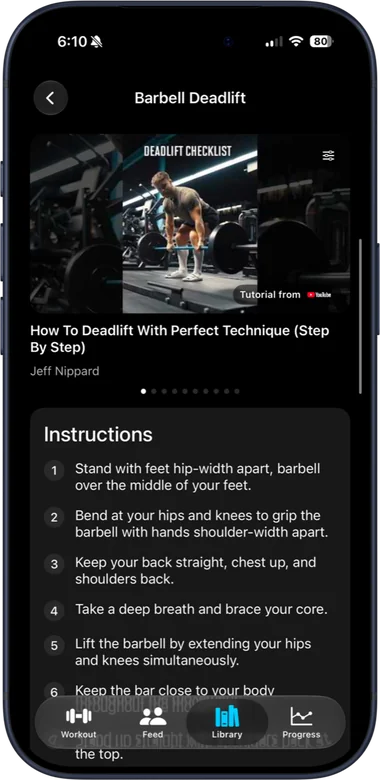
Superlift shows what you lifted last time, times your rest, and charts your strength week by week, so you always know what to beat. Every exercise in this library is built in, with the same demos and tutorials.
Good Morning FAQ
What does the good morning work?
It works your hamstrings, glutes and lower back. It is a hinge exercise, similar to a Romanian deadlift but with the bar on your back.
Are good mornings bad for your back?
They are not inherently bad, but they load the lower back directly. Light weight and a flat back keep them reasonable for most lifters.
How heavy should good mornings be?
Much lighter than your squat. Use a weight that lets you move with control for 8–12 reps.