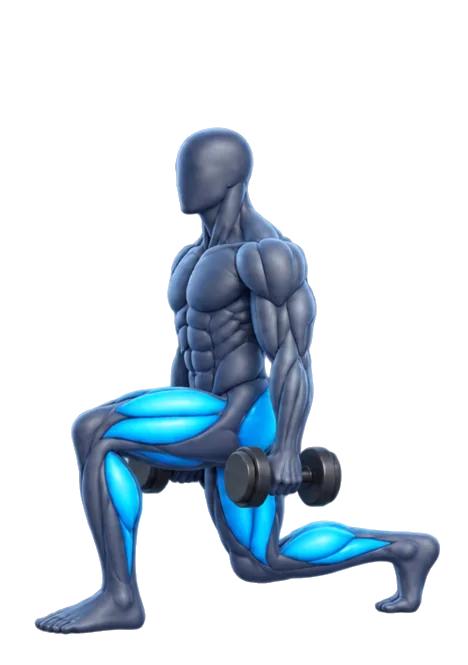
How to Do the Jump Squat
The jump squat is a bodyweight squat that ends in a maximal jump, training explosive power in your quads, glutes and calves. It helps with sprinting and jumping, and it raises your heart rate quickly. It suits intermediate lifters with solid squat form who want a no-equipment power move.
 Log every set of your Jump Squat in Superlift

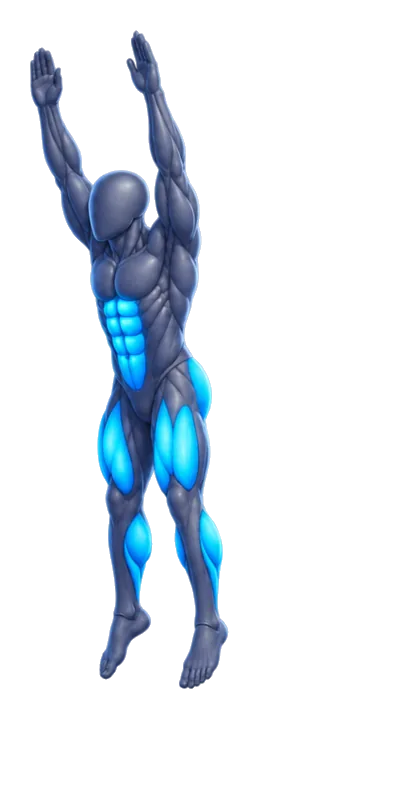
Muscles worked
Primary
- Quads
- Glutes
Secondary
- Calves
- Abs
How to do the Jump Squat
- 1
Stand with your feet shoulder-width apart and your arms at your sides.
- 2
Squat down until your thighs are roughly parallel to the floor.
- 3
Explode up by driving through the floor and swinging your arms.
- 4
Leave the ground with your legs fully extended.
- 5
Land softly on the balls of your feet and sink back into the squat.
- 6
Reset your position and repeat.
Form cues to remember
- Explode off the floor
- Land soft, knees bent
- Swing your arms
- Chest up in the squat
Common mistakes
Landing stiff-legged
Bend your knees and sink into the next squat.
Shallow squat depth
Drop to at least parallel before you jump.
Knees caving in
Push your knees out as you land.
Doing too many reps tired
Stop when height drops and your landing gets loud.
Sets and reps
| Strength | 3–5 sets of 3–6 reps, 90 sec rest |
|---|---|
| Conditioning | 3–4 sets of 10–15 reps, 60 sec rest |
Land softly and stop when your form breaks down, since fatigued landings stress the knees. Skip it if you have knee or ankle pain with jumping.
Superlift for iPhone
Track your Jump Squat and watch it go up
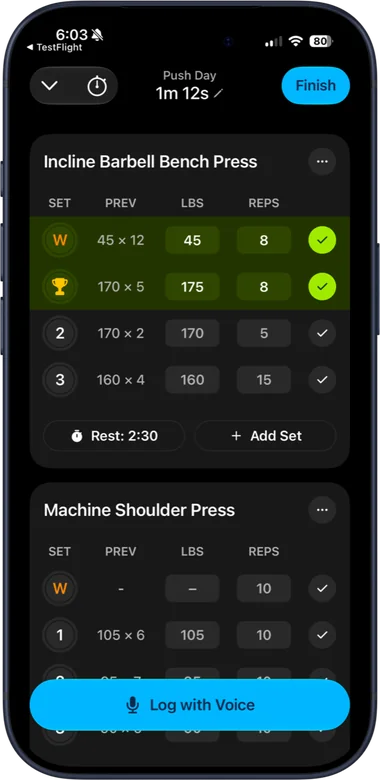
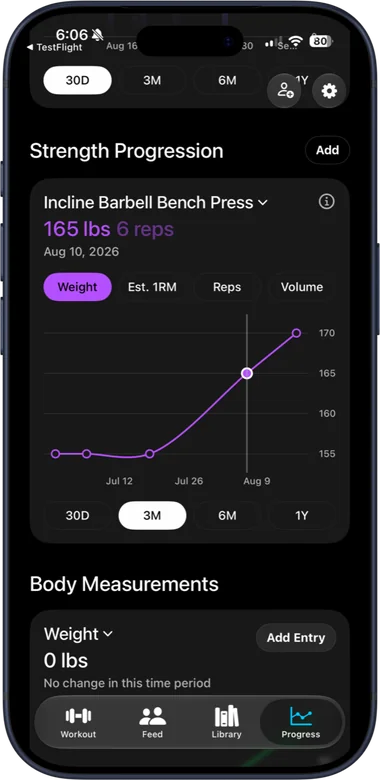
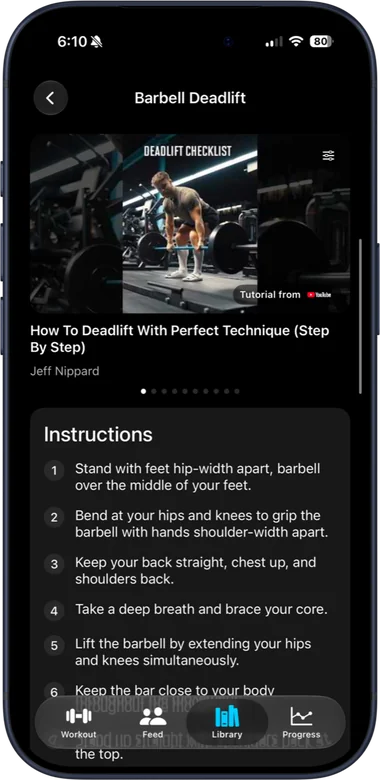
Superlift shows what you lifted last time, times your rest, and charts your strength week by week, so you always know what to beat. Every exercise in this library is built in, with the same demos and tutorials.
Jump Squat FAQ
Are jump squats good for building power?
Yes, they train fast, explosive force in your legs. Fewer, crisp reps with full rest are better for power than high-rep burnout sets.
Jump squat vs box jump: what's the difference?
A jump squat lands back on the floor in a squat, while a box jump lands on a raised surface. Box jumps are easier on landing impact, so they suit people working on technique.
How many jump squats should I do?
Try 3–5 sets of 3–6 power reps, or 10–15 for conditioning. Stop when your height drops or landings get loud.