How to Do the Push Press
The push press uses a small leg dip and drive to help launch the bar overhead, so you can press more than a strict overhead press. It builds shoulder and triceps strength, plus the leg-to-arm power that carries over to athletics. It suits intermediate lifters who want to overload the top of the press.
 Log every set of your Push Press in Superlift
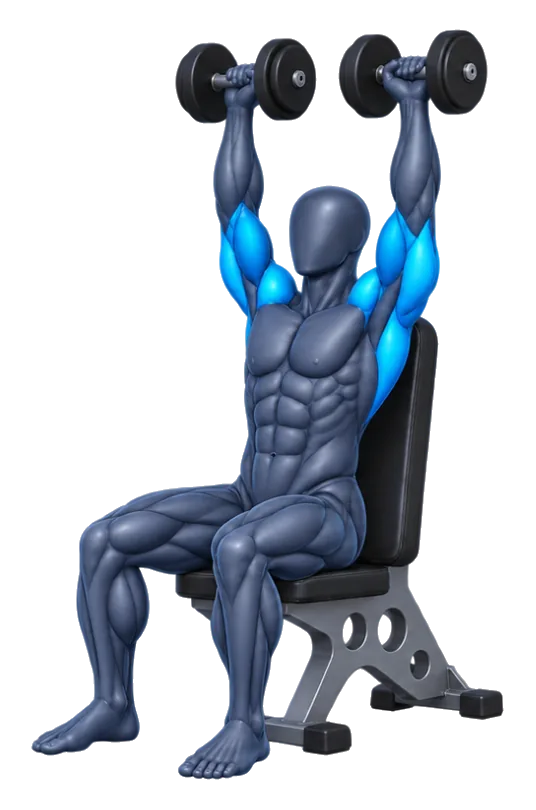
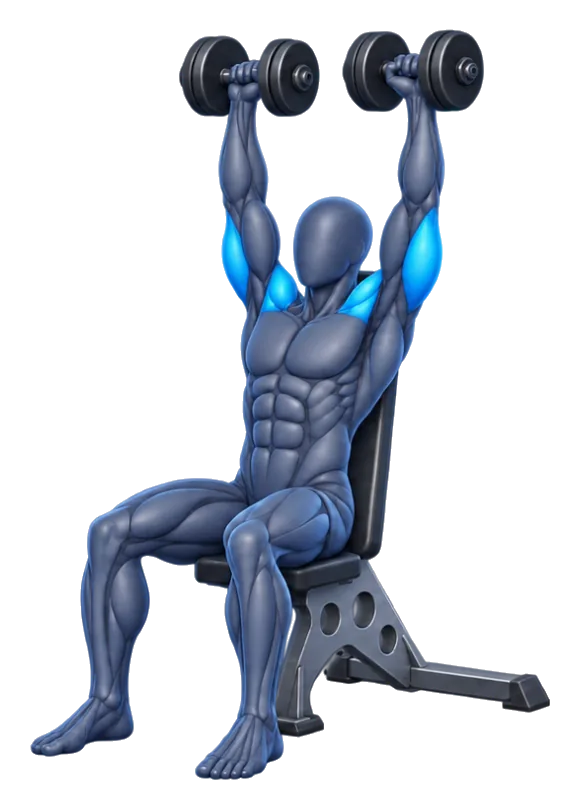
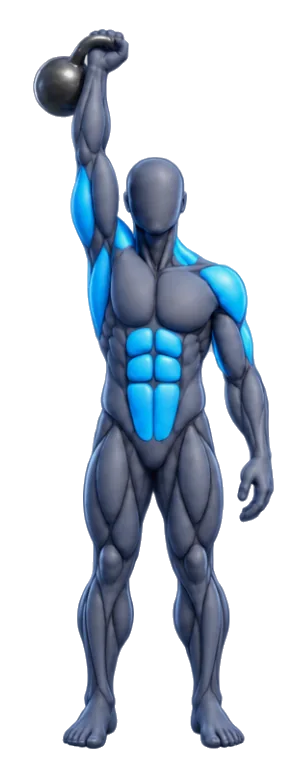
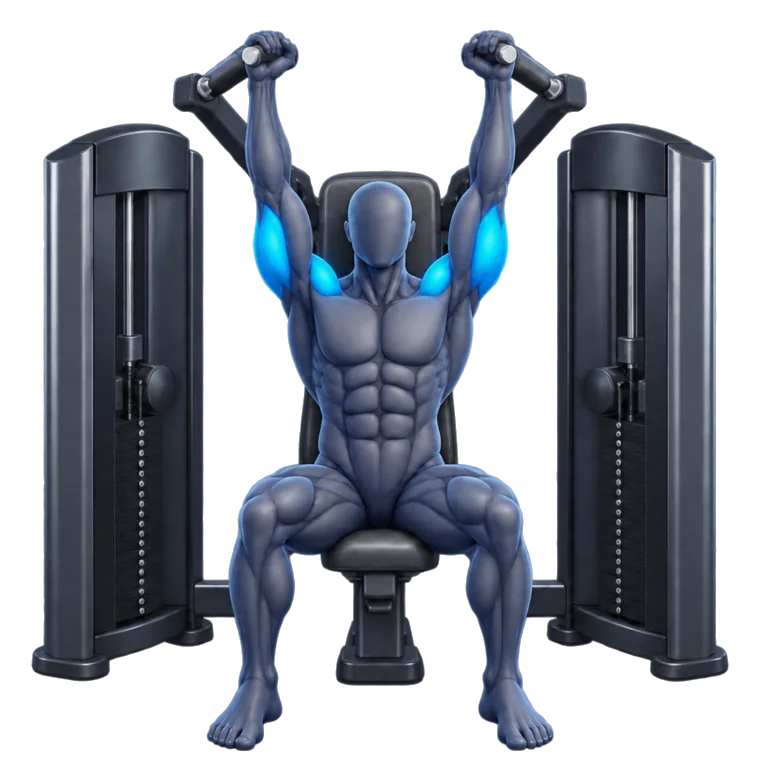
Muscles worked
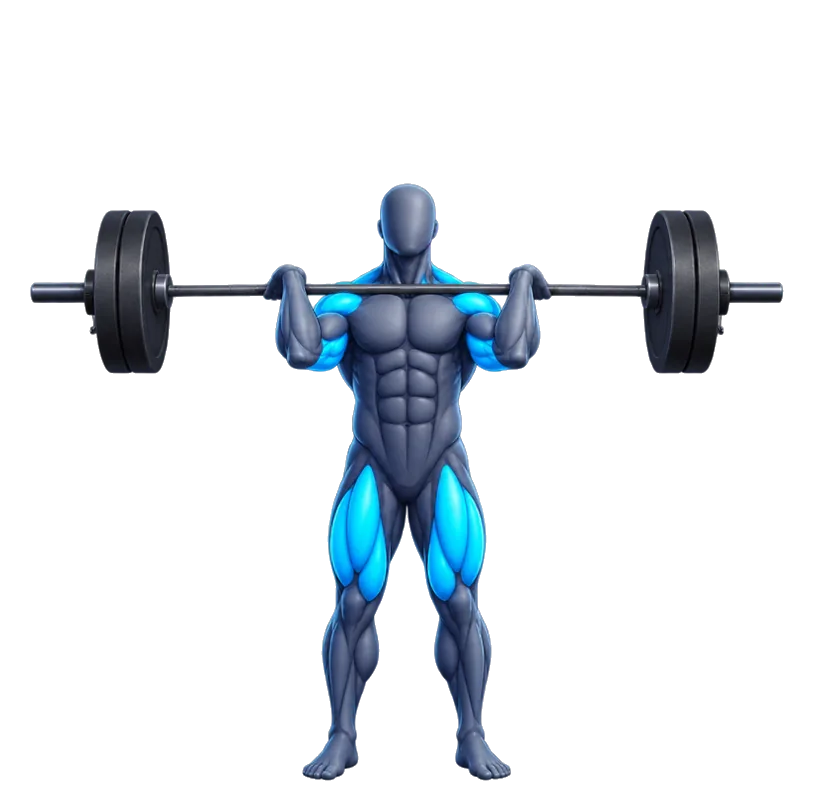
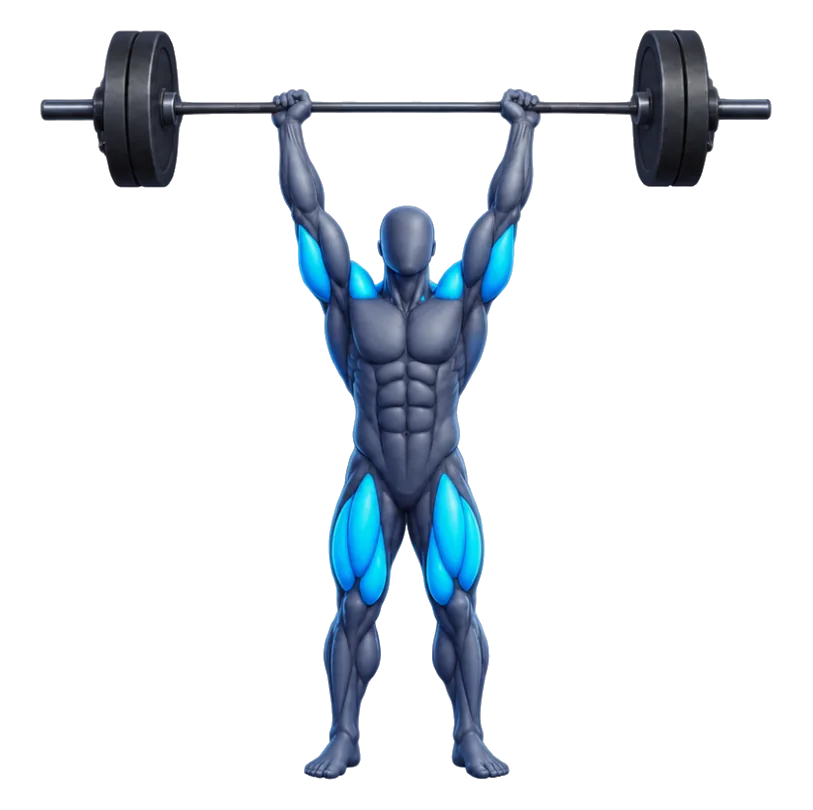
Primary
- Shoulders
Secondary
- Triceps
- Quads
How to do the Push Press
- 1
Hold the bar at your shoulders with your hands just outside them and your elbows slightly forward.
- 2
Stand with your feet hip-width apart and brace your core.
- 3
Dip a few inches by bending your knees, keeping your torso upright.
- 4
Drive up explosively through your legs.
- 5
Press the bar overhead as your legs finish extending.
- 6
Lock out with the bar over your mid-foot, then lower to your shoulders.
Form cues to remember
- Dip straight down, not back
- Drive hard through your legs
- Finish pressing overhead
- Bar over your mid-foot
Push Press video tutorial
Common mistakes
Dipping too deep
Keep the dip shallow, only a few inches.
Leaning back
Squeeze your glutes and keep your ribs down.
Pressing before the legs finish
Let your legs drive the bar first, then press.
Pausing in the dip
Dip and drive in one smooth motion.
Sets and reps
| Strength | 4–5 sets of 3–5 reps, 2–3 min rest |
|---|---|
| Muscle growth | 3–4 sets of 6–8 reps, 90 sec rest |
Keep your ribs down and glutes tight so you don't overarch your lower back. Use a weight you can control, and avoid pressing if you have shoulder pain overhead.
Superlift for iPhone
Track your Push Press and watch it go up
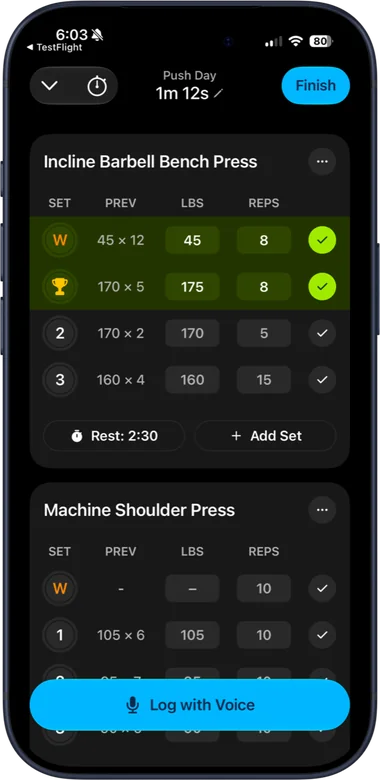
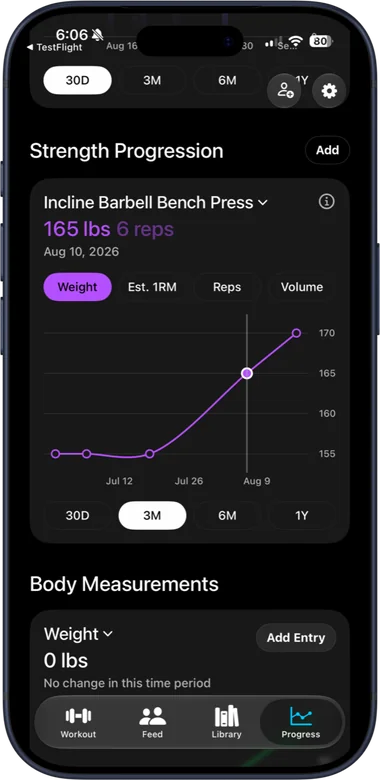
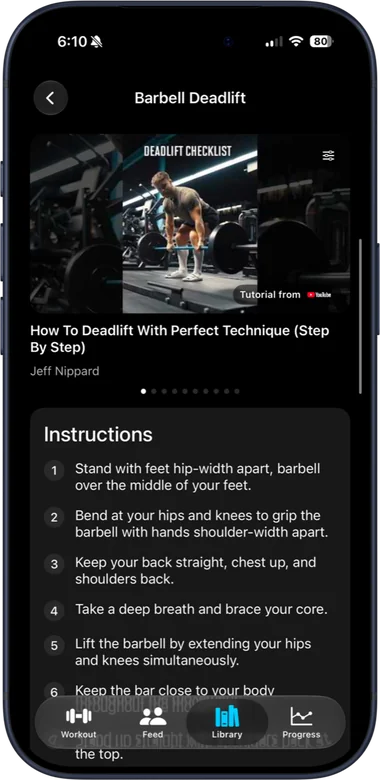
Superlift shows what you lifted last time, times your rest, and charts your strength week by week, so you always know what to beat. Every exercise in this library is built in, with the same demos and tutorials.
Push Press FAQ
Push press vs overhead press: which should I do?
The push press lets you use more weight because your legs help, while the strict press isolates the shoulders more. Both are useful.
How much more can I push press than overhead press?
You can usually lift more, often noticeably, since your legs help drive the bar. The exact amount varies a lot between lifters.
What muscles does the push press work?
It works the shoulders and triceps, plus your legs, glutes and core for the drive and stability.