How to Do the Sled Drag
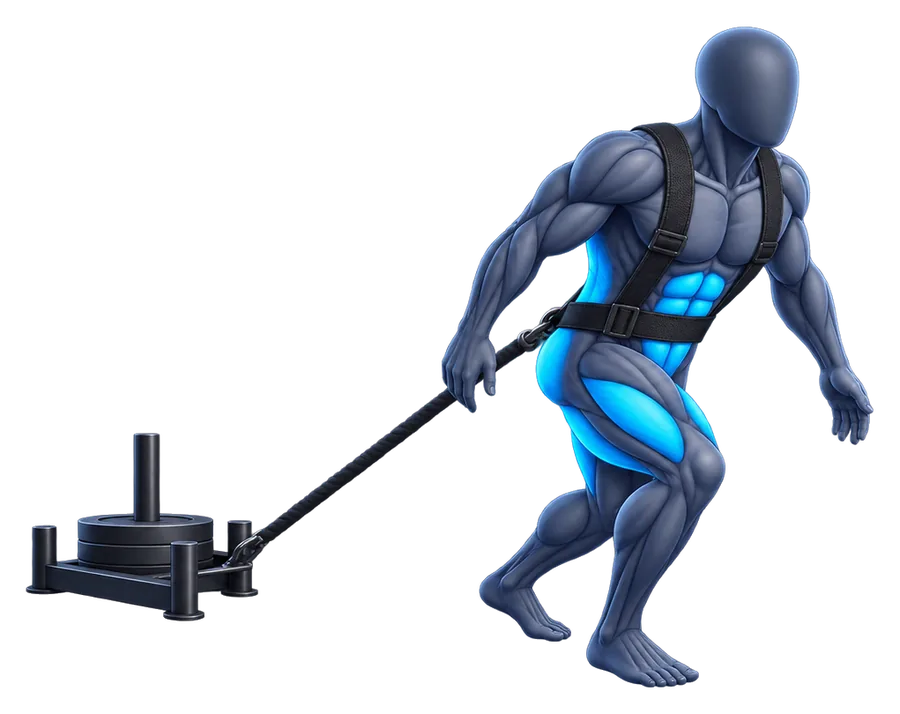
The sled drag has you walk while pulling a loaded sled behind you with a harness or straps, building your legs and conditioning with little eccentric strain. It suits anyone wanting hard lower-body work that is easy on joints.
 Log every set of your Sled Drag in Superlift
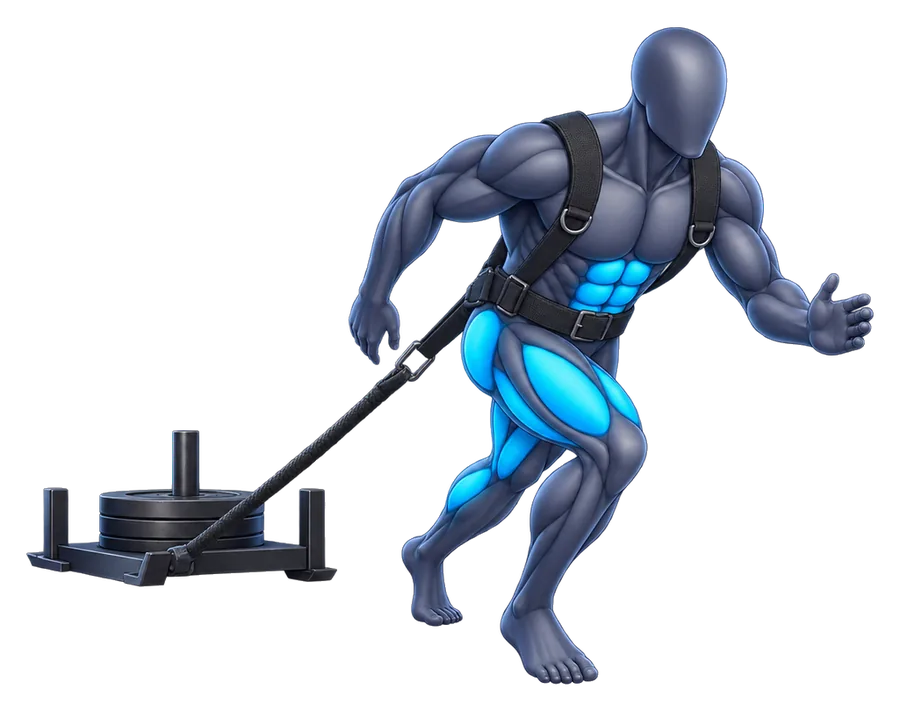
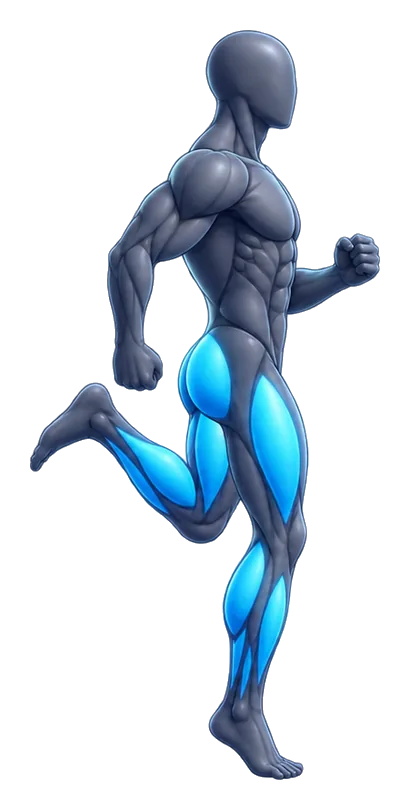
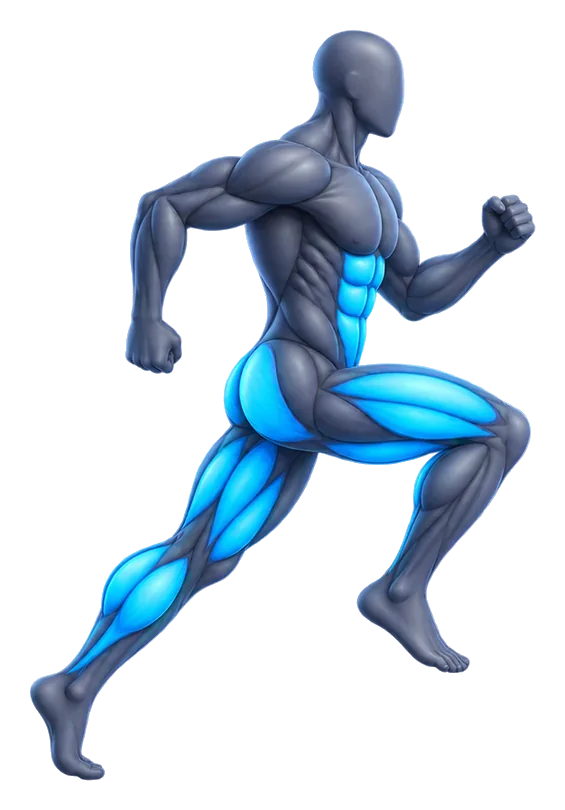
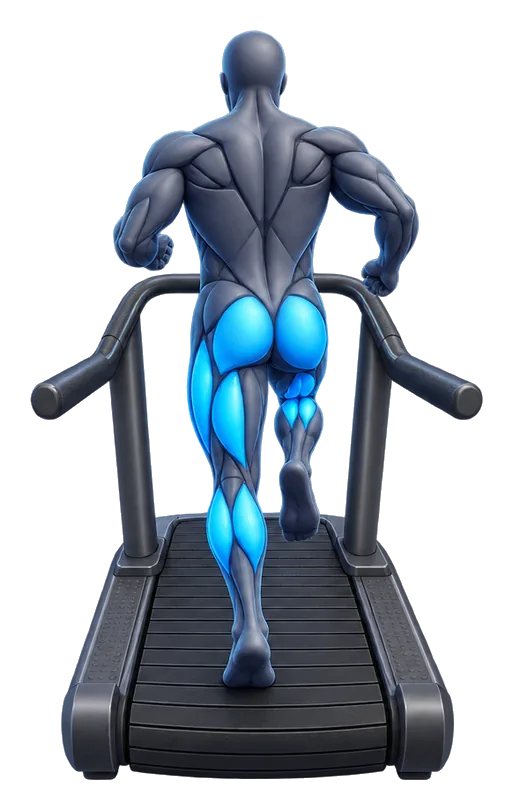
Muscles worked
Primary
- Hamstrings
- Glutes
Secondary
- Abs
How to do the Sled Drag
- 1
Attach a harness or straps to a loaded sled and stand facing away from it.
- 2
Lean forward slightly with your chest up and arms tight.
- 3
Push through the balls of your feet and take a powerful step forward.
- 4
Keep your steps short and driving rather than long reaches.
- 5
Walk for your target distance without letting the straps go slack.
- 6
Keep your torso steady and your core braced.
- 7
Rest and repeat.
Form cues to remember
- Drive through the balls of your feet
- Chest up, torso braced
- Short, powerful steps
- Keep tension on the straps
Common mistakes
Leaning back
Lean slightly forward so you push the floor behind you.
Taking long, reaching steps
Use shorter, driving steps.
Overloading the sled
Choose a weight you can pull with steady, smooth steps.
Rounding your back
Brace your core and keep your chest up.
Sets and reps
| Conditioning | 6–10 trips of 20–40 meters (22–44 yards), 60–90 seconds rest |
|---|---|
| Muscle growth | 4–6 heavy pulls of 15–25 meters, 90 seconds rest |
| Endurance | 3–4 rounds of 60 seconds of walking with a moderate load |
Slippery floors and heavy loads can cause falls or back strain. Start light and keep your torso braced.
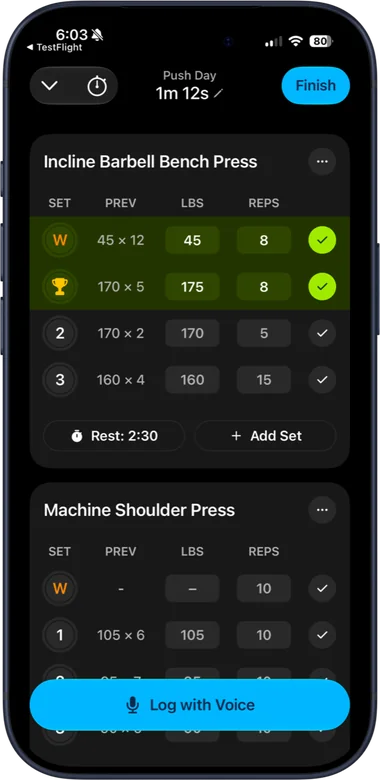
Superlift for iPhone
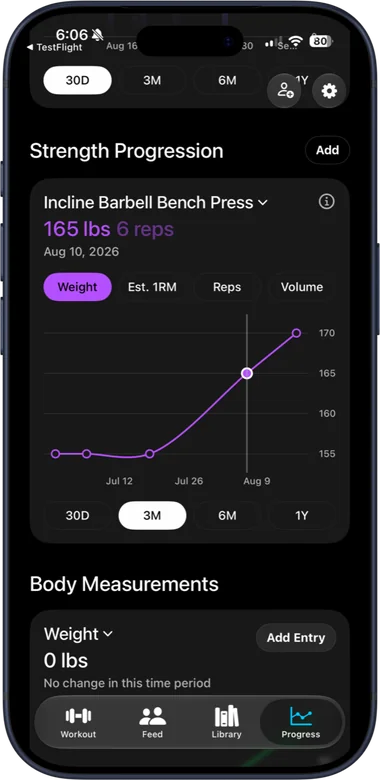
Track your Sled Drag and watch it go up
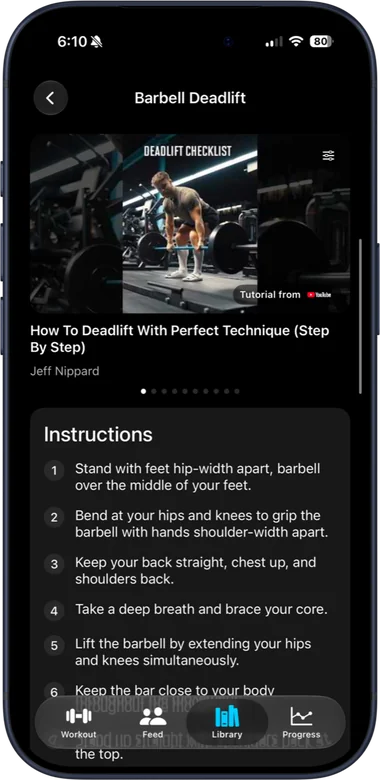
Superlift shows what you lifted last time, times your rest, and charts your strength week by week, so you always know what to beat. Every exercise in this library is built in, with the same demos and tutorials.
Sled Drag FAQ
What does the sled drag work?
It works your quads, glutes and hamstrings, with your calves and core stabilizing. It is also good for conditioning without heavy joint impact.
Is the sled drag good for recovery days?
Light drags can add easy leg work, since there is little lowering stress. Keep the weight light and the pace steady.
Sled drag vs sled push?
The drag has you pull from behind; the push has you drive forward from the front. Both build leg drive and conditioning.