How to Do the Sled Pull
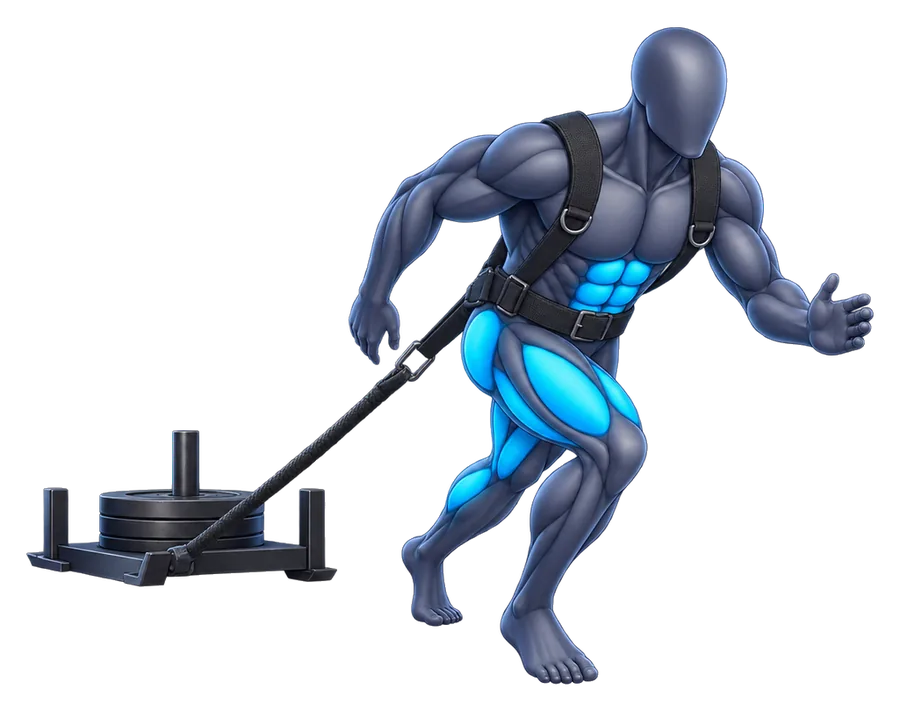
The sled pull drags a weighted sled with a harness or straps, loading your hamstrings, glutes and back while you walk. Pulling backward or forward changes which muscles take over, and the low impact makes it easy on your joints. It suits lifters who want conditioning and posterior-chain work.
 Log every set of your Sled Pull in Superlift
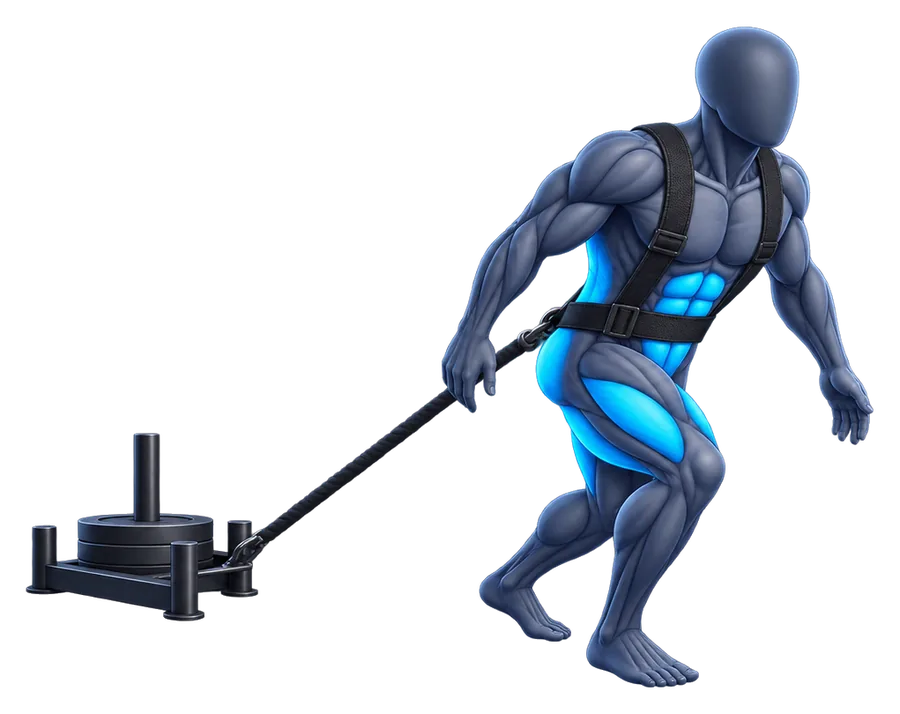
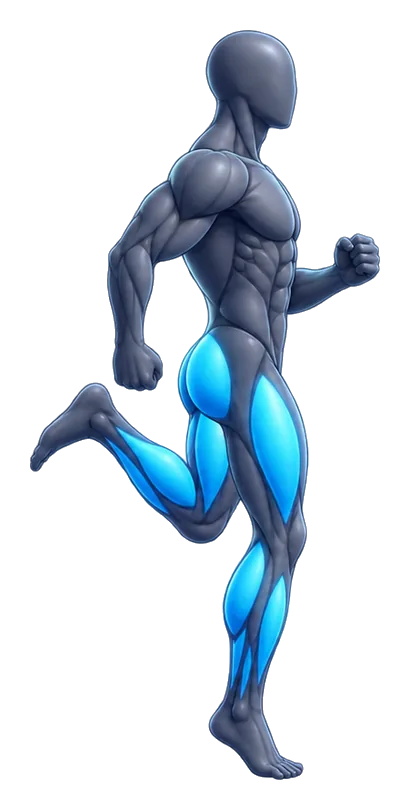
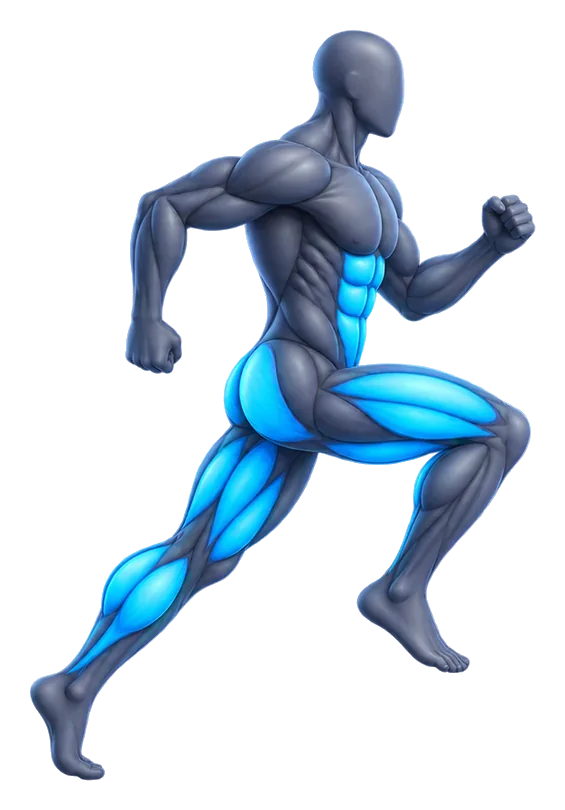
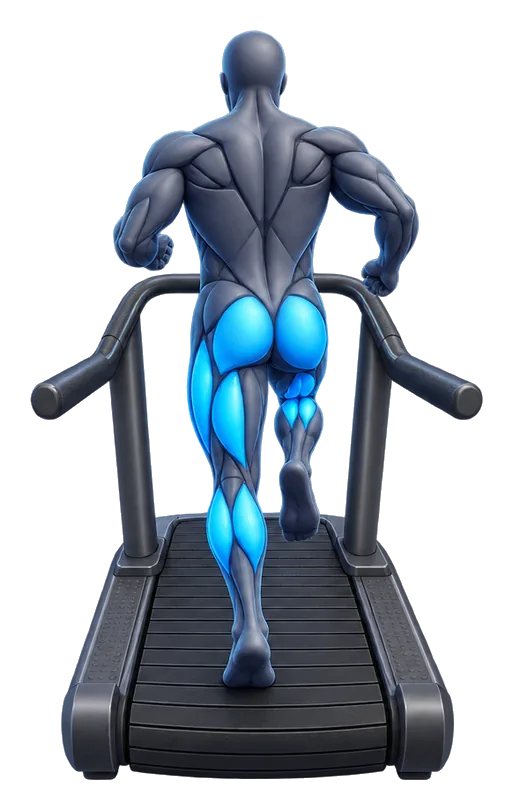
Muscles worked
Primary
- Hamstrings
- Glutes
Secondary
- Upper Back
- Abs
How to do the Sled Pull
- 1
Attach the harness or straps to the sled and load it.
- 2
Stand tall in the harness with your core braced.
- 3
Walk forward or backward, pulling the sled steadily.
- 4
Take strong steps, driving through your heels.
- 5
Keep your torso upright and your breathing steady.
- 6
Walk to the end of the lane, rest, then repeat.
Form cues to remember
- Stand tall in the harness
- Drive through your heels
- Smooth, steady steps
- Keep your core braced
Common mistakes
Leaning too far
Keep your torso upright and walk tall.
Taking short, choppy steps
Use full steps with strong hip drive.
Going too heavy
Pick a load you can pull steadily without rounding your back.
Holding your breath
Breathe steadily through each run.
Sets and reps
| Conditioning | 6–8 pulls of 20–40 yards (18–36 m), 60–90 sec rest |
|---|---|
| Muscle growth | 3–4 sets of 20–30 yards (18–27 m) with a heavier load, 90 sec rest |
Start light and keep a flat back, especially when walking backward. Watch your footing and clear the lane.
Superlift for iPhone
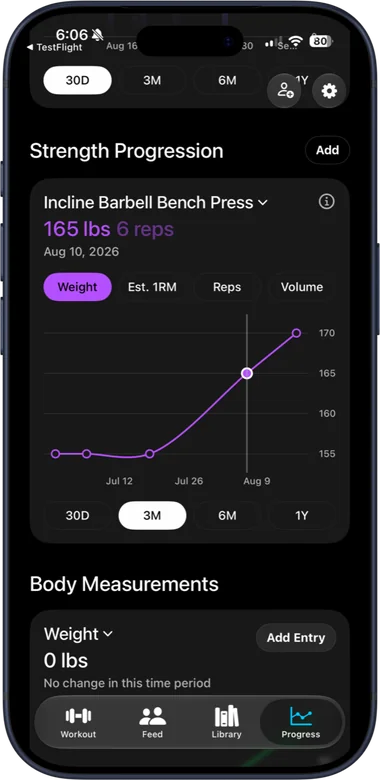
Track your Sled Pull and watch it go up
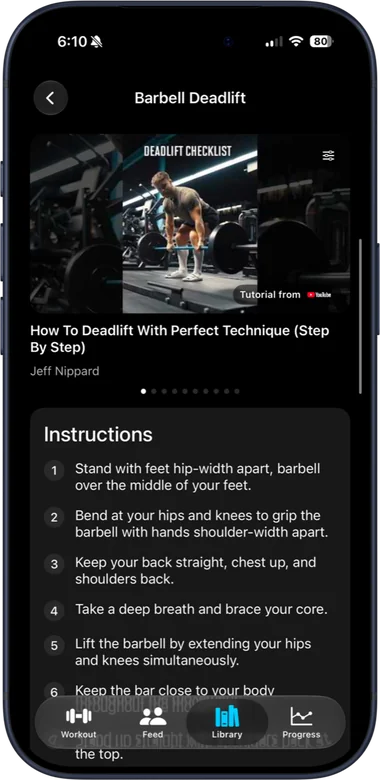
Superlift shows what you lifted last time, times your rest, and charts your strength week by week, so you always know what to beat. Every exercise in this library is built in, with the same demos and tutorials.
Sled Pull FAQ
What muscles does the sled pull work?
It works your hamstrings, glutes and back, plus your quads and core. Walking backward adds more quad work.
Sled pull vs sled push: what's the difference?
A push leans on your quads and glutes, while a pull with a harness emphasizes your hamstrings and posterior chain. Many people use both.
How heavy should I go on the sled pull?
Choose a weight you can pull for 20–40 yards at a steady pace. If your form breaks or your back rounds, drop the load.