How to Do the Tuck Jump
The tuck jump is a plyometric jump where you leap up and pull your knees toward your chest in midair. It builds explosive power, core control and cardio. It suits intermediate athletes with strong landing mechanics.
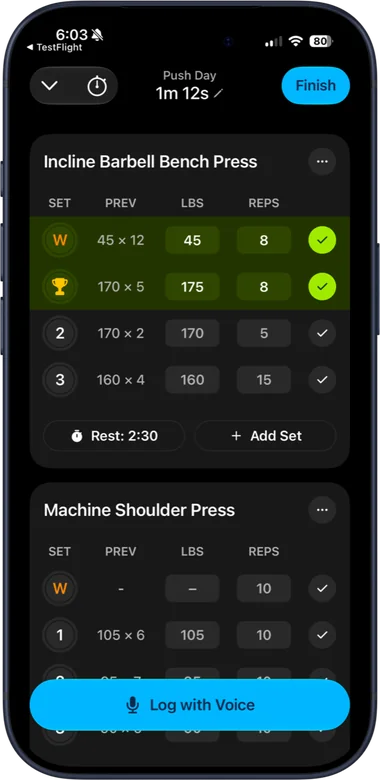
 Log every set of your Tuck Jump in Superlift


Muscles worked
Primary
- Quads
- Abs
Secondary
- Glutes
- Calves
How to do the Tuck Jump
- 1
Stand with your feet shoulder-width apart and your arms at your sides.
- 2
Dip into a quarter squat and swing your arms back.
- 3
Jump explosively and drive your knees toward your chest.
- 4
Tuck as high as you can while keeping your chest up.
- 5
Extend your legs before landing.
- 6
Land softly with bent knees and absorb the impact.
- 7
Reset and repeat for your reps.
Form cues to remember
- Jump tall, tuck high
- Land softly, bend knees
- Chest stays up
- Reset between reps
Tuck Jump video tutorial
Common mistakes
Landing with straight legs
Bend your knees and absorb the landing through your hips.
Rounding your back
Keep your chest tall and tuck with your knees, not your torso.
Chaining reps with sloppy form
Pause between reps for clean landings.
Not jumping high enough
Swing your arms and drive your knees up fast.
Sets and reps
| Conditioning | 4–6 rounds of 20–30 seconds, with 30–40 seconds rest |
|---|---|
| Strength | 3–4 sets of 5–8 reps, with 60–90 seconds rest |
The high-impact landing loads your knees and ankles. Skip it if you have knee pain, and keep the sets short.
Superlift for iPhone
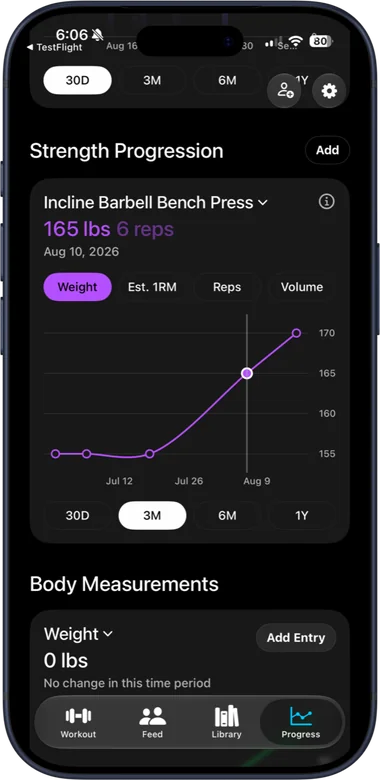
Track your Tuck Jump and watch it go up
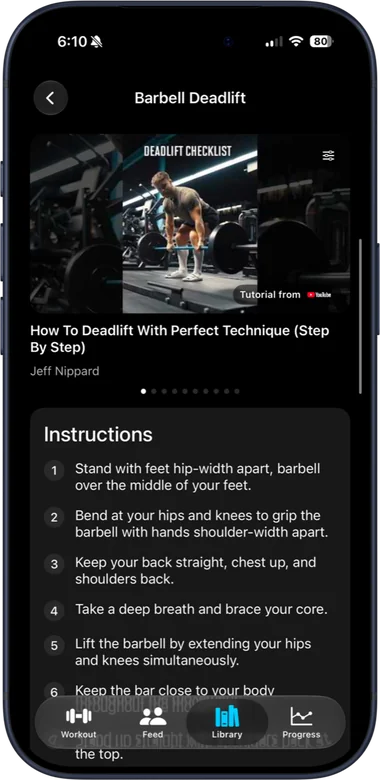
Superlift shows what you lifted last time, times your rest, and charts your strength week by week, so you always know what to beat. Every exercise in this library is built in, with the same demos and tutorials.
Tuck Jump FAQ
What muscles do tuck jumps work?
Your quads, glutes and calves provide the power, while your abs and hip flexors pull your knees toward your chest.
Are tuck jumps safe for your knees?
They are high impact, so land softly and keep volume low. If you have knee pain, try squat jumps or low box jumps instead.
How many tuck jumps should I do?
Short sets of 5–10 reps are usually enough. Stop when your landings get heavy or sloppy.