How to Do the Cable Chest Press
The cable chest press lets you press forward against steady tension from two pulleys while standing in a staggered stance. It suits beginners and anyone who wants to train their chest with a bit of core demand and no bench.
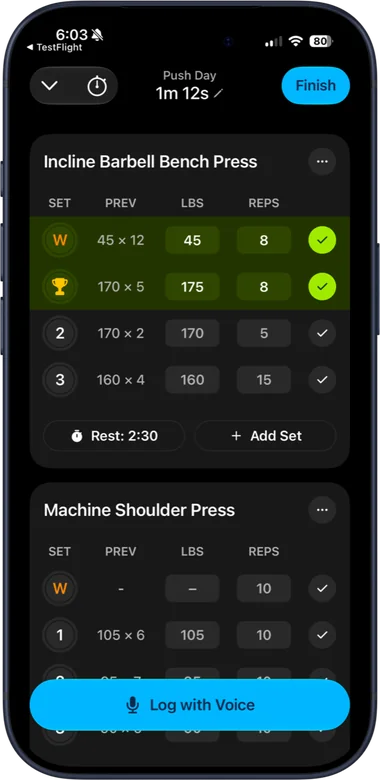
 Log every set of your Cable Chest Press in Superlift
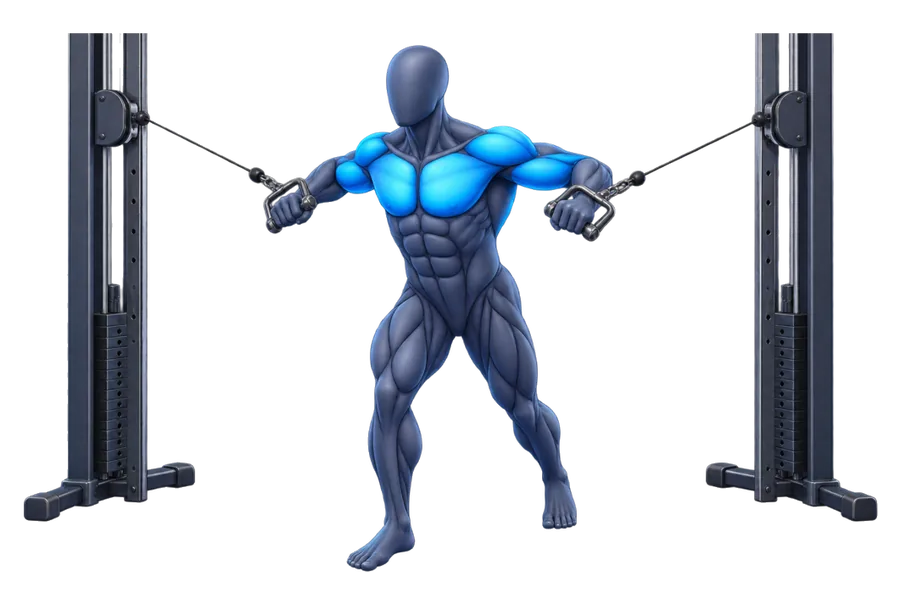
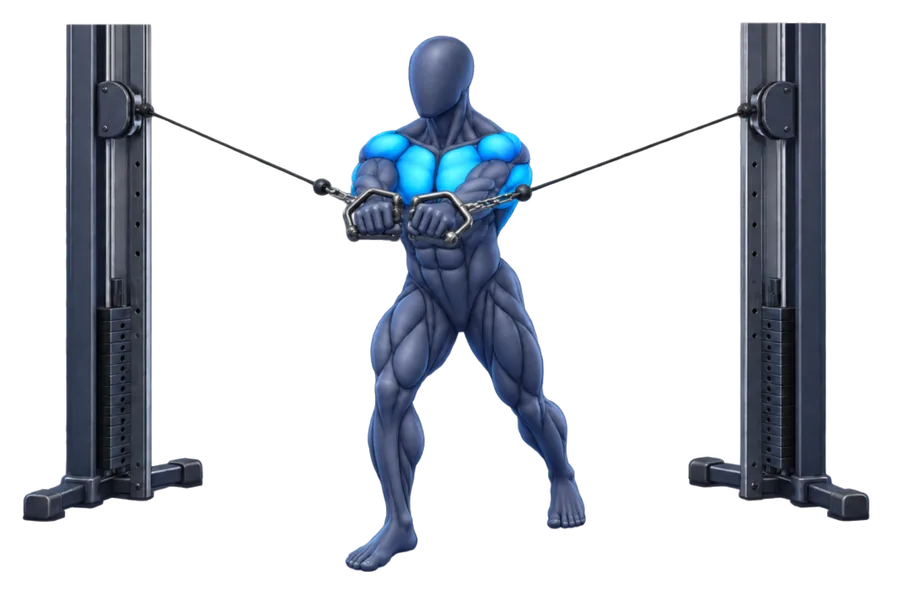
Muscles worked
Primary
- Chest
Secondary
- Triceps
- Shoulders
How to do the Cable Chest Press
- 1
Set both pulleys to chest height and stand between them with a handle in each hand.
- 2
Step forward into a staggered stance, with one foot ahead for balance.
- 3
Start with your elbows bent and your hands at chest level.
- 4
Brace your core and press the handles straight forward until your arms are straight.
- 5
Squeeze your chest for a second.
- 6
Return slowly until your hands are back at chest level.
- 7
Keep your torso from rocking.
Form cues to remember
- Stay braced, don't lean
- Press straight in front of your chest
- Squeeze at full extension
- Control the return
Common mistakes
Leaning forward into the weight
Use a lighter load and keep your torso upright.
Letting the elbows flare
Keep them about 45 degrees from your sides.
Using momentum
Slow the return and pause at the front.
Standing with a narrow stance
Split your feet and brace for a stable base.
Sets and reps
| Muscle growth | 3–4 sets of 10–15 reps, 60–90 sec rest |
|---|---|
| Endurance | 2–3 sets of 15–25 reps, 45–60 sec rest |
| Strength | 3 sets of 6–10 reps, 90–120 sec rest |
Make sure the stance is stable and don't overstretch with the arms far behind you at the start. Reduce the weight if you feel strain at the front of the shoulder.
Superlift for iPhone
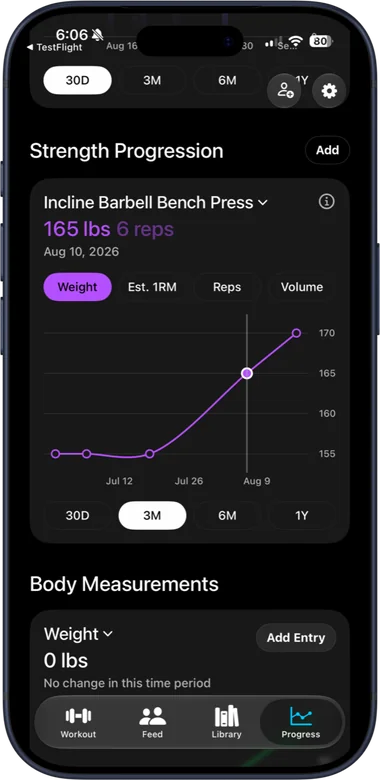
Track your Cable Chest Press and watch it go up
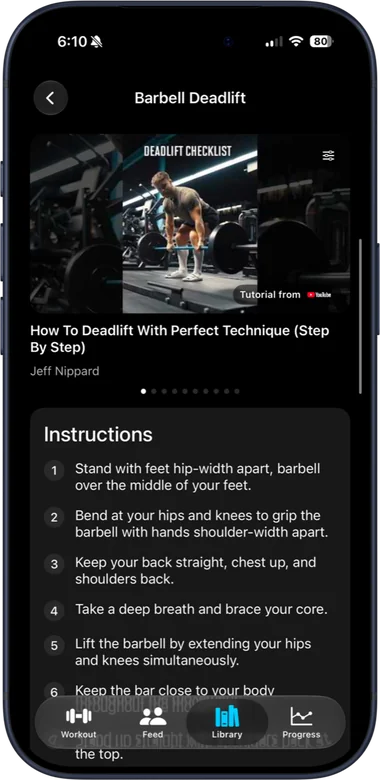
Superlift shows what you lifted last time, times your rest, and charts your strength week by week, so you always know what to beat. Every exercise in this library is built in, with the same demos and tutorials.
Cable Chest Press FAQ
Cable chest press vs bench press?
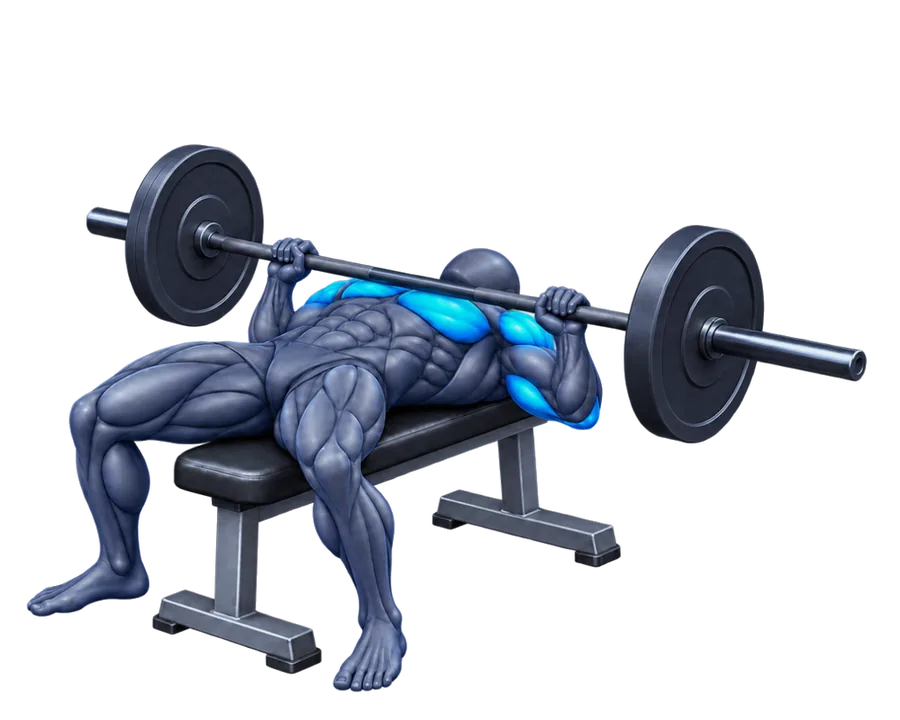
The cable press gives constant tension and a freer arm path, while the bench press is easier to load heavy. They complement each other.
What angle should I set the cables for?
Chest height trains the middle of the chest. Lower pulleys with an upward press shifts emphasis to the upper chest.
Why use a staggered stance on the cable chest press?
It gives you stability against the pull of the cables. Switch the leading foot between sets to even things out.