How to Do the Cable Woodchopper
The cable woodchopper uses a cable to chop diagonally across your body, training your obliques and abs to rotate and transfer force. It is a useful add-on for lifters and athletes who need rotational power for sports like golf, baseball and tennis. Beginners can learn it with light weight.
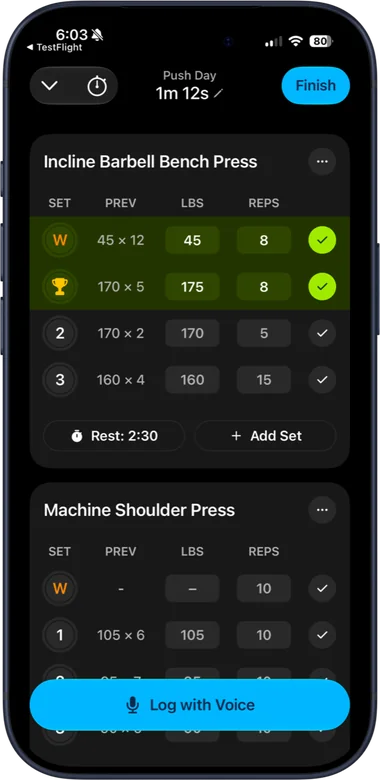
 Log every set of your Cable Woodchopper in Superlift
Muscles worked
Primary
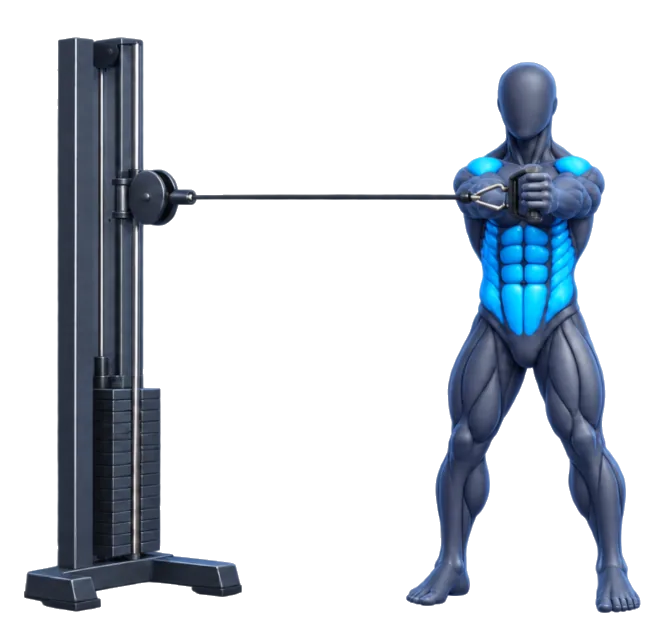
- Obliques
- Abs
Secondary
- Shoulders
How to do the Cable Woodchopper
- 1
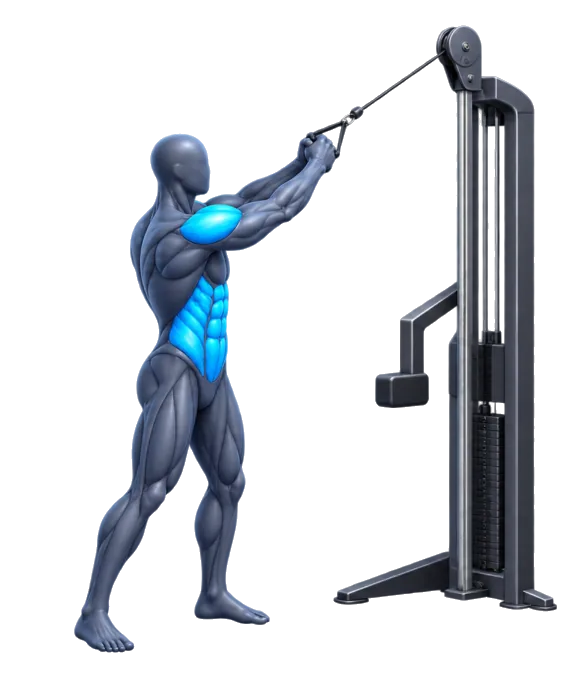
Set a cable to a high position and attach a handle or rope.
- 2
Stand sideways to the machine with your feet wider than your hips.
- 3
Grab the handle with both hands above your shoulder on the cable side.
- 4
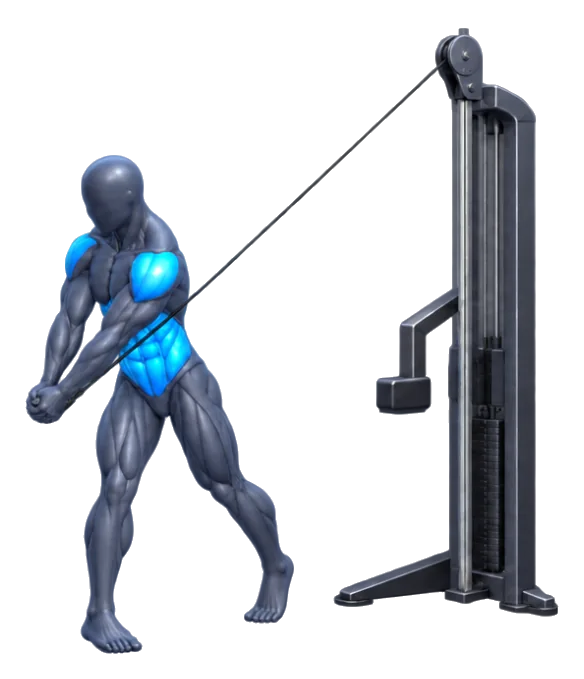
Brace your abs and rotate your torso as you pull the handle diagonally down across your body.
- 5
Pivot your back foot and let your arms follow your torso.
- 6
Finish with your hands outside your opposite knee.
- 7
Return slowly to the start, then switch sides.
Form cues to remember
- Rotate through the hips and torso
- Arms stay long and guide the cable
- Pivot the back foot
- Return slowly, resist the pull
Cable Woodchopper video tutorial
Common mistakes
Pulling with the arms only
Initiate the move by rotating your torso and hips.
Using too much weight
Choose a load you can rotate smoothly with control.
Rounding the back
Keep your chest up and spine neutral.
Rushing the return
Resist the cable on the way back.
Sets and reps
| Endurance | 3 sets of 10–15 reps per side, 45 sec rest |
|---|---|
| Strength | 3 sets of 8–10 reps per side, 60 sec rest |
Use a weight you can control and rotate through your hips; forcing rotation through your lower back is a common way to strain it.
Superlift for iPhone
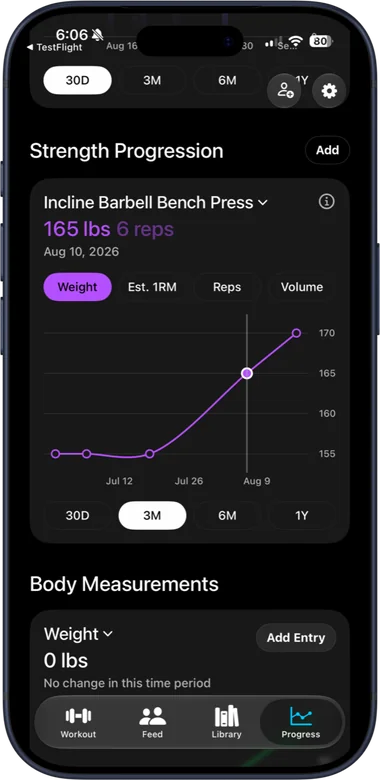
Track your Cable Woodchopper and watch it go up
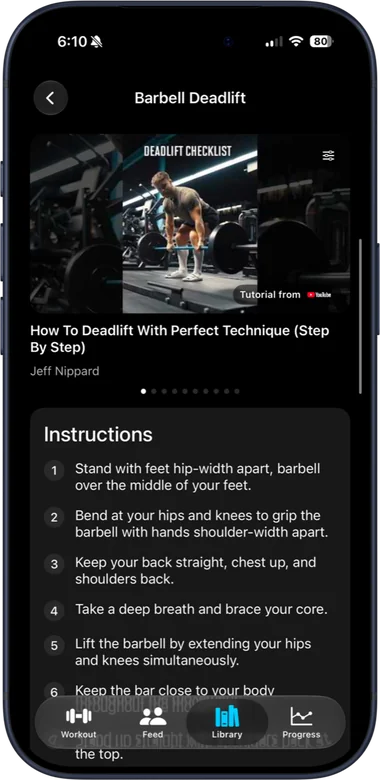
Superlift shows what you lifted last time, times your rest, and charts your strength week by week, so you always know what to beat. Every exercise in this library is built in, with the same demos and tutorials.
Cable Woodchopper FAQ
What muscles does the cable woodchopper work?
The obliques and abs do the rotating, while your shoulders and hips help drive the movement. It is a full-body rotational exercise.
Woodchopper vs Pallof press?
The woodchopper trains rotation, while the Pallof press trains resisting rotation. Many programs use both.
Should I do the cable woodchopper high-to-low or low-to-high?
Both work. High-to-low is the classic chop, while low-to-high mimics a throw or swing; try each and treat it as a different exercise.