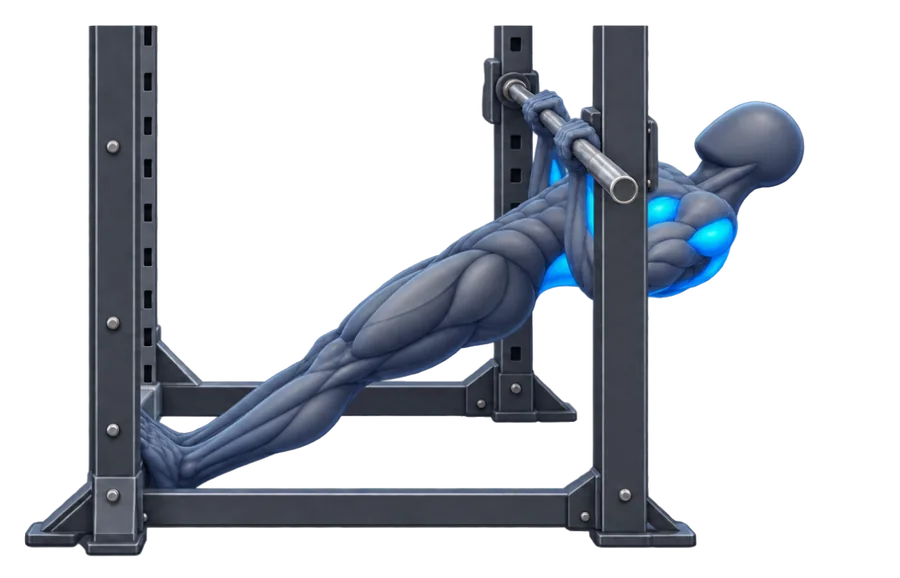
How to Do the Chest-Supported Row
The chest-supported row has you lie face down on an incline bench and row dumbbells, taking your lower back and momentum out of the movement. It suits lifters who want to focus on their upper back and lats or who are fatigued from heavy deadlifts.
 Log every set of your Chest-Supported Row in Superlift
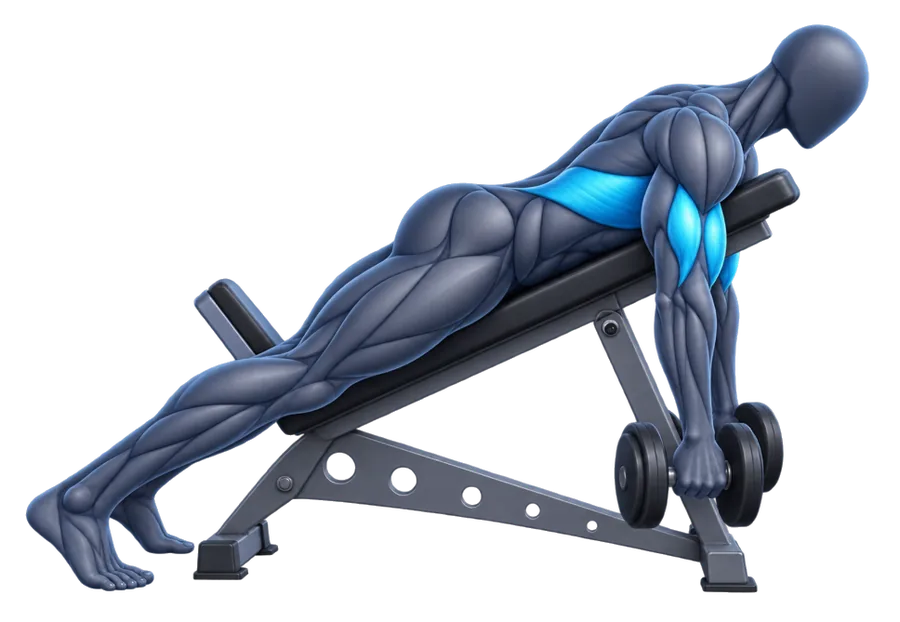
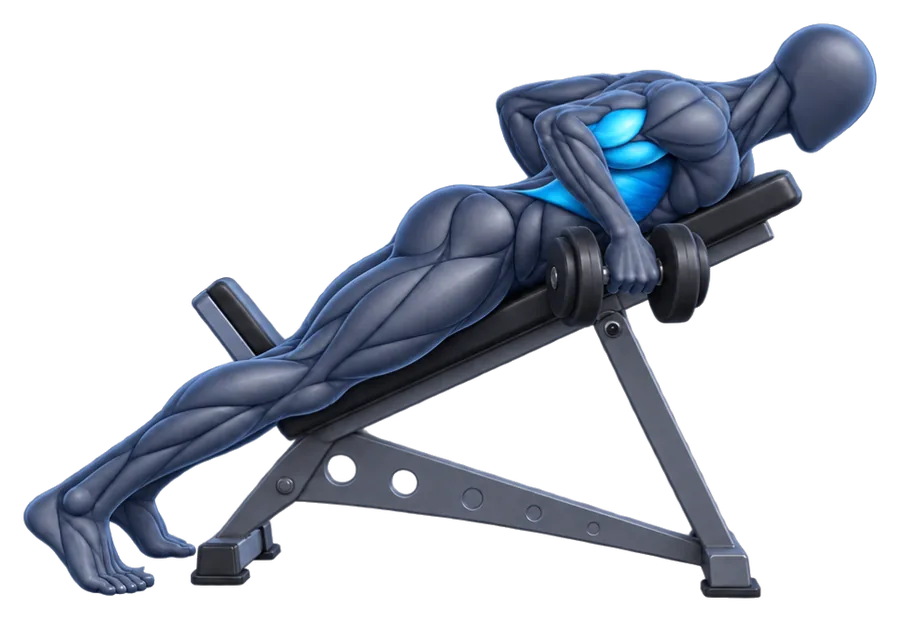
Muscles worked
Primary
- Lats
Secondary
- Biceps
How to do the Chest-Supported Row
- 1
Set an incline bench to about 30–45 degrees and lie chest-down with your feet on the floor.
- 2
Hold a dumbbell in each hand with arms hanging straight.
- 3
Brace your core and keep your chest on the pad.
- 4
Row the dumbbells toward your hips, leading with your elbows.
- 5
Squeeze your shoulder blades together at the top.
- 6
Lower the dumbbells slowly until your arms are fully extended.
- 7
Keep your head neutral throughout.
Form cues to remember
- Chest stays on the pad
- Lead with your elbows
- Squeeze your shoulder blades
- Lower with control
Chest-Supported Row video tutorial
Common mistakes
Lifting your chest off the pad
Lower the weight and keep your chest pressed against the bench.
Shrugging toward your ears
Pull your shoulders down and back before each rep.
Cutting the range short
Extend fully at the bottom and row until your elbows pass your torso.
Swinging the weights
Pause at the top for a beat to remove momentum.
Sets and reps
| Muscle growth | 3–4 sets of 8–12 reps, 60–90 seconds rest |
|---|---|
| Strength | 3–4 sets of 6–8 reps with heavier dumbbells |
| Endurance | 2–3 sets of 12–15 reps with controlled tempo |
Keep your neck neutral rather than lifting your head up. Set the bench securely and use a weight you can control without bouncing.
Superlift for iPhone
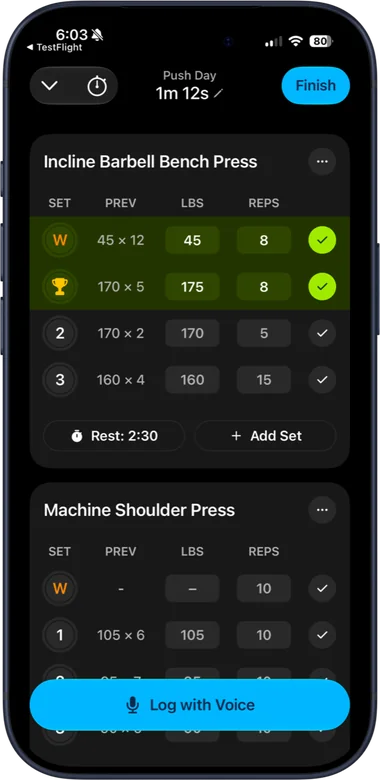
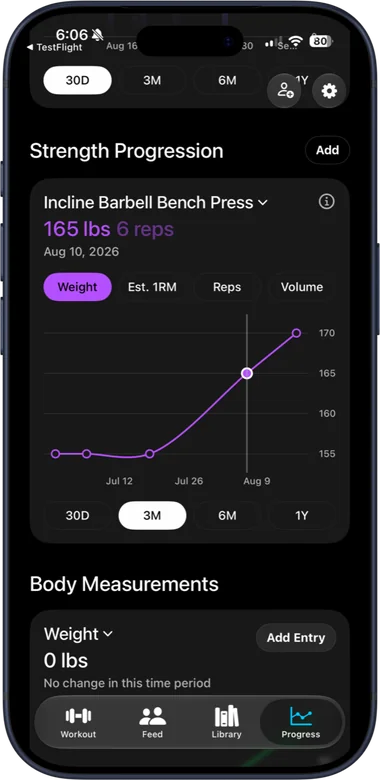
Track your Chest-Supported Row and watch it go up
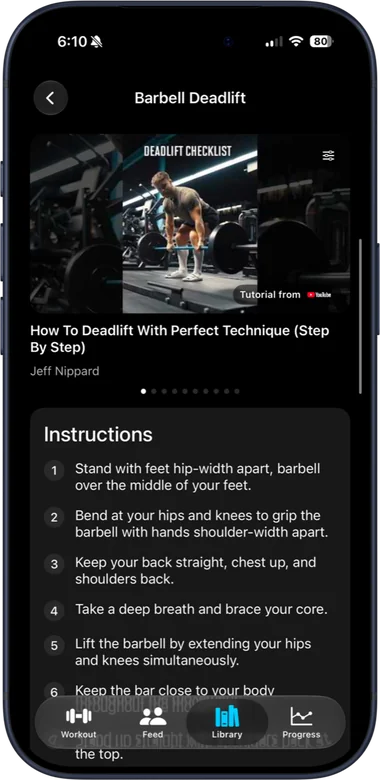
Superlift shows what you lifted last time, times your rest, and charts your strength week by week, so you always know what to beat. Every exercise in this library is built in, with the same demos and tutorials.
Chest-Supported Row FAQ
Why do a chest-supported row?
The bench removes your lower back and momentum from the lift, so your lats and upper back do the work. It is useful on days when your lower back is tired.
What bench angle should I use for the chest-supported row?
A 30–45 degree incline works for most people. A lower angle emphasizes your lats more, while a steeper one hits more of your upper back.
Chest-supported row vs bent-over row?
The chest-supported version is easier to keep strict, while the bent-over row also trains your lower back and bracing. Many programs use both.