How to Do the Inverted Row
The inverted row has you pull your chest to a bar while hanging beneath it, working your back and arms with your bodyweight. It is a great beginner row and a stepping stone toward pull-ups, with difficulty easy to adjust by changing your body angle.
 Log every set of your Inverted Row in Superlift
Muscles worked
Primary
- Lats
Secondary
- Biceps
How to do the Inverted Row
- 1
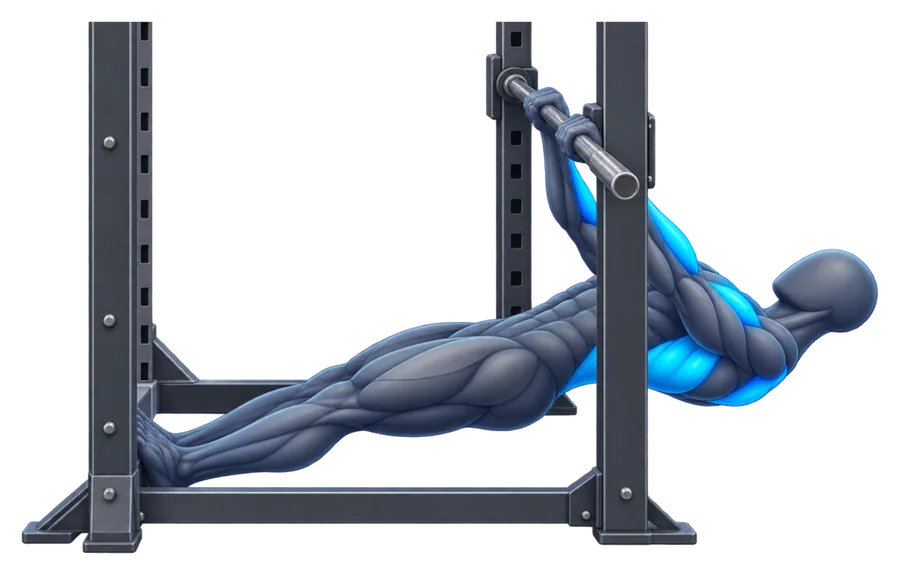
Set a bar in a rack at about waist height and lie under it.
- 2
Grip the bar slightly wider than shoulder-width with an overhand grip.
- 3
Straighten your body into a plank with heels on the floor.
- 4
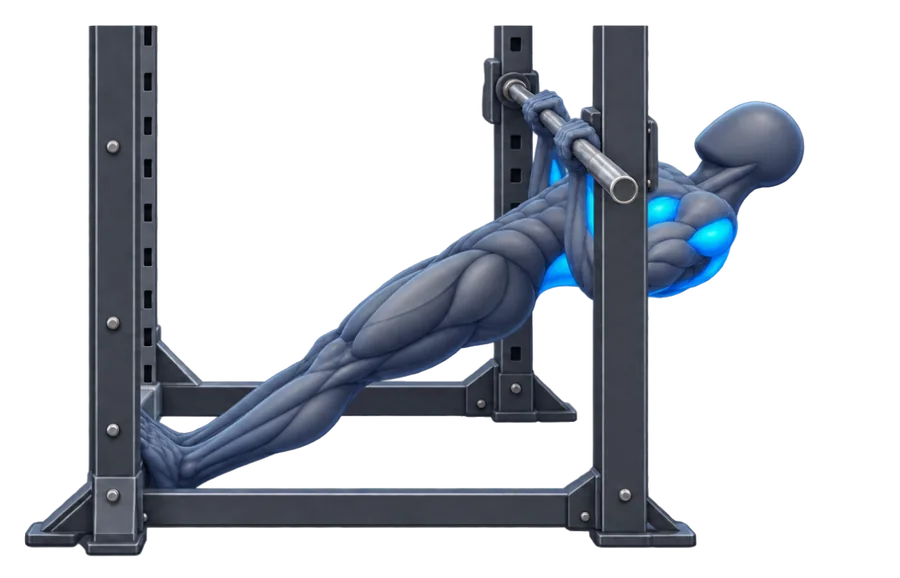
Squeeze your shoulder blades together and pull your chest to the bar.
- 5
Pause briefly at the top.
- 6
Lower yourself with straight arms until you are fully extended.
- 7
Keep your hips up for the whole rep.
Form cues to remember
- Body in one straight line
- Pull your chest to the bar
- Squeeze your shoulder blades
- Lower under control
Common mistakes
Hips sagging
Squeeze your glutes and brace your abs so your body stays straight.
Using only your arms
Start by pulling your shoulder blades back before your elbows bend.
Partial reps
Fully extend your arms at the bottom and touch your chest to the bar.
Bar too low for your strength
Raise the bar or bend your knees until you can complete the full range.
Sets and reps
| Muscle growth | 3–4 sets of 8–15 reps, 60–90 seconds rest |
|---|---|
| Strength | 3–4 sets of 6–10 reps with feet elevated or a weight on your chest |
| Endurance | 2–3 sets of 15–20 reps with a higher bar |
Keep your shoulders from rolling forward at the bottom, and use a bar that is securely set in the rack. Adjust bar height if you feel strain in your shoulders.
Superlift for iPhone
Track your Inverted Row and watch it go up
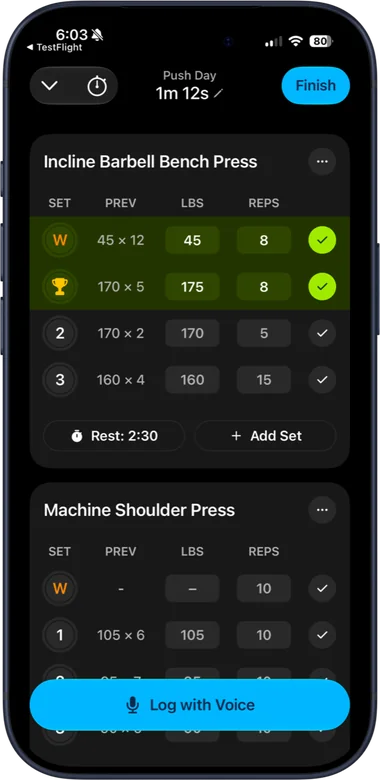
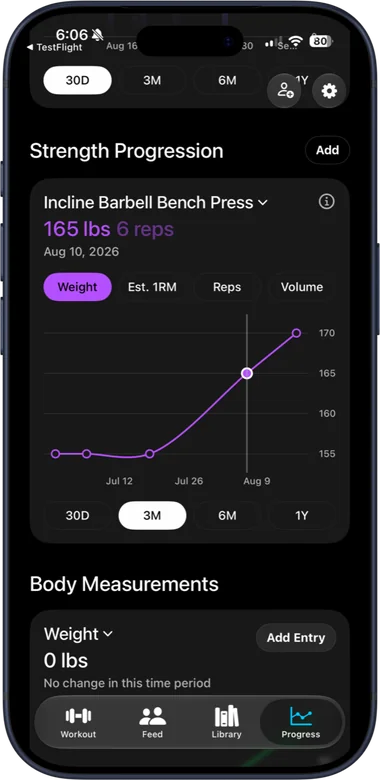
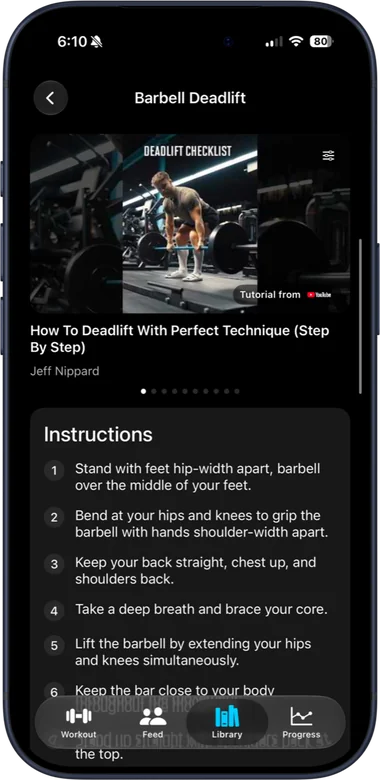
Superlift shows what you lifted last time, times your rest, and charts your strength week by week, so you always know what to beat. Every exercise in this library is built in, with the same demos and tutorials.
Inverted Row FAQ
How do I make inverted rows harder?
Lower the bar, raise your feet on a box, slow the lowering phase or add a weight plate on your chest. Each change adds difficulty.
Inverted row vs pull-up?
Inverted rows are a horizontal pull and easier to scale; pull-ups are a vertical pull. Beginners often use rows to build up to pull-ups.
What muscles do inverted rows work?
They work your lats, upper back and rear shoulders, with your biceps assisting. Your abs and glutes hold your body straight.