How to Do the Dumbbell Row
The one-arm dumbbell row works each side of your back separately, with a supported torso. It builds the lats, mid-back and biceps and lets you move heavy with less lower-back stress. It suits beginners and anyone fixing imbalances.
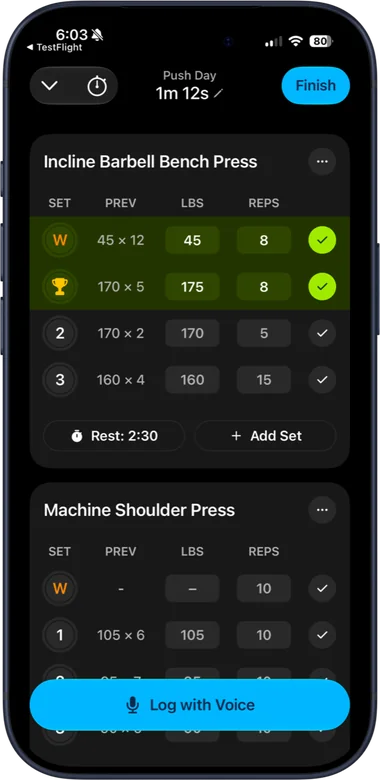
 Log every set of your Dumbbell Row in Superlift
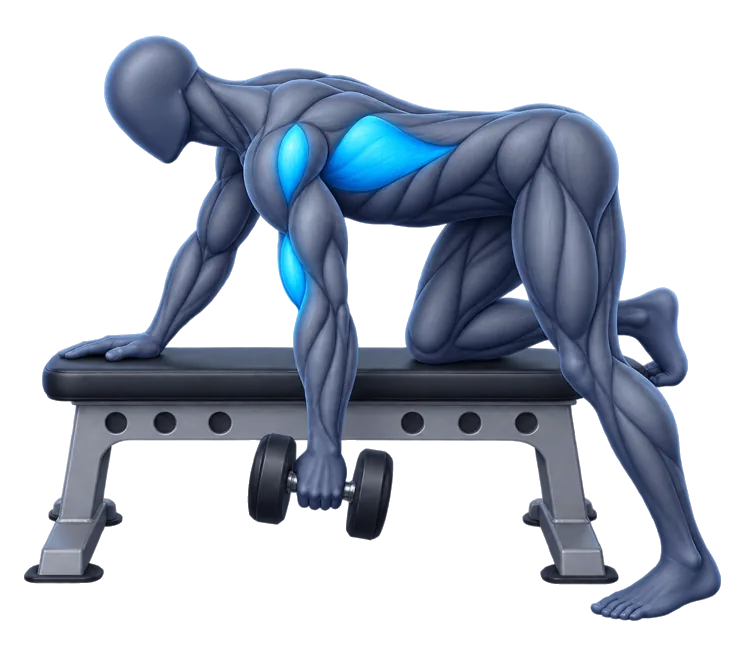
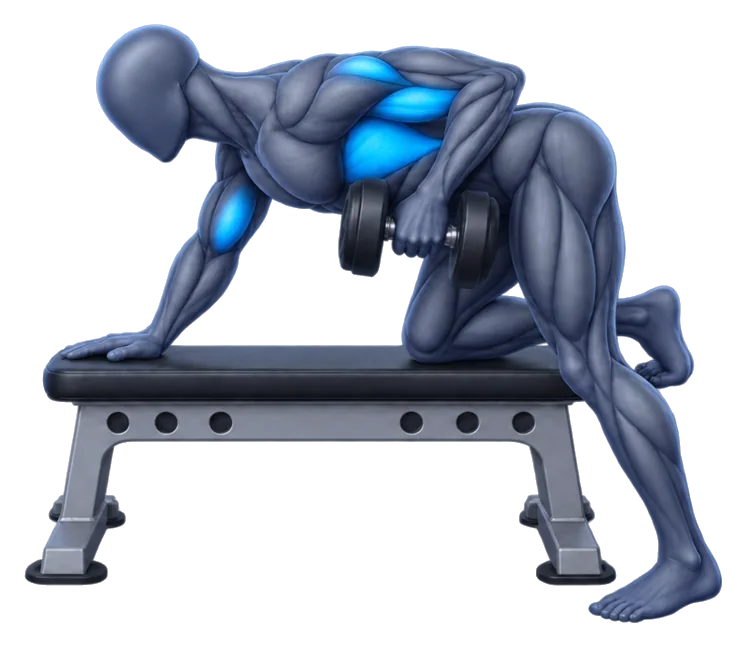
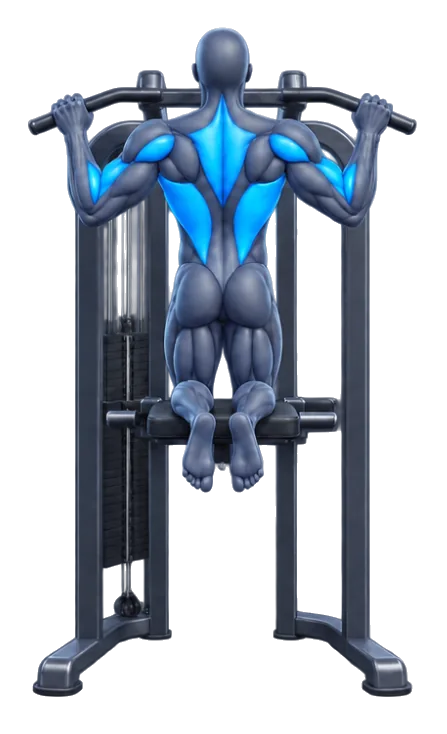
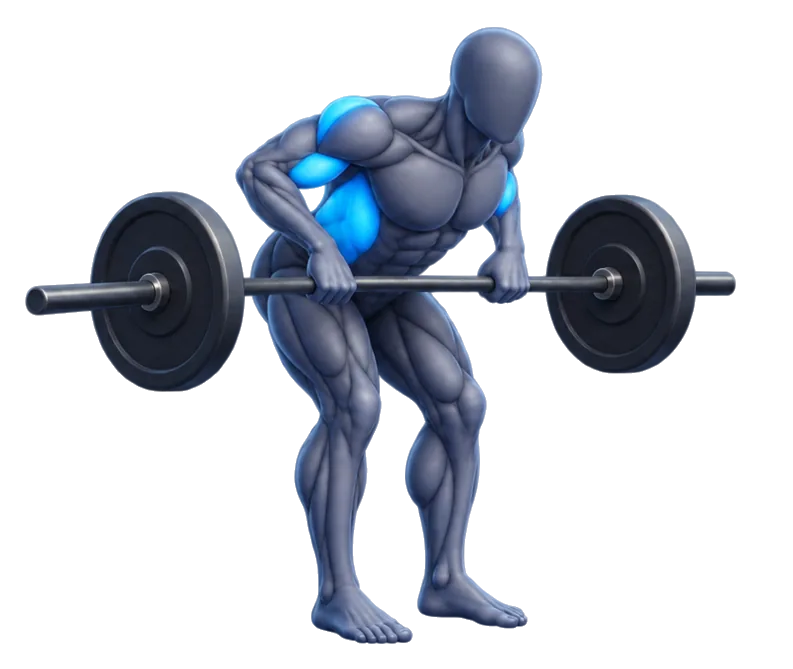
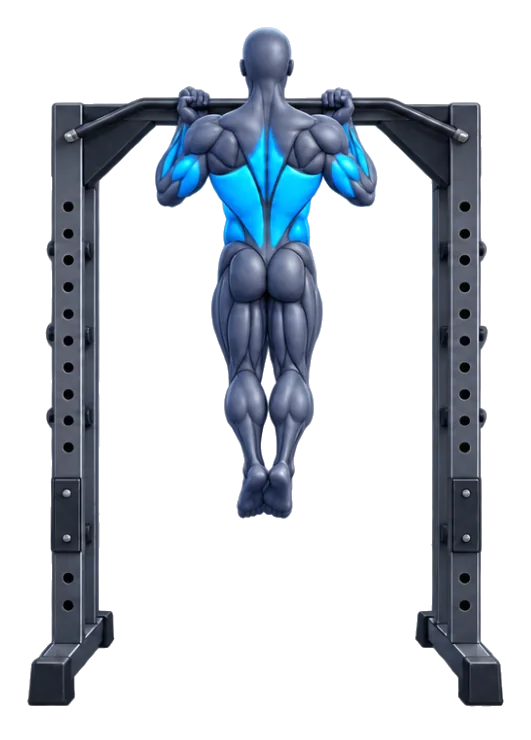
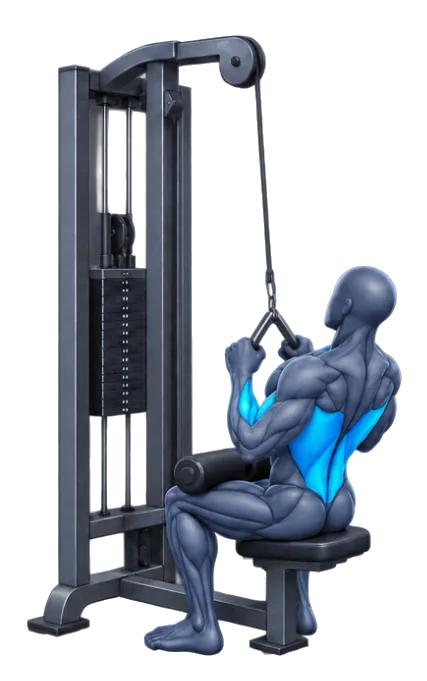
Muscles worked
Primary
- Lats
Secondary
- Biceps
- Rear Delts
How to do the Dumbbell Row
- 1
Place your left hand and left knee on a bench with your back flat.
- 2
Hold a dumbbell in your right hand with your arm straight.
- 3
Brace your abs and keep your torso still.
- 4
Pull the dumbbell toward your hip by driving your elbow up and back.
- 5
Squeeze your shoulder blade toward your spine.
- 6
Lower the weight until your arm is straight, then switch sides after your reps.
Form cues to remember
- Row to your hip
- Elbow back, not out
- Keep your torso level
- Pause at the top
Dumbbell Row video tutorial
Common mistakes
Twisting your torso
Keep your shoulders square and your back flat.
Pulling with the biceps
Think of driving your elbow back instead of lifting the weight.
Shrugging
Keep your shoulder away from your ear.
Cutting the range
Let your arm straighten fully at the bottom.
Sets and reps
| Muscle growth | 3–4 sets of 8–12 reps per arm, 60–90 sec rest |
|---|---|
| Strength | 3–4 sets of 5–8 reps per arm, 2 min rest |
Keep your back flat and don't jerk the weight. If your lower back tires, support your torso more.
Superlift for iPhone
Track your Dumbbell Row and watch it go up
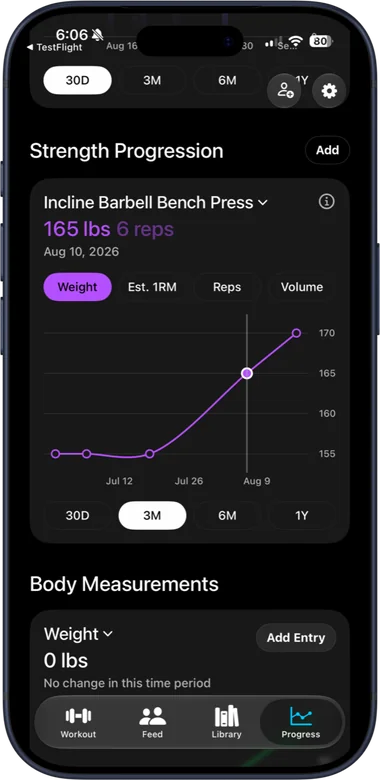
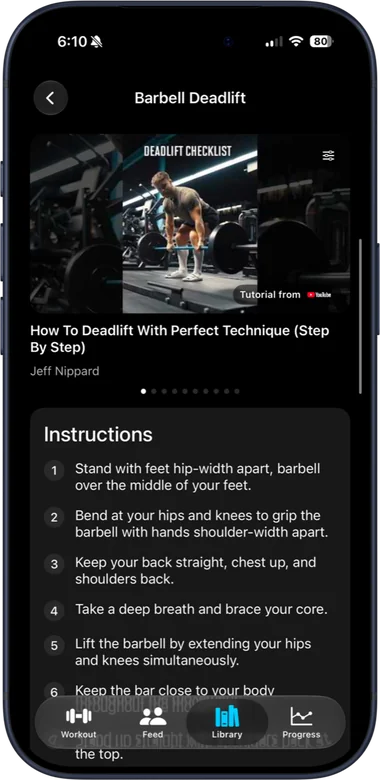
Superlift shows what you lifted last time, times your rest, and charts your strength week by week, so you always know what to beat. Every exercise in this library is built in, with the same demos and tutorials.
Dumbbell Row FAQ
Where should I pull the dumbbell to?
Toward your hip, not your chest. This path uses your lats more.
How heavy should a dumbbell row be?
Heavy enough that the last reps are hard, but you keep your torso still. Many lifters use 40–100 lb (18–45 kg).
Dumbbell row vs barbell row?
The dumbbell row has more support and a longer range, and trains each side alone. The barbell row lets you move more total weight.