How to Do the Copenhagen Plank
The Copenhagen plank is a side plank with your top leg on a bench, so your inner thigh and obliques hold you up. It strengthens the adductors, which many lifters and runners neglect. It's a common choice for groin and hip stability.
 Log every set of your Copenhagen Plank in Superlift
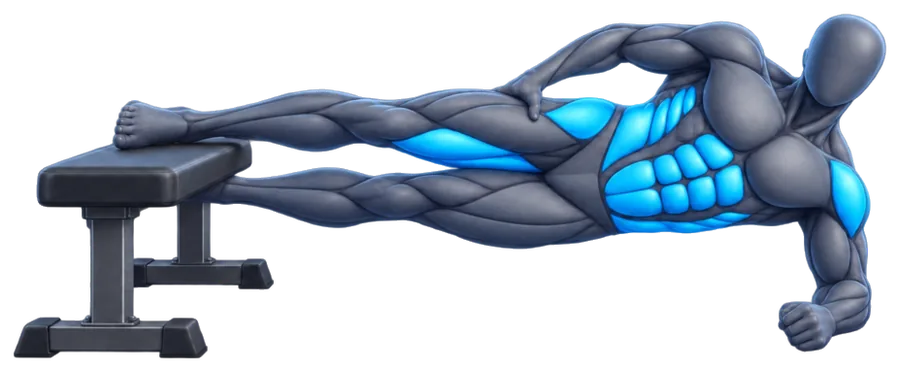
Muscles worked
Primary
- Adductors
- Obliques
Secondary
- Abs
How to do the Copenhagen Plank
- 1
Set a bench and lie on your side with your top foot or knee on it.
- 2
Place your bottom forearm on the floor under your shoulder.
- 3
Lift your hips so your body forms a straight line.
- 4
Keep your bottom leg lifted or tucked under the bench.
- 5
Hold while breathing steadily.
- 6
Lower with control and switch sides.
Form cues to remember
- Hips up in a straight line
- Press the top leg into the bench
- Elbow under your shoulder
- Breathe, don't brace your breath away
Copenhagen Plank video tutorial
Common mistakes
Hips sagging
Press your forearm and top leg down and lift your hips higher.
Bottom foot touching the floor
Lift or tuck it away so the top leg works.
Going straight to the full version
Start with your knee on the bench, then progress to the foot.
Holding too long too soon
Start with short holds of 10–20 seconds.
Sets and reps
| Strength | 3 sets of 15–30 seconds per side, 60 seconds rest |
|---|---|
| Endurance | 2–3 sets of 30–45 seconds per side |
| Mobility | 2 sets of 10–15 second holds with the knee version |
The groin muscles are easy to strain if you jump into long holds. Start with the short-lever knee version and stop if you feel groin pain.
Superlift for iPhone
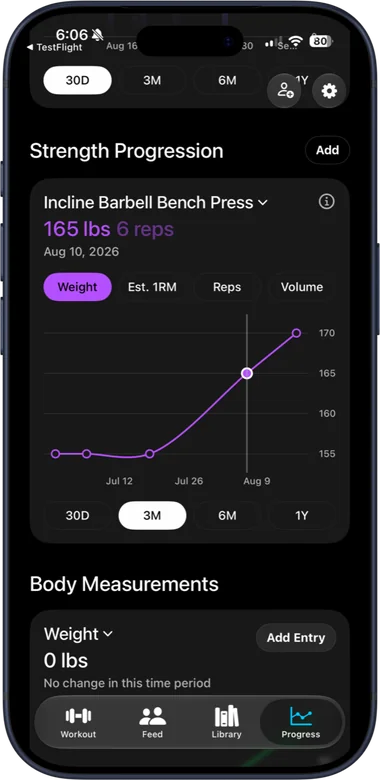
Track your Copenhagen Plank and watch it go up
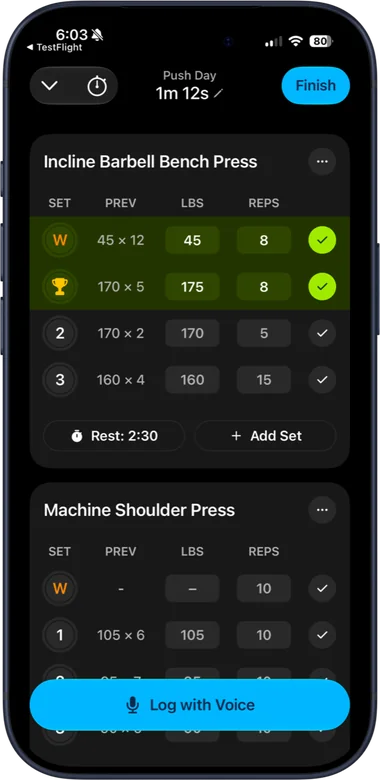
Superlift shows what you lifted last time, times your rest, and charts your strength week by week, so you always know what to beat. Every exercise in this library is built in, with the same demos and tutorials.
Copenhagen Plank FAQ
What does the Copenhagen plank work?
It targets the inner thigh muscles and the obliques, with the abs stabilizing.
Is the Copenhagen plank hard?
The full version is demanding. Start with your knee on the bench to shorten the lever.
How often should I do the Copenhagen plank?
Two or three times a week works for most people. Build up gradually, since adductors can be sore at first.