How to Do the Rowing Machine
The rowing machine is a seated cardio exercise that links a leg drive, a hip hinge and an arm pull in one smooth stroke. It works your legs, back and arms with no impact. It suits beginners and experienced athletes who want steady cardio or hard intervals.
 Log every set of your Rowing Machine in Superlift
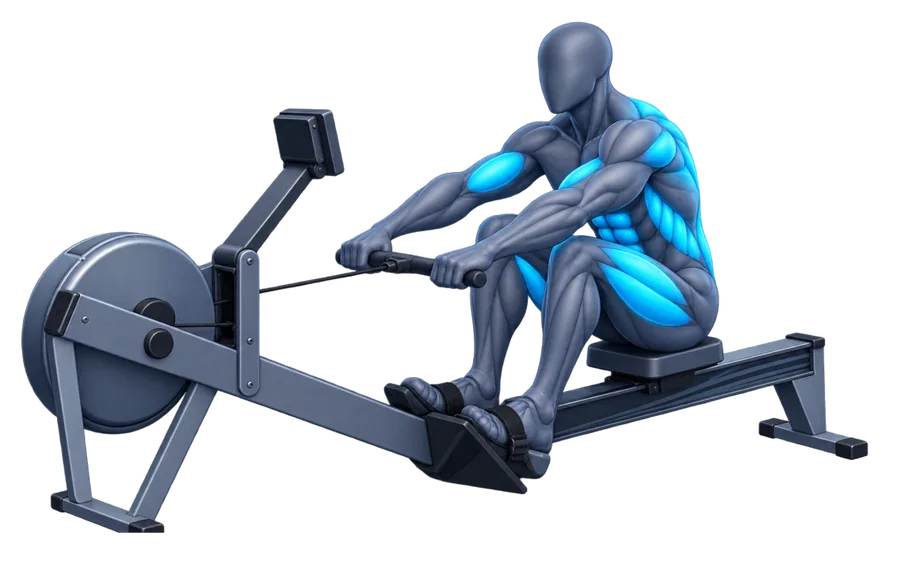
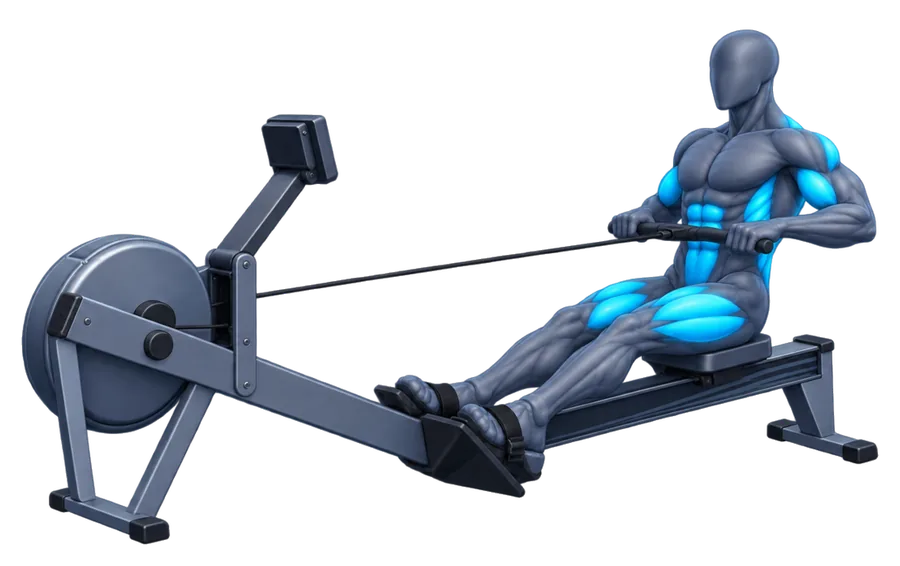
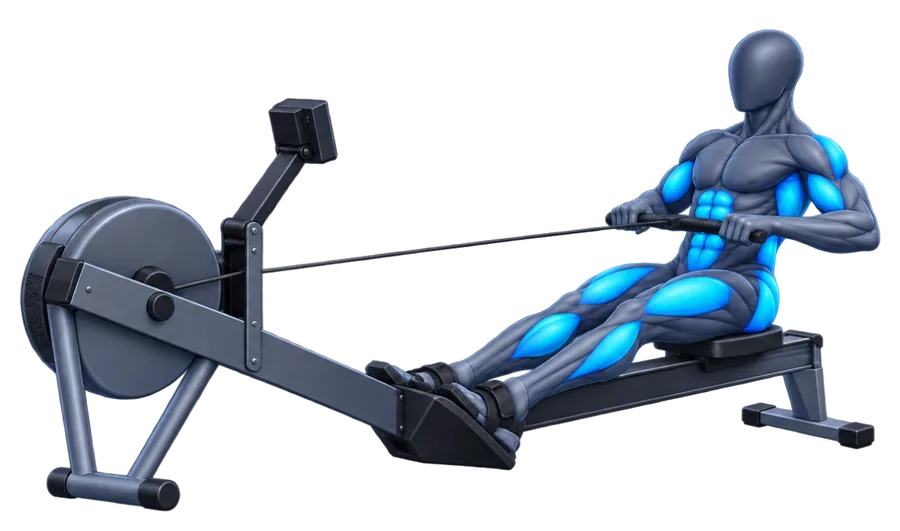
Muscles worked
Primary
- Upper Back
- Quads
Secondary
- Abs
- Biceps
How to do the Rowing Machine
- 1
Sit on the seat, strap your feet in and grab the handle with straight arms.
- 2
Start at the catch with your shins vertical and your back tall.
- 3
Drive hard with your legs first.
- 4
Lean back slightly and pull the handle to your lower ribs.
- 5
Reverse the order: extend your arms, hinge forward, then bend your knees.
- 6
Slide back to the catch and repeat at a steady rhythm.
Form cues to remember
- Legs, then back, then arms
- Back tall, don't slump
- Handle to your lower ribs
- Arms, hips, knees on the way back
Rowing Machine video tutorial
Common mistakes
Pulling with your arms first
Start every stroke with a strong leg drive.
Rounding your back
Keep your chest up and hinge from your hips.
Rushing the recovery
Slide back at a controlled pace, about twice as slow as the drive.
Leaning back too far
Finish just slightly behind vertical.
Sets and reps
| Endurance | 20–30 minutes at a steady, conversational pace |
|---|---|
| Conditioning | 6–10 intervals of 1 minute hard and 1 minute easy |
Keep your back flat to avoid straining your lower back, and use the footplates snugly. Build up your time gradually.
Superlift for iPhone
Track your Rowing Machine and watch it go up
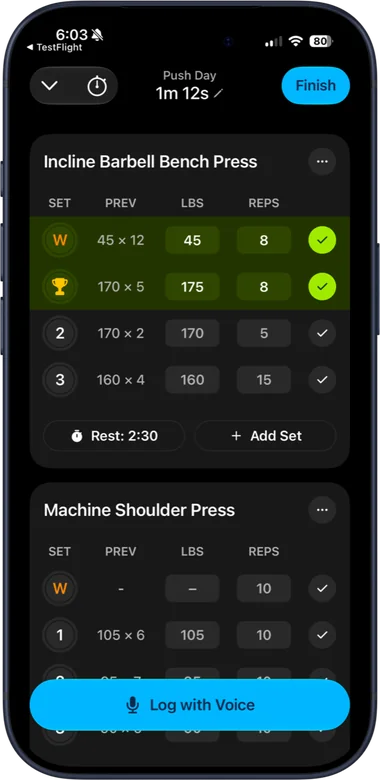
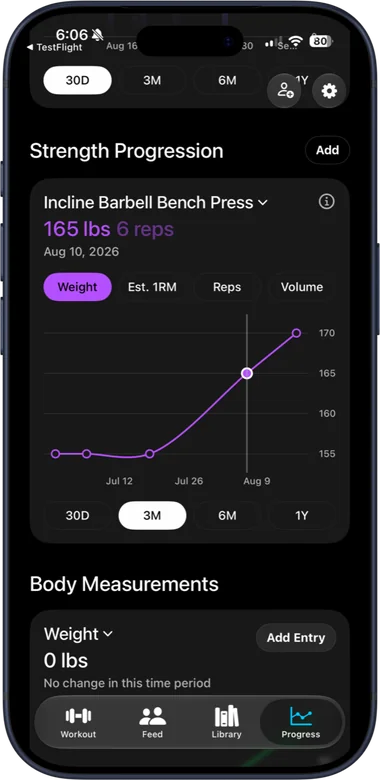
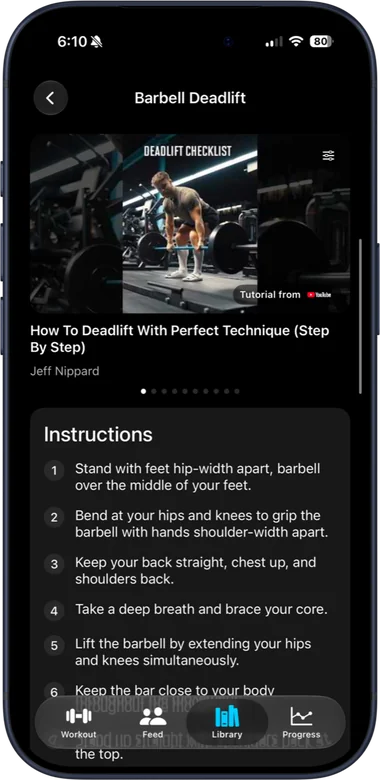
Superlift shows what you lifted last time, times your rest, and charts your strength week by week, so you always know what to beat. Every exercise in this library is built in, with the same demos and tutorials.
Rowing Machine FAQ
What muscles does the rowing machine work?
It works your legs, back and arms, plus your core. The leg drive provides most of the power.
How long should I row for a good workout?
Beginners can start with 10–15 minutes at a steady pace, then build to 20–30 minutes. Intervals can be shorter but harder.
Is the rowing machine good for losing fat?
It burns a lot of energy with no impact, which helps with weight management as part of your overall plan. No single exercise causes fat loss on its own.