How to Do the Rowing Machine Intervals
Rowing machine intervals alternate hard rowing with easy recovery strokes, so you can push intensity while keeping your form. They train your back, legs and core and give you a strong cardio session with low impact. They suit intermediate exercisers who already know basic rowing technique.
 Log every set of your Rowing Machine Intervals in Superlift
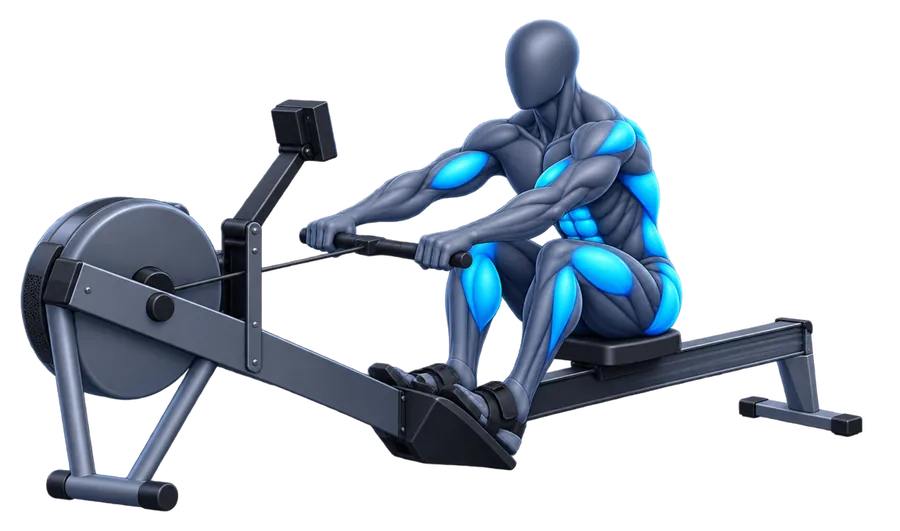
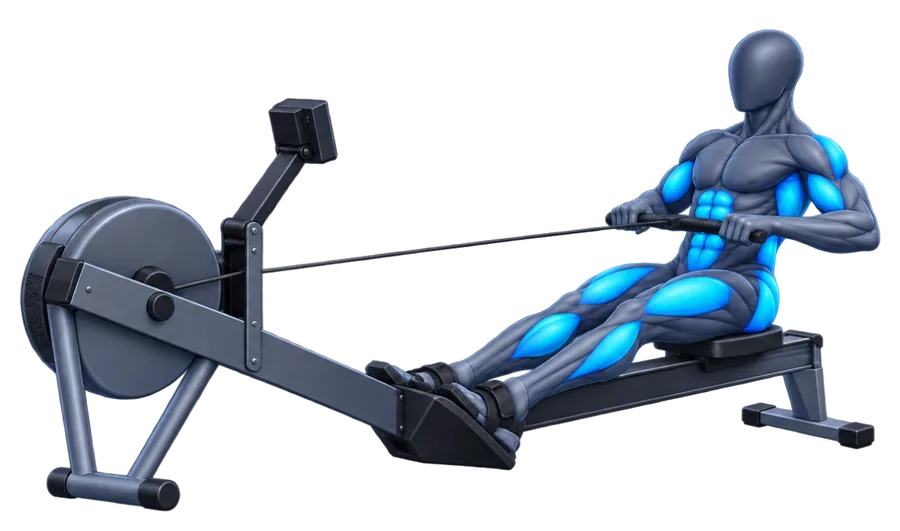
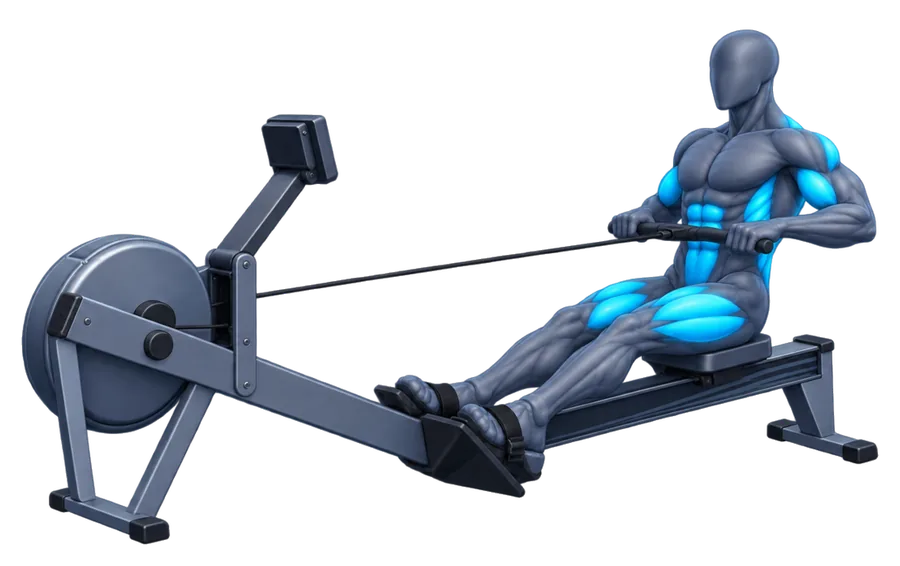
Muscles worked
Primary
- Upper Back
- Quads
Secondary
- Abs
- Biceps
How to do the Rowing Machine Intervals
- 1
Sit on the rower, strap your feet in and grip the handle with straight arms.
- 2
Start the stroke by driving through your legs.
- 3
Lean back slightly and pull the handle to your lower ribs.
- 4
Return by straightening your arms, hinging your torso forward, then bending your knees.
- 5
Row at a high intensity for your work interval.
- 6
Switch to a light paddle for your rest interval.
- 7
Repeat for the desired number of rounds.
Form cues to remember
- Legs, then back, then arms
- Chest tall, no hunching
- Smooth return, slow slide
- Strong drive every stroke
Common mistakes
Pulling with your arms first
Start each stroke by driving through your legs before you pull.
Rounding your back
Keep your chest tall and hinge from your hips.
Rushing the slide
Take the return slowly so you are ready to drive.
Going all out in round one
Pick a pace you can repeat for every interval.
Sets and reps
| Conditioning | 6–10 rounds of 30–60 seconds hard, with equal easy rowing |
|---|---|
| Endurance | 4–5 rounds of 3–4 minutes steady, with 1–2 minutes rest |
Good technique protects your lower back. Keep your spine neutral when you tire, and shorten your intervals if your form breaks down.
Superlift for iPhone
Track your Rowing Machine Intervals and watch it go up
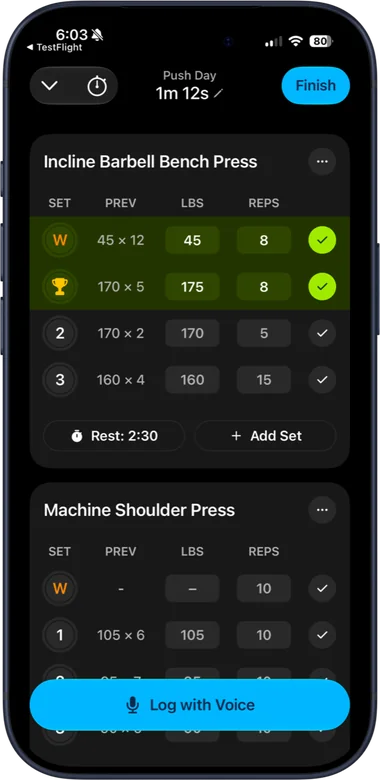
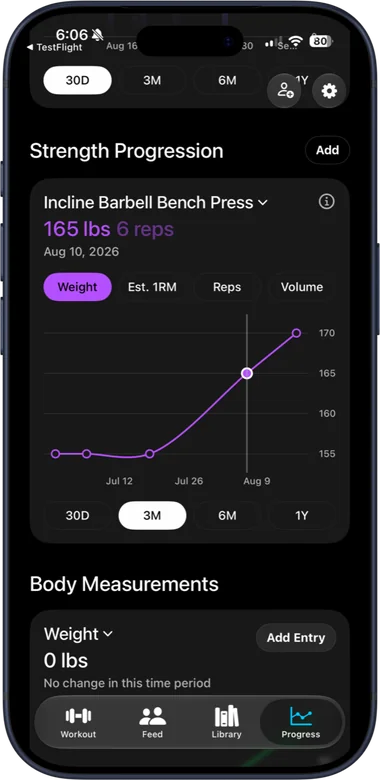
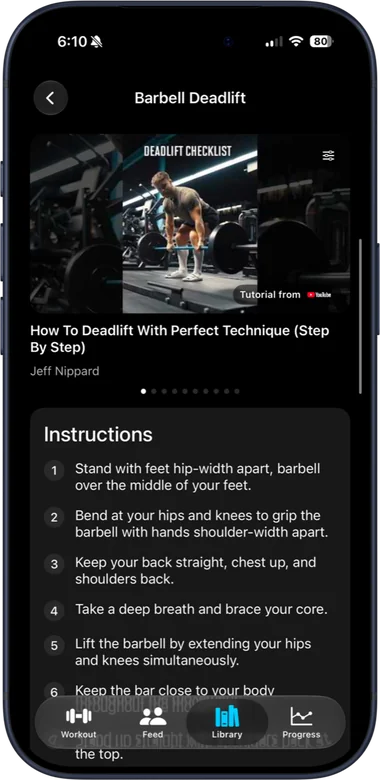
Superlift shows what you lifted last time, times your rest, and charts your strength week by week, so you always know what to beat. Every exercise in this library is built in, with the same demos and tutorials.
Rowing Machine Intervals FAQ
Are rowing intervals better than steady-state rowing?
They are different. Intervals let you work harder and burn more in less time, while steady rowing builds aerobic base and is easier to recover from.
What muscles does rowing work?
Your legs drive most of the stroke, while your back, arms and abs finish the pull and keep your torso stable.
How hard should the work intervals be?
They should feel hard but repeatable, around an effort where you could not hold a full conversation. Keep your technique clean on every stroke.