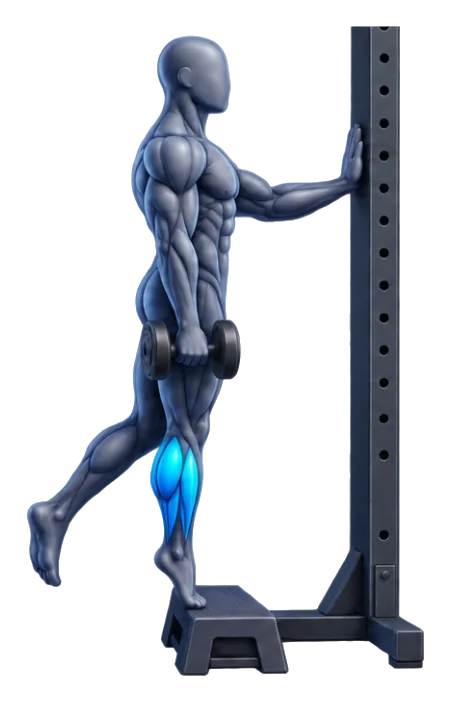
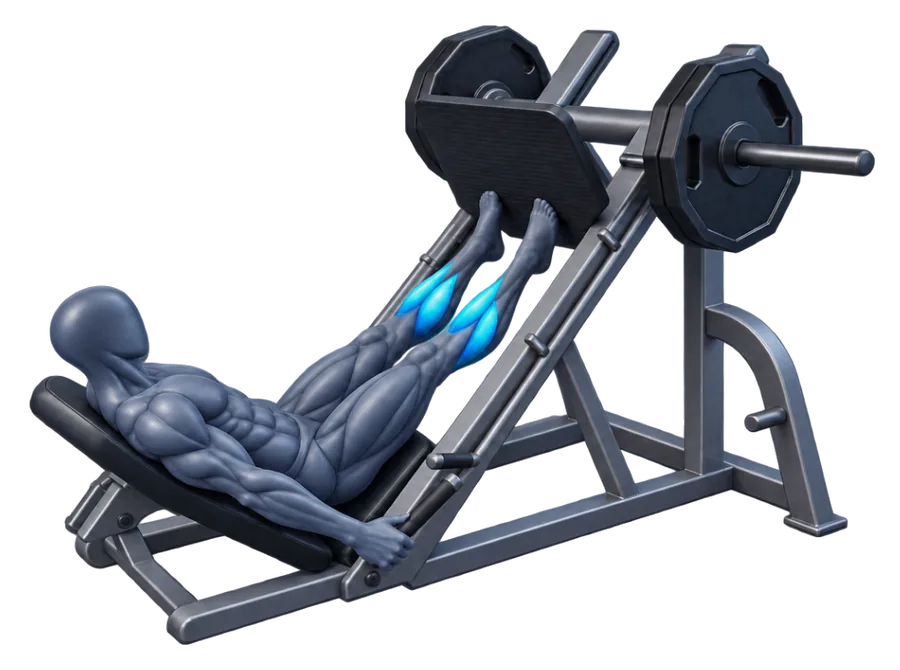
How to Do the Standing Calf Raise
The standing calf raise trains the gastrocnemius, the larger calf muscle, using a full stretch and a hard contraction. It is the main exercise for adding calf size and ankle strength. It suits anyone with small calves or who runs and jumps.
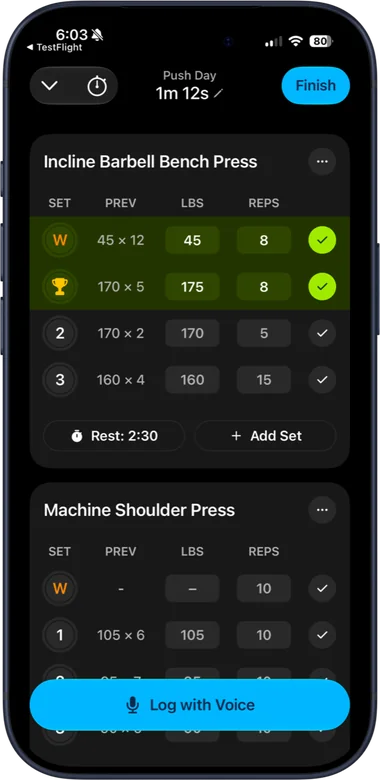
 Log every set of your Standing Calf Raise in Superlift
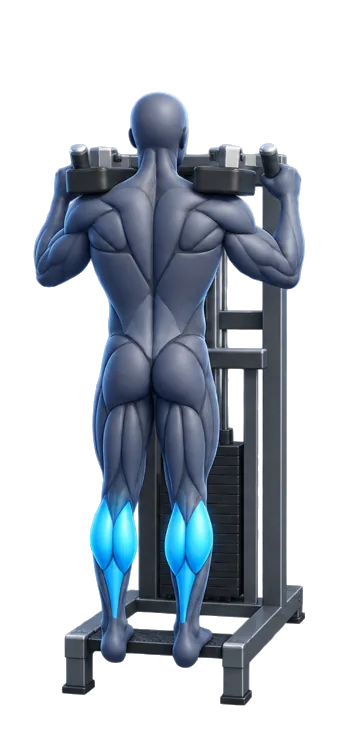
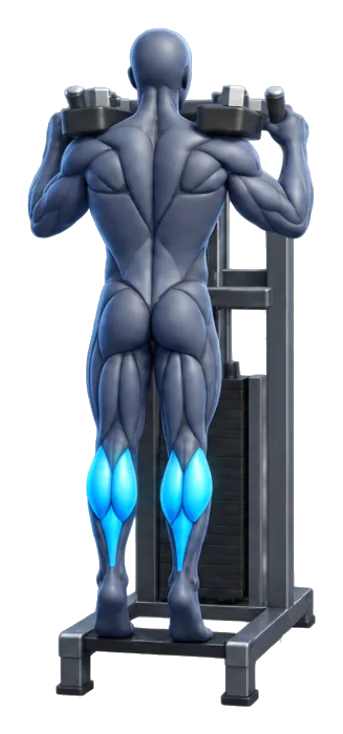
Muscles worked
Primary
- Calves
Secondary
- None to speak of
How to do the Standing Calf Raise
- 1
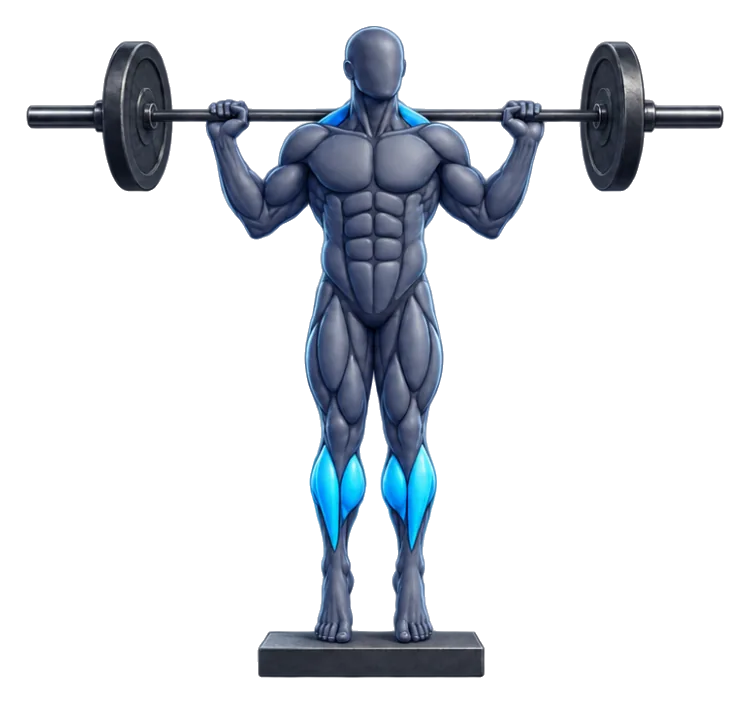
Stand on the platform of a calf raise machine with the balls of your feet on the edge.
- 2
Set the pad on your shoulders and straighten your legs.
- 3
Lower your heels as far as they go for a deep stretch.
- 4
Pause for a moment at the bottom.
- 5
Rise onto your toes as high as you can.
- 6
Squeeze at the top, then lower slowly.
Form cues to remember
- Full stretch at the bottom
- Rise as high as you can
- Pause, don't bounce
- Knees nearly straight
Standing Calf Raise video tutorial
Common mistakes
Bouncing
Pause at the bottom and top of every rep.
Short range
Lower your heels below the platform and rise onto your toes fully.
Bending your knees
Keep your legs almost straight to hit the larger calf muscle.
Rushing
Use a two second lowering and a pause.
Sets and reps
| Muscle growth | 3–5 sets of 8–15 reps, 60–90 sec rest |
|---|---|
| Endurance | 2–3 sets of 15–25 reps, 45–60 sec rest |
Build the load gradually because the Achilles tendon adapts slowly. Stop if you feel sharp pain at the back of the ankle.
Superlift for iPhone
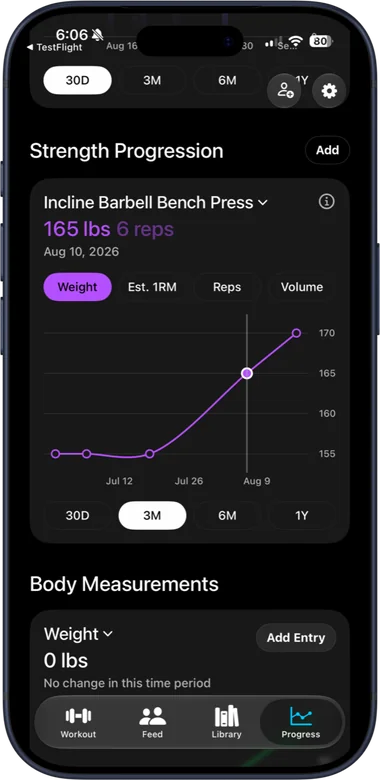
Track your Standing Calf Raise and watch it go up
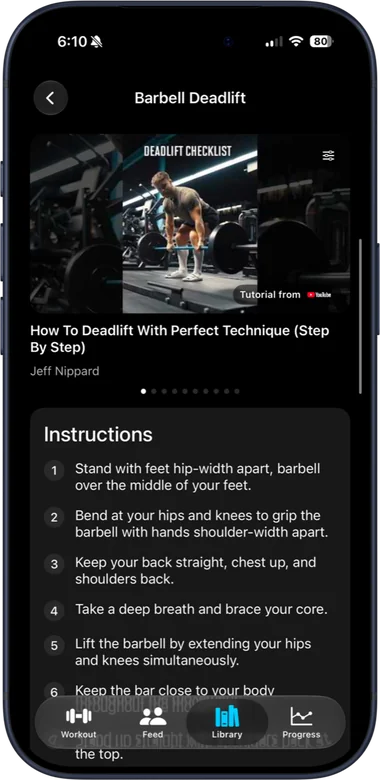
Superlift shows what you lifted last time, times your rest, and charts your strength week by week, so you always know what to beat. Every exercise in this library is built in, with the same demos and tutorials.
Standing Calf Raise FAQ
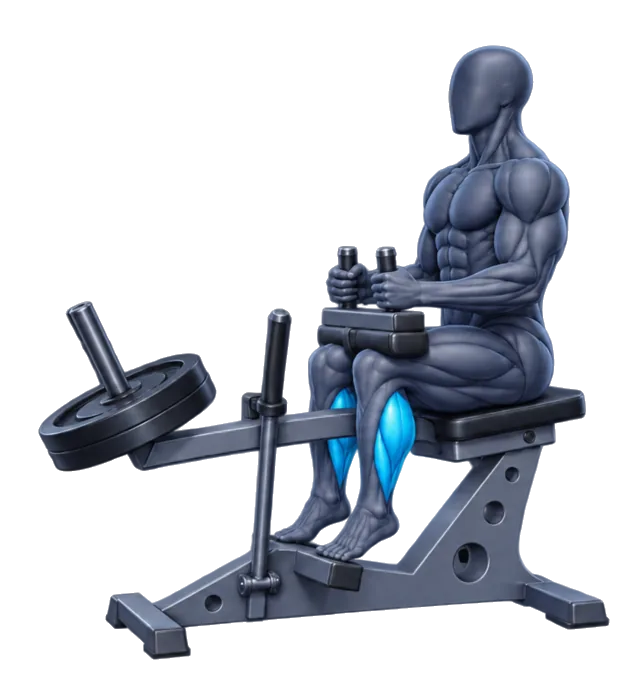
Standing vs seated calf raises?
Standing calf raises target the gastrocnemius more because the knees are straight. Seated raises hit the soleus more.
How often should I do standing calf raises?
Two to four times a week works for many people, since calves recover quickly.
Why aren't my calves growing from standing calf raises?
Calves respond to full range, a pause at the stretch and steady progression. Most people skip the stretch and rush.