How to Do the Lat Pulldown
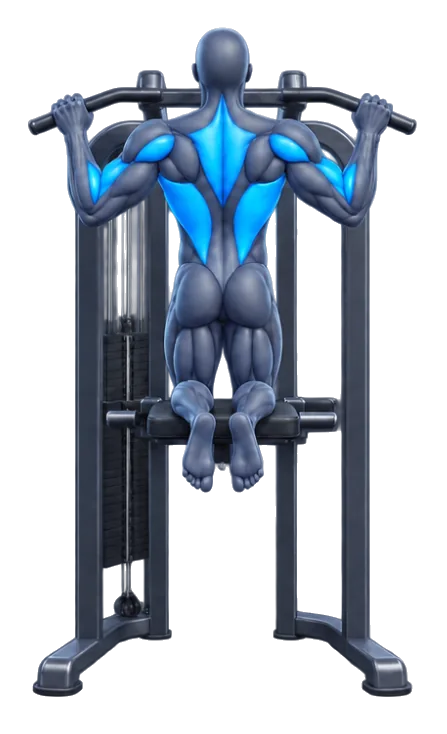
The lat pulldown pulls a bar down to your upper chest on a cable stack, training the lats, the big muscles that give your back its width. Because you pick the exact weight and sit supported by a thigh pad, it is the easiest way to build pulling strength if you cannot yet do pull-ups. It suits beginners and anyone adding back volume without grip or bodyweight limits.
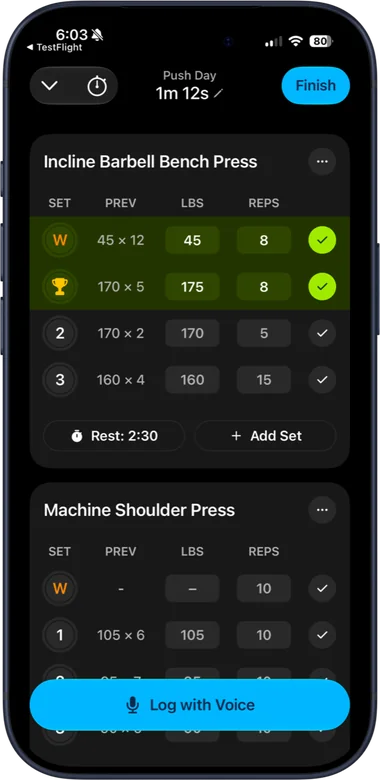
 Log every set of your Lat Pulldown in Superlift
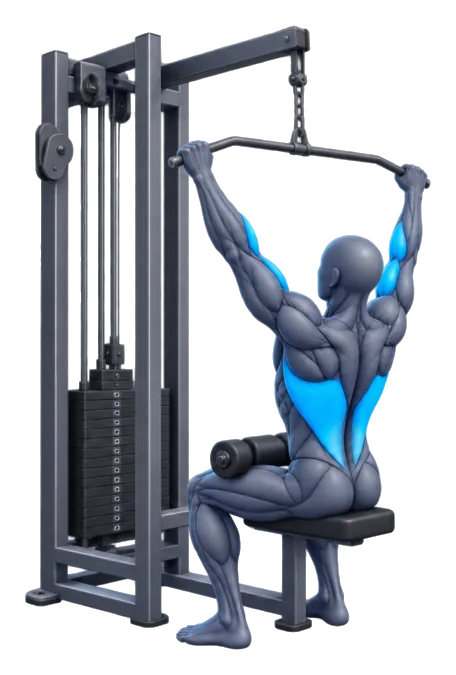
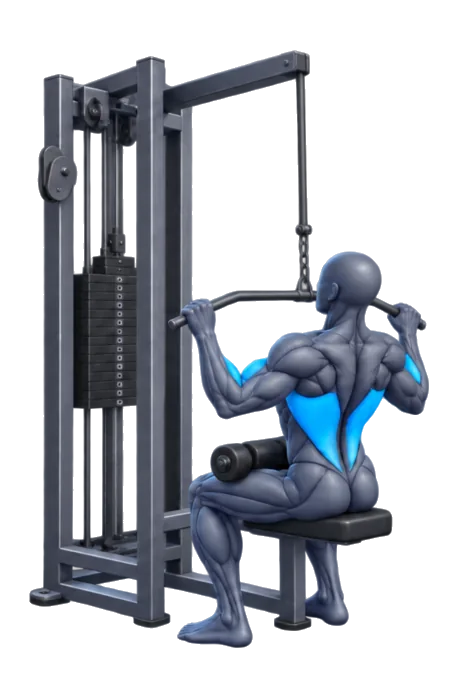
Muscles worked
Primary
- Lats
Secondary
- Biceps
How to do the Lat Pulldown
- 1
Adjust the thigh pad so your legs are locked in and your feet are flat on the floor.
- 2
Reach up and take the bar with an overhand grip a little wider than your shoulders.
- 3
Sit tall, lean back slightly and lift your chest toward the bar.
- 4
Pull your shoulder blades down first, then drive your elbows down and toward your ribs.
- 5
Bring the bar to your upper chest and squeeze your lats for a beat.
- 6
Let the bar rise under control until your arms are straight and you feel a stretch in your lats.
- 7
Stand up carefully and guide the bar back to the rack when the set is done.
Form cues to remember
- Elbows down to your back pockets
- Chest up to meet the bar
- Shoulders down before you pull
- Control the bar on the way up
Lat Pulldown video tutorial
Common mistakes
Leaning back too far
Keep about a 10–15 degree lean and hold it, so the bar moves down rather than your torso rocking.
Pulling the bar behind your neck
Pull to your upper chest in front of you, which is easier on the shoulders.
Yanking with momentum
Drop the weight until you can pull smoothly with no swing.
Shrugging and pulling with your hands
Think about driving your elbows down and keep your shoulders away from your ears.
Sets and reps
| Muscle growth | 3–4 sets of 8–12 reps, 60–90 sec rest |
|---|---|
| Strength | 3–5 sets of 5–8 reps, 2 min rest |
| Endurance | 2–3 sets of 15–20 reps, 45–60 sec rest |
Skip the behind-the-neck variation, which puts the shoulder in a vulnerable position. Set the thigh pad snug so the weight doesn't lift you off the seat.
Superlift for iPhone
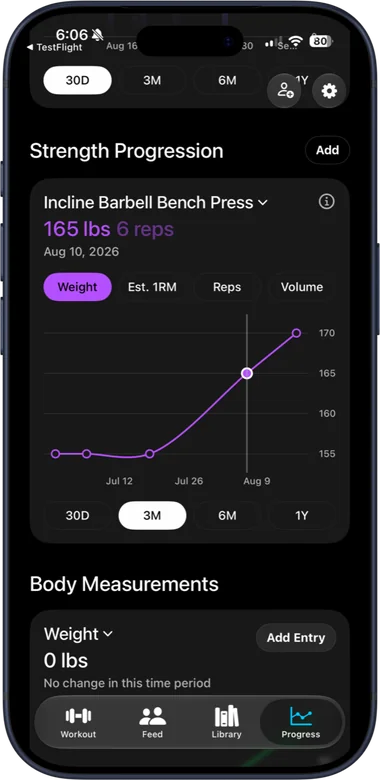
Track your Lat Pulldown and watch it go up
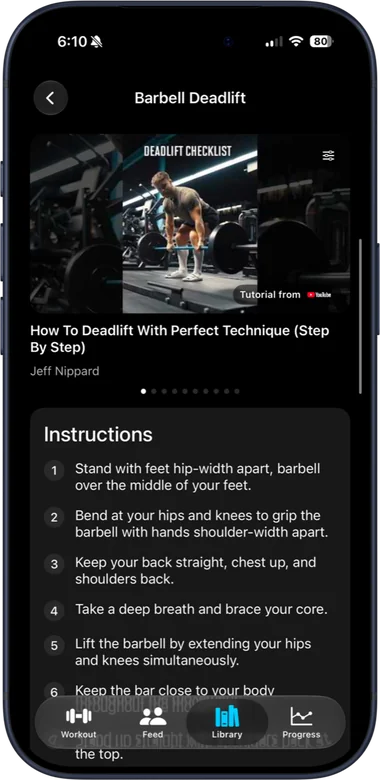
Superlift shows what you lifted last time, times your rest, and charts your strength week by week, so you always know what to beat. Every exercise in this library is built in, with the same demos and tutorials.
Lat Pulldown FAQ
Lat pulldown vs pull-up: which is better?
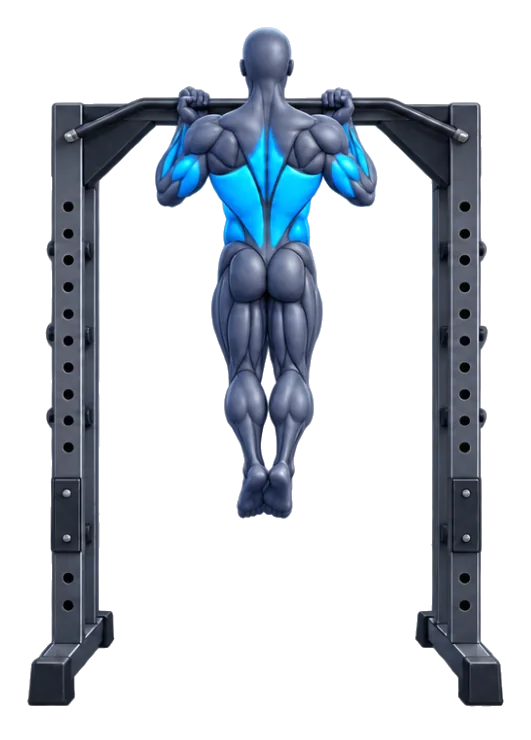
Both train the lats. Pulldowns let you choose the exact load and are easier to progress, while pull-ups use your full bodyweight and demand more from your core and grip. Many people use pulldowns to build up to pull-ups.
What grip is best on the lat pulldown?
An overhand grip just wider than your shoulders is a good default for the lats. Closer or underhand grips bring in more biceps and let some people feel a longer range of motion.
How far should I lean back on the lat pulldown?
Only slightly, around 10–15 degrees. If you lean far back and swing, the lat pulldown turns into a poor row and the lats do less of the work.