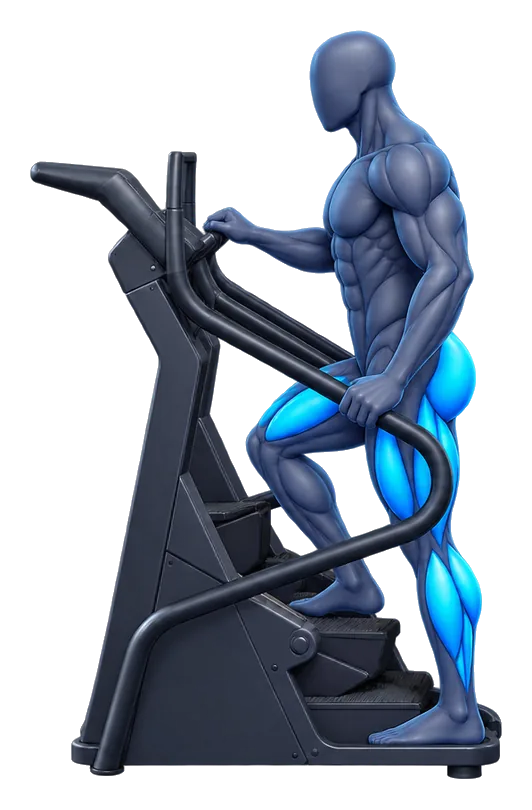
How to Do the Depth Jump
The depth jump is an advanced plyometric where you step off a box, land, then jump straight up as fast as you can. It trains your muscles to absorb and reuse force quickly, so athletes use it to improve jump power. It is for experienced lifters with strong landing mechanics.
 Log every set of your Depth Jump in Superlift

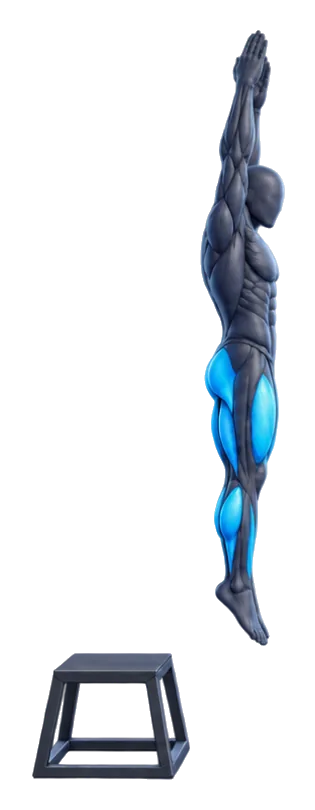
Muscles worked
Primary
- Quads
- Glutes
Secondary
- Calves
- Hamstrings
How to do the Depth Jump
- 1
Stand on a low, stable box about 12–18 inches (30–45 cm) high.
- 2
Step off the edge, don't jump down.
- 3
Land on both feet with your knees slightly bent.
- 4
Spend as little time on the ground as possible.
- 5
Immediately explode into a max-height jump.
- 6
Land softly with bent knees.
- 7
Step back onto the box and reset before the next rep.
Form cues to remember
- Step off, don't jump off
- Quick off the ground
- Land soft, knees bent
- Jump as high as you can
Common mistakes
Using a box that is too high
Start with a low box so you can bounce off the ground quickly.
Sinking too deep on landing
Stay stiff and quick; a short contact time is the goal.
Landing with knees caving
Keep your knees tracking over your toes on every landing.
Doing too many reps
Keep sets short and stop when your jump height drops.
Sets and reps
| Strength | 3–5 sets of 3–5 reps, with 2–3 min rest |
|---|---|
| Conditioning | 2–3 sets of 4–6 reps as a power primer before lifting, 90 seconds rest |
The landing forces are high, so build up with box jumps and squat jumps first. Skip it if you have joint pain, and keep the volume low.
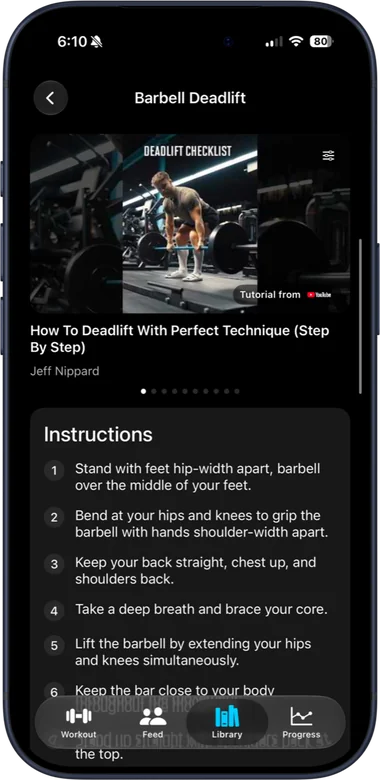
Superlift for iPhone
Track your Depth Jump and watch it go up
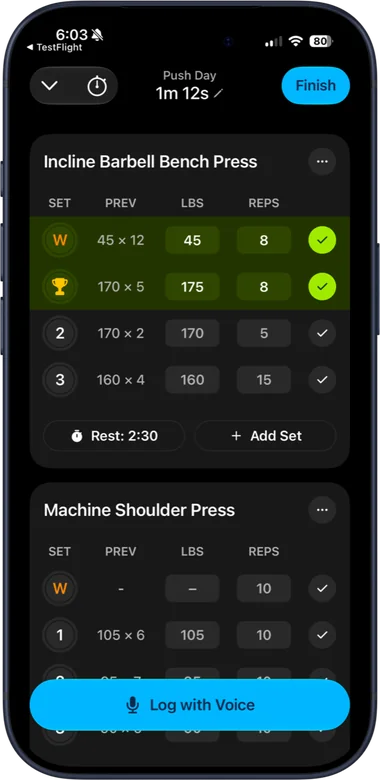
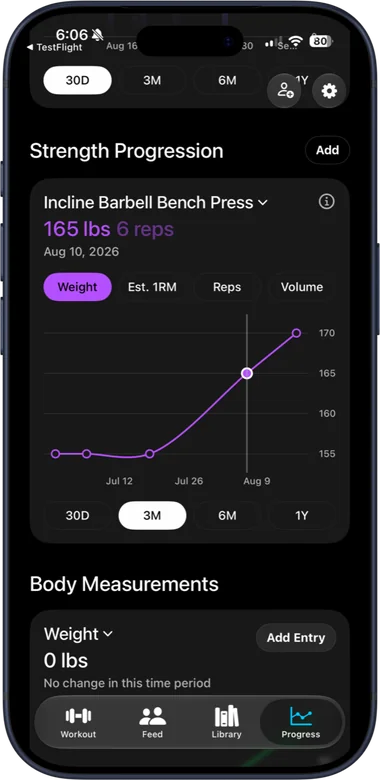
Superlift shows what you lifted last time, times your rest, and charts your strength week by week, so you always know what to beat. Every exercise in this library is built in, with the same demos and tutorials.
Depth Jump FAQ
What is the purpose of a depth jump?
It trains your muscles and tendons to absorb force and bounce back quickly, which helps with jumping and sprinting power.
How high should the box be for depth jumps?
Start with 12–18 inches (30–45 cm). A higher box is not necessarily better and can slow your rebound.
How often should I do depth jumps?
Once or twice a week with plenty of rest between sets. They are demanding, so keep them early in your workout when you are fresh.