How to Do the Jump Lunge
The jump lunge is a plyometric lunge where you switch legs in the air and land in the opposite lunge. It builds explosive leg power and gets your heart rate up quickly. It suits intermediate exercisers with good balance and healthy knees.
 Log every set of your Jump Lunge in Superlift
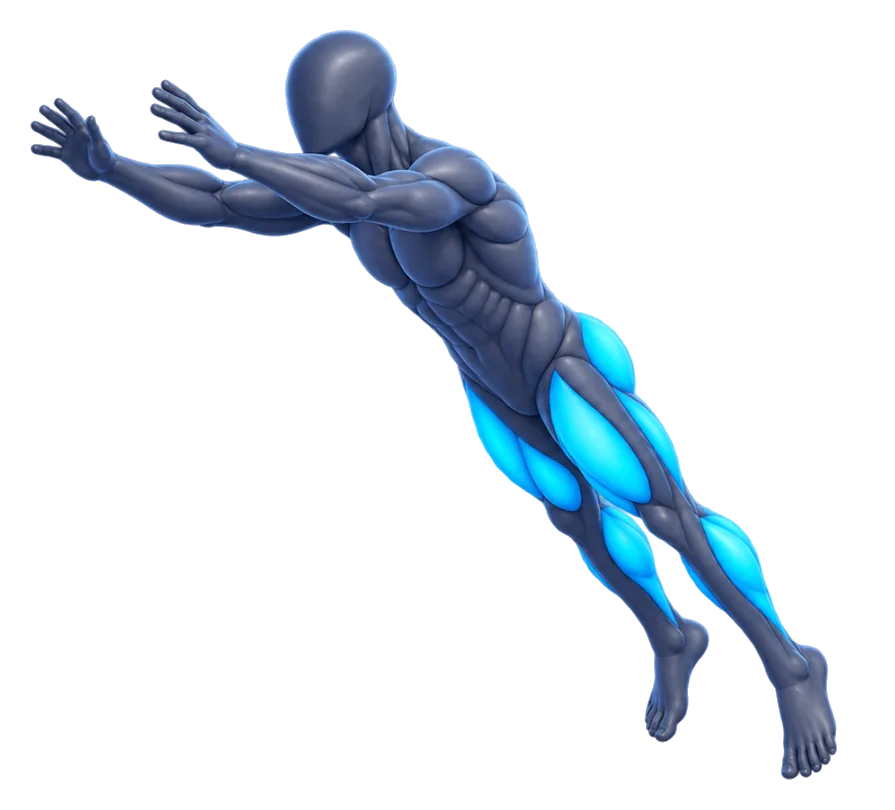
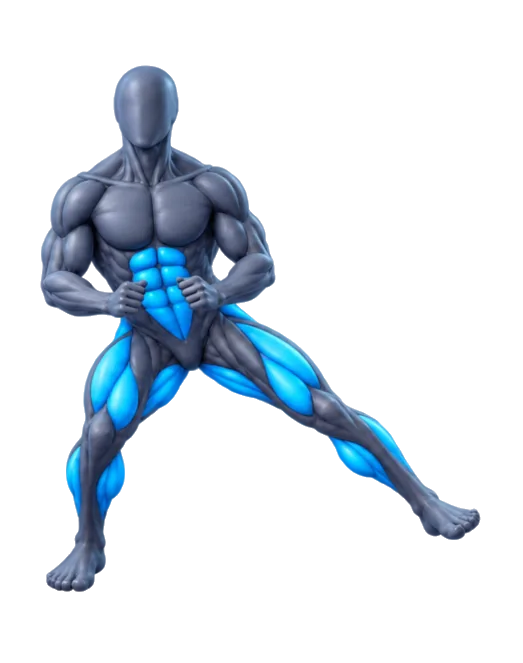
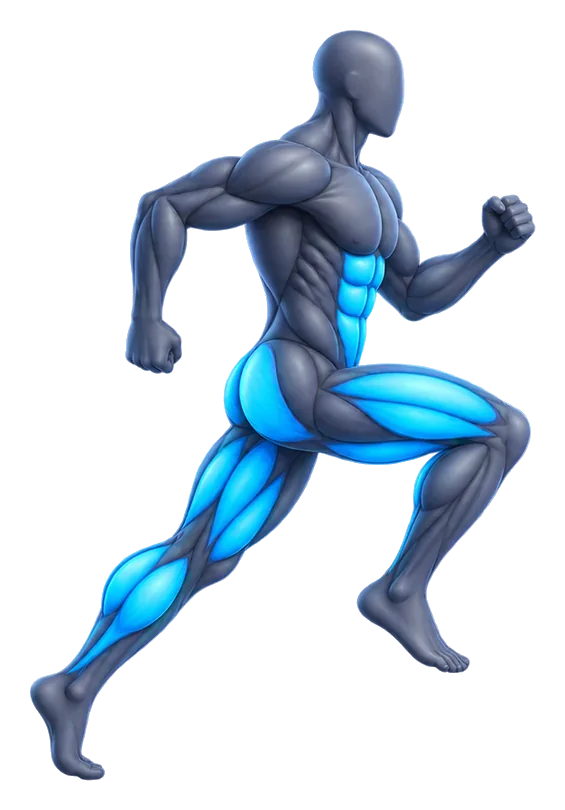
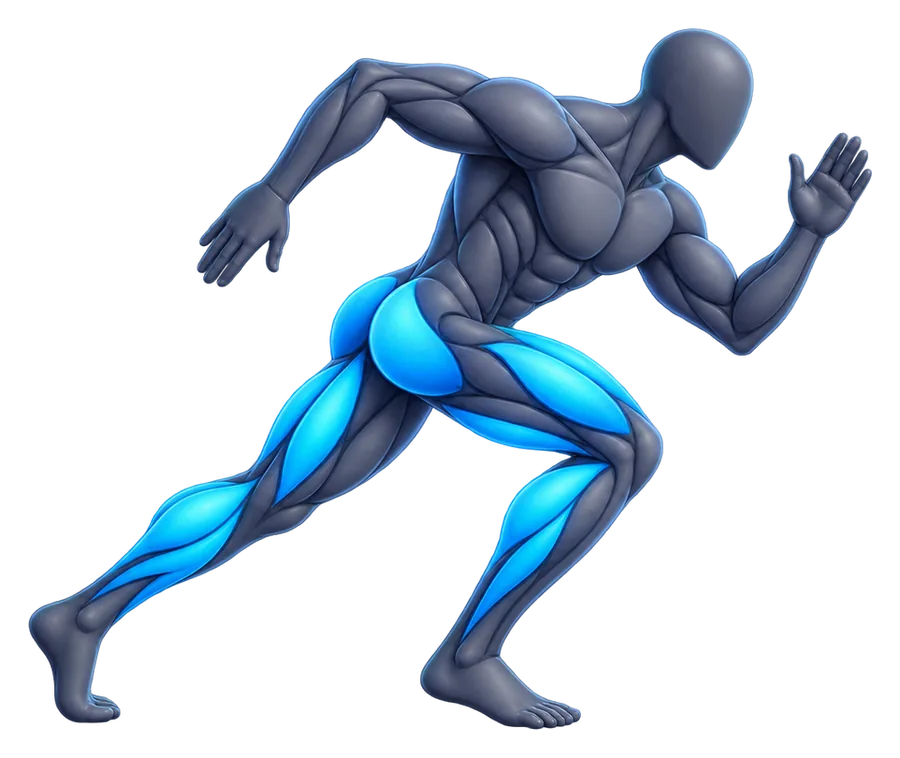
Muscles worked
Primary
- Quads
- Glutes
Secondary
- Hamstrings
- Calves
How to do the Jump Lunge
- 1
Start in a lunge with one foot forward and both knees bent.
- 2
Keep your chest tall and your core braced.
- 3
Drive through both feet to jump straight up.
- 4
Switch your legs in the air so the other foot is forward.
- 5
Land softly in a lunge with your front knee over your ankle.
- 6
Sink into the landing and jump again right away.
- 7
Continue alternating for your reps.
Form cues to remember
- Land softly, bend your knees
- Chest tall
- Front knee over ankle
- Switch in the air
Common mistakes
Landing with a stiff knee
Sink into the lunge and absorb the landing through your hips and knees.
Front knee caving inward
Push your knee out in line with your toes.
Leaning forward
Keep your chest tall and your core braced.
Rushing and losing balance
Slow down and reset your position when needed.
Sets and reps
| Conditioning | 5–8 rounds of 20–30 seconds, with 30–40 seconds rest |
|---|---|
| Strength | 3 sets of 6–10 reps per side, with 90 seconds rest |
The landing puts a lot of load through your knees, so skip it if you have knee pain. Master standard lunges first and keep reps low and controlled.
Superlift for iPhone
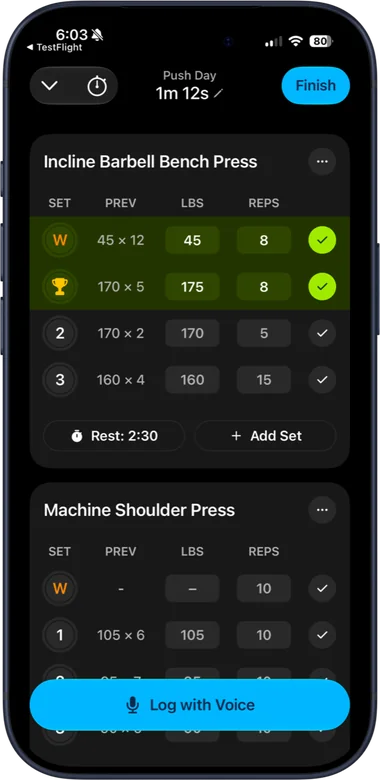
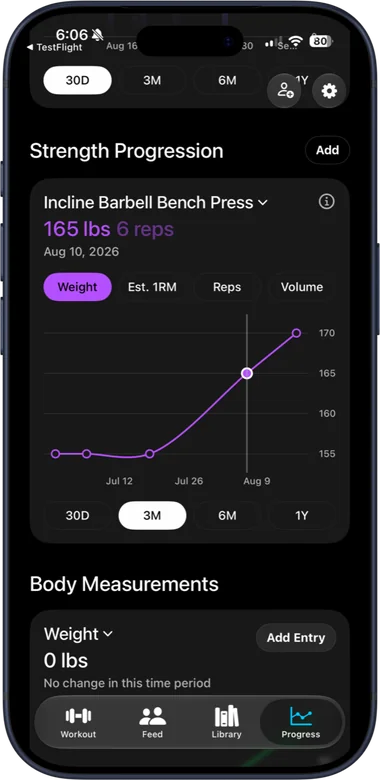
Track your Jump Lunge and watch it go up
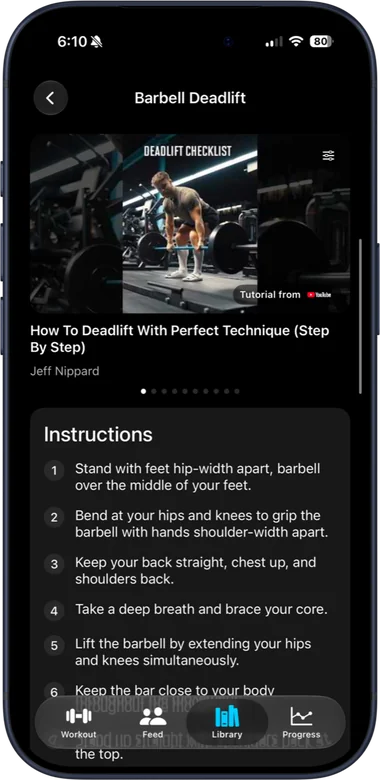
Superlift shows what you lifted last time, times your rest, and charts your strength week by week, so you always know what to beat. Every exercise in this library is built in, with the same demos and tutorials.
Jump Lunge FAQ
Are jump lunges good for your legs?
They train your quads and glutes explosively and add a cardio challenge. Regular lunges build more strength with less impact.
How can I make jump lunges easier?
Do them without the jump, as alternating lunges or split squats, or shorten the jump height and land softly.
What muscles do jump lunges work?
Mainly your quads and glutes, with your hamstrings and calves helping absorb and create force.