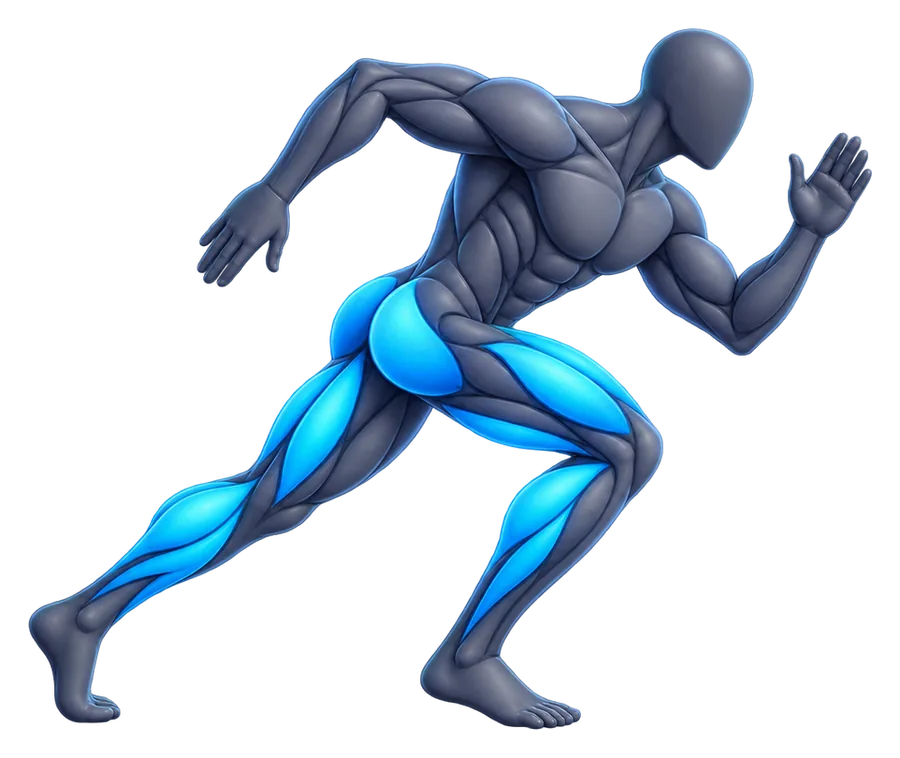
How to Do the Frog Jump
The frog jump is a bodyweight plyometric: squat low, touch the floor between your feet, then spring forward and land back in a deep squat. It trains explosive hip and knee extension and gets your heart rate up fast. It suits beginners looking for a no-equipment power and conditioning drill.
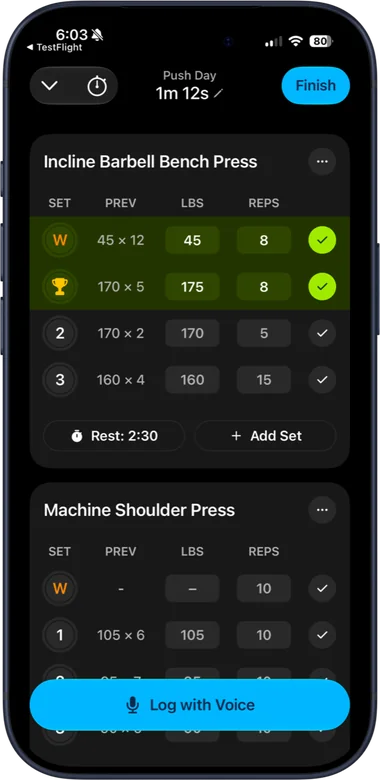
 Log every set of your Frog Jump in Superlift
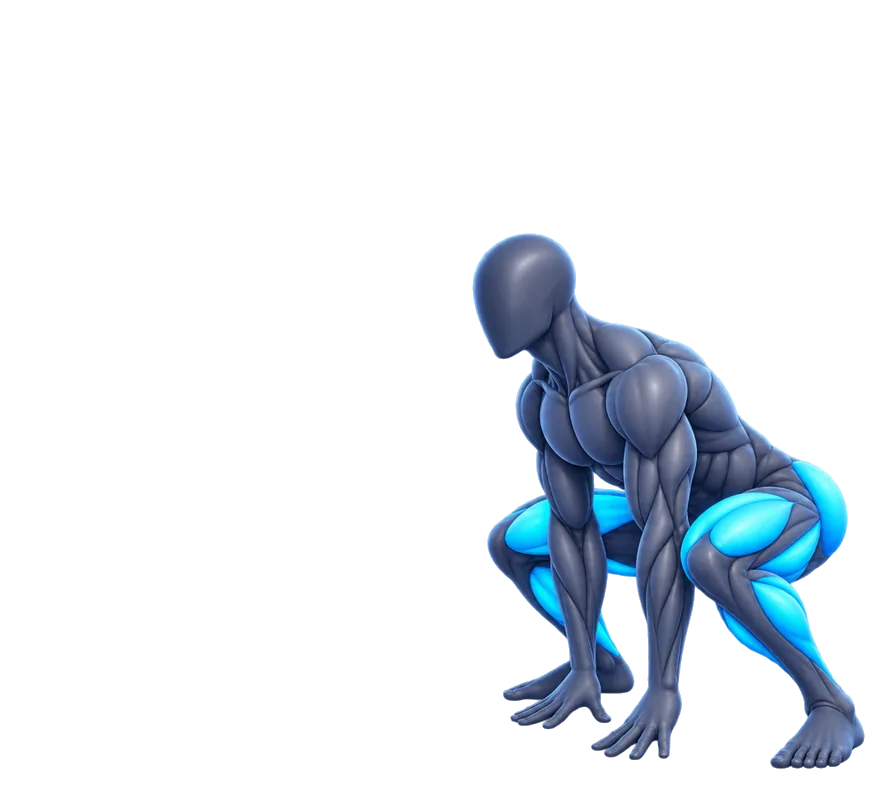
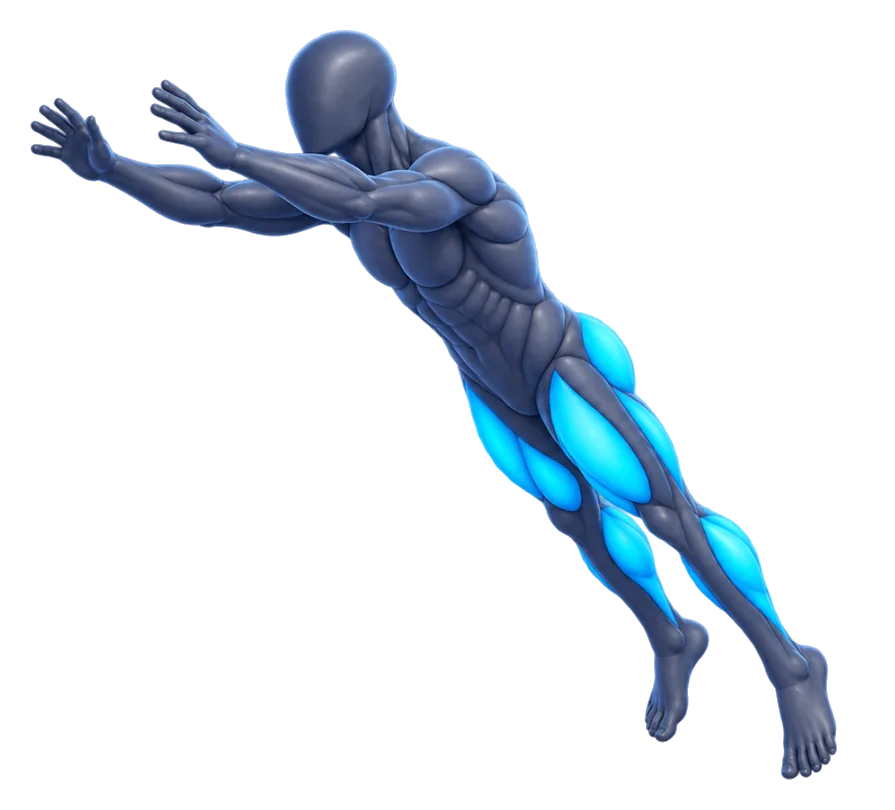
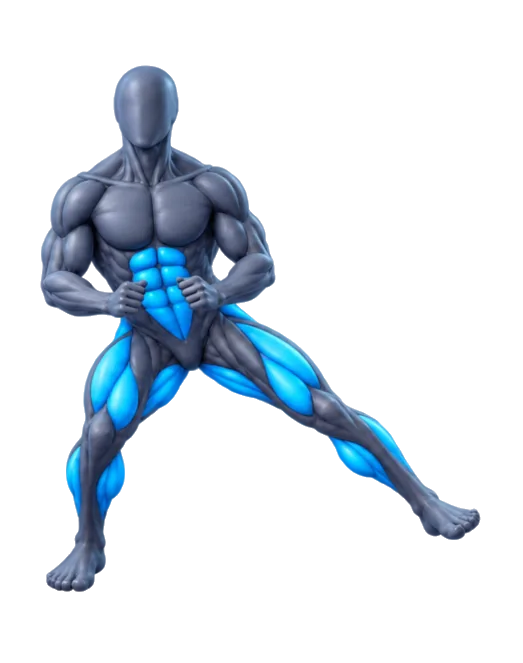
Muscles worked
Primary
- Quads
- Glutes
Secondary
- Calves
- Hamstrings
How to do the Frog Jump
- 1
Stand with your feet wider than your shoulders and toes turned slightly out.
- 2
Squat down until your hands touch the floor between your feet.
- 3
Swing your arms forward and explode up and forward with your hips and legs.
- 4
Land softly on the balls of your feet with your knees bent.
- 5
Sink straight back into the deep squat and touch the floor again.
- 6
Reset your balance, then jump again.
Form cues to remember
- Sit deep, chest up
- Explode up and forward
- Land soft and quiet
- Knees track over your toes
Common mistakes
Landing stiff-legged
Bend your knees and sink into the squat to absorb impact.
Letting your knees cave in
Push your knees out in line with your toes.
Rounding your back in the squat
Keep your chest up and spine long.
Jumping short and sloppy
Swing your arms and drive your hips for a longer, controlled jump.
Sets and reps
| Conditioning | 4–6 rounds of 20–30 sec jumping, 30–40 sec rest |
|---|---|
| Strength | 3–4 sets of 5–8 jumps with full recovery |
Land softly and stop when your landings get loud or sloppy. Skip it if you have knee or ankle pain when jumping.
Superlift for iPhone
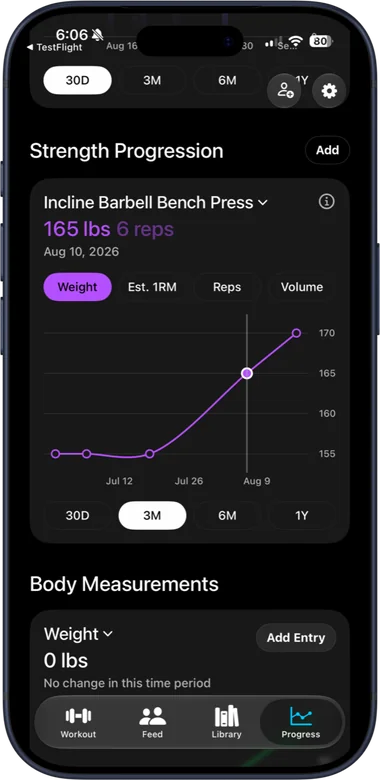
Track your Frog Jump and watch it go up
Superlift shows what you lifted last time, times your rest, and charts your strength week by week, so you always know what to beat. Every exercise in this library is built in, with the same demos and tutorials.
Frog Jump FAQ
What muscles does the frog jump work?
It works the quads, glutes and calves, plus your hips and core. It's a great move for leg power.
Frog jump vs jump squat?
The frog jump moves forward from a deep squat with a wide stance, while the jump squat goes straight up. The frog jump asks for more hip mobility.
How many frog jumps should I do?
Try sets of 5–8 for power or 20–30 seconds for conditioning. Stop when your landings get heavy.